
Art, Action, Vertigo. A journey through Wiener Aktionismus
The emblematic exhibition 'Vier Aktionen' ('Four Actions') is open to the public until 27 July 2025
3' min read
3' min read
Today, performance art is a widespread aesthetic practice - in physical places as well as in the collective imagination. Widely popularised, often abused, popularised through non-ordinary figures such as Marina Abramović and equally deconstructed in equally iconic - and ironic - cinematic representations (think of the celebrated scenes in Sorrento's 'Grande Bellezza' or Ruben Östlund's irreverent 'The Square'). The contemporary outcomes of performance art (including the so-called Body Art) are, however, nothing more than the last piece of a long aesthetic adventure, inaugurated in the 1960s with the birth of the "Happening", enhanced within the poetics of Fluxus but with much older roots already in the early twentieth-century avant-gardes (above all: Futurism and Dadaism), which, in turn, did nothing more than artistically "dignify" archaic ritual practices and magical-liturgical gestures.
Viennese Actionism
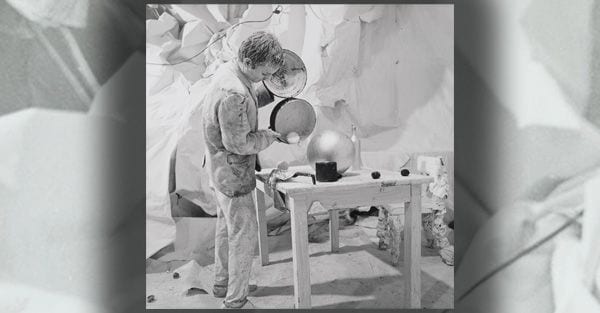
A fundamental junction in this history is represented by Viennese Actionism (Wiener Aktionismus): a movement with a fragmentary anatomy, imbued with a cultured and provocative activism, it innervated the atmosphere of 1960s Austria with a powerful revolutionary charge. With Actionism, not only does Life rise to Art, according to the well-known futurist adage; but it is Action that becomes the authentic protagonist, understood as radical praxis, a bodily gesture that wounds reality, producing an event capable of meaning, making the fragmentary chaos of everyday gestures often forgotten identify trajectories of meaning thus rescued from insignificance. This anti-traditional art, which is mainly linked to the names of four artists - Günter Brus, Otto Muehl, Rudolf Schwarzkogler and Hermann Nitsch - thus invokes the intuition of Goethe's 'Faust': 'In the beginning was action (die Tat)'. Faustian activism, the foundation of the self-consciousness of the modern German spirit, is translated into the languages of visual art.
Loading...
"Vier Aktionen"
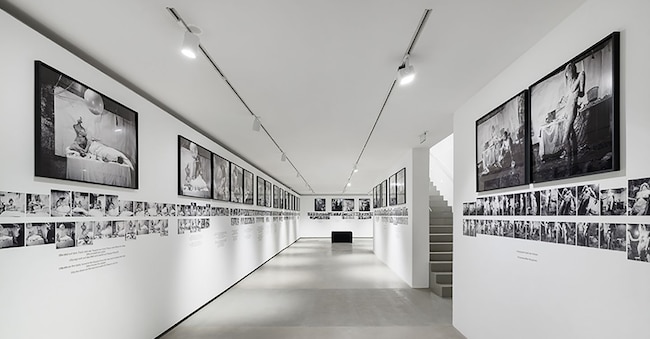
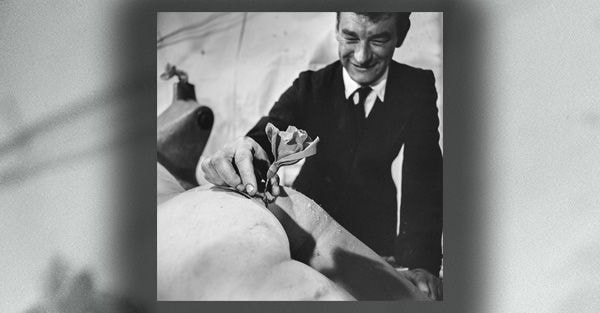
.To some emblematic moments of this generational history is dedicated an important exhibition of the Wiener Aktionismus Museum, 'Vier Aktionen' ('Four Actions'), open to the public until 27 July 2025. Complementing the already rich offerings of the Viennese museum, whose permanent collection is an excellent introduction to Actionism, the exhibition presents the documentation of four famous actions that Brus, Muehl, Nitsch and Schwarzkogler held between 1963 and 1965. The collected photographic materials, together with artists' films, video commentary materials, preparatory writings and drawings, art posters and press commentaries, provide a comprehensive framework for discovering some of the actions most relevant to the history of the movement.
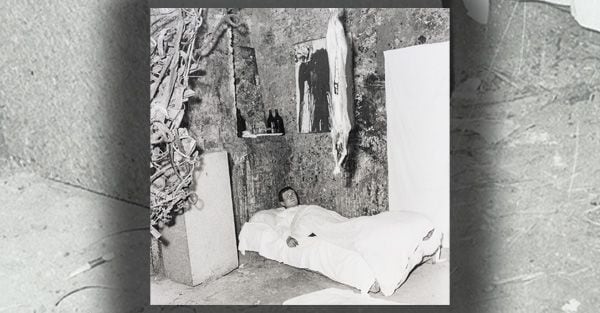
Nitsch's cathartic symbolic-ritual fascination with the forms of the sacred, later implemented in his ambitious artistic project of the "Theatre of Orgies and Mysteries", and Muehl's obsession with the disruption of social roles - which in "Mama und Papa" (1964) is declined as a subversion of the relationship between the notions of couple, conception and birth - emerge; Brus' reinterpretation of the iconic images of fin de siècle Austrian art, subtracted from the weight of the canvas and rendered as immediate bodily dynamism; finally, the prophetic visions of Schwarzkogler radiate, Apollonian concretions - at once luminous and perturbing - of a man-machine fusion 'cyborg model' with dystopian traits that are today close to becoming reality.
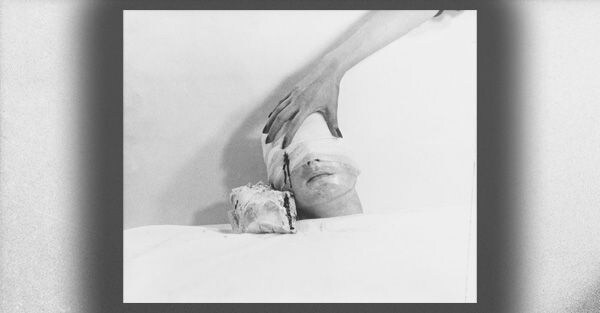
Four artists, four actions, four cuts inflicted on ordinary consciousness. The violence of Actionism reminds us that artistic endeavour cannot be reduced to mere decorativism nor, to quote the philosopher Byung Chul Han, to the empty device of likeness. The beautiful "is only the beginning of the tremendous, which we can barely bear, and the beautiful we admire so because it heedlessly disdains to destroy us" thunders Rainer Maria Rilke in the first of his dazzling 'Duine Elegies'. Woe to those who wish to pacify the giddy afflatus of art.


Brand connect
Loading...
