The event

Art and the future in Riyadh: the hybrid that anticipates the market

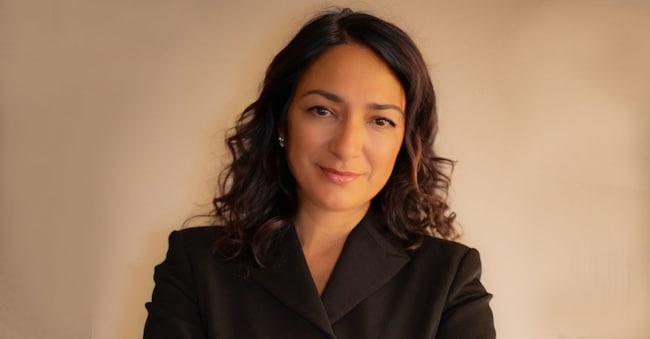
Vittoria Matarrese, artistic director of the Saudi city's first Art Week where three collections were exhibited, speaks: Art Jameel, Ithra and SRMG

by Maria Adelaide Marchesoni

Vittoria Matarrese, direttrice artistica del primo Art Week Riyadh

6' min read

6' min read

The time is not yet ripe to launch a real art fair in Saudi Arabia. Why risk it, then? Better then to bet on a more agile and experimental format: an art week that combines the spontaneity of a festival with the international ambition of a fair, but without the commercial pressure.

From 6 to 13 April, the first Art Week Riyadh was held, a widespread event that opened the doors of artists' studios, inaugurated exhibitions in numerous galleries in the capital (including those of the Al Mousa Center), and hosted no less than 45 galleries from the Middle East, Africa, Asia and Europe - with Galleria Continua as the only Italian representative. In the creative district of Jax, these galleries exhibited museum works in a non-commercial context, accompanied by a section dedicated to the moving image, with artist films signed by names such asBani Abidi, Zineb Sedira and Theaster Gates. At the heart of the event was the exhibition 'Collections in Dialogue', which brought together works from three prestigious Saudi collections: Art Jameel, Ithra and SRMG (Saudi Research and Media Group). Artistic Director of the event was Vittoria Matarrese, flanked by associate curators Basma Harasani and Victoria Gandit Lelandais. In this interview, Matarrese talks about how the project came about and offers an insider's view of the Saudi art scene, which is currently undergoing a transformation.

Loading...

How did you get involved in the first edition of Riyadh Art Week?

My experience in the Gulf before this project was zero and it was a great discovery. It all came about because 15 years ago I had worked at Villa Medici in Rome with one of the current members of the Visual Arts Commission of the Ministry of Culture in Riyadh who proposed my name for the role of artistic director, so my collaboration began.

What criteria were used to select the artists and projects to be included in the event?

It was a truly hybrid project, on the one hand the curated selection part, which some call an exhibition but I prefer to call it a curated selection made together with the 45 galleries, and on the other hand, the three exhibitions of the invited Saudi collections, presented under the title 'Collections in Dialogue', for which I made an artistic choice.

What were the Saudi collections?  

The works came from the King Abdulaziz Center for World Culture (Ithra), from the collection Art Jameel, a selection of single-channel works highlighting the diverse and evolving landscape of experimental film and video art practices in the wider region, and finally, the exhibition "Abstract Horizons: Three Generations of Saudi Art" from the Saudi Research and Media Group (SRMG). Taking its title from a seminal work by Mohammed Al-Saleem, the exhibition drew on the SRMG's unique collection to explore the progression of Saudi abstraction through the practices of key figures such as Al-Saleem, Abdulhalim Radwi and Taha Al-Sabban, who fused global influences with local traditions. Their legacy is reinterpreted by a new generation of artists, including Raeda Ashour, Rashed AlShashai and Zaman Jassim, who push the boundaries of materiality and form.

And the selection of works from the 45 galleries?

As for the galleries, being invited and not being a fair, we made a selection of the works that the galleries brought and I tried to create points of contact between local, regional and international galleries, each presenting curated selections to collectively explore the evolving cultural dialogues between Saudi Arabia, the broader MENA region and the global contemporary art scene. That's why, in the end, the feeling is that of an exhibition.

Was there a common thread or specific theme that guided the selection of artists or projects?

Three themes identifiedEveryday Life, Landscapes, and Motifs - At The Edge aimed to provide a platform for works that speak to the complexities of the region, moving away from the typical Western-centric narratives that dominate international art spaces.

Did you notice any particular themes, languages or practices emerging strongly from local artists?

They are recent and historical at the same time in the sense that the contemporary art scene is very powerful because it is still unknown to most of the West, and there is a large pool of young and old contemporary artists who work and have very interesting practices. For their practice they use the earth, local materials, such as Mohamed Alfaraj and Sarah Brahim who reflect on their territory, their heritage, the materials they find. On the theme of landscape, I would say that the desert is really something very preponderant, very powerful, there is all the work on light, on the loss of self, what can emerge again. Also the tradition, the ancestral techniques, this rediscovery is much truer in these territories.

How would you describe the contemporary art scene in Saudi Arabia?

Dynamics. I lived in Berlin ten years after the fall of the wall and it seems to me that in Riyad, but not only in relation to the contemporary art scene, I have found that energy again, all those formats that are created and begin to exist when something opens up, whether it is at the level of music, dance, performances, festivals. I seem to find that dynamic and that energy again. Saudi Arabia started to open up in 2019 and today six years later there are so many things being created, there is an incredible energy, so much curiosity and youth. A dynamic that I recognise in the Berlin where I lived.

How do you see the transformation of Art Weeks into a commercial moment like art fairs in the future?

They are preparing, because in order to have the market you need to have all that is induced, to have more galleries, more collectors, more formats; I think these are the first steps of preparation to create all that is induced that is needed for something more commercial.

Will the role of public institutions continue in supporting art in the Kingdom?

A lot of contemporary art museums are being built and opened places that need collections, so everything is in motion and everything will come. In five years the landscape will be very different from today, much richer in terms of collections, collectors, the general art market.

What are the main opportunities and critical issues for emerging artists and curators in this area?

I do not know the programmes of Saudi Vision in detail, but I do know that they offer a lot of support: they fund residencies for their artists abroad, promote residency programmes in many parts of the world and, of course, provide concrete support in Saudi Arabia as well. One can sense a real political will behind this development.

And what about contemporary Italian artists? What interventions are needed to encourage a greater presence of contemporary Italian art in the area? Is there a lack of support from galleries??

Speaking of support policies, I don't think the problem lies with the galleries. What I tried to avoid during Art Week was precisely considering galleries as mere commercial entities. In my opinion, the role of a gallery goes far beyond selling: it should discover new talents, accompany artists on their path and, above all, help them enter museums, institutions, exhibitions. Make them evolve. And it is precisely the evolution of the artist that represents the real reward for a gallery: real value. The gallery owner, in short, is not a dealer.
In countries like France, where I live, the State plays a fundamental role in this process. In Paris, for example, there are many public programmes to support artists, and it is no coincidence that many of them manage to create and travel all over the world: it is the result of a careful and structured cultural policy. In Italy, unfortunately, this policy is still very weak. We need to seriously rethink support strategies and work on building a shared cultural identity, because neither artists nor valid gallerists are lacking. What is lacking is institutional support. A further critical point is centralisation: it would be crucial to create support poles linked to the different artistic disciplines, also distributed according to the characteristics of the various geographical areas. Only in this way can the system become more accessible, inclusive and functional.


Copyright reserved ©
Loading...

Brand connect

Loading...

Newsletter

Notizie e approfondimenti sugli avvenimenti politici, economici e finanziari.

Iscriviti