
In Loazzolo, art can be found amongst the rows of vines
The group exhibition dedicated to contemporary art, “From Earth to Earth”, runs until 8 September at the IZart Gallery in Borgo Isolabella

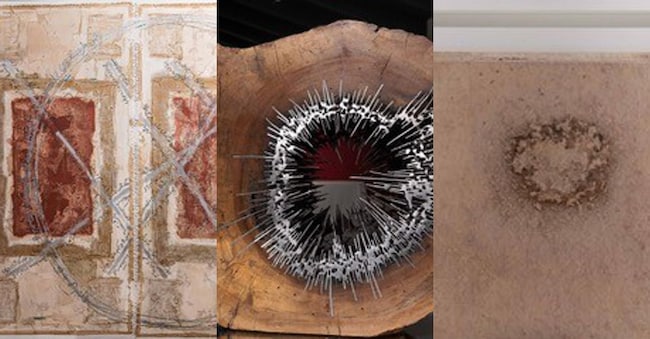
The silence of the valley and, stretching out into the greenery, the breathtaking view of the sunset; then the coolness of the stone-walled cellars, the conviviality of wine and the beauty amongst the vineyards, which takes the form of sculptures – many sculptures – and paintings. Until 8 September, the exhibition ‘Dalla Terra alla Terra’ is on display in this setting at the IZart Gallery (the new venue dedicated to contemporary art) within the Borgo Isolabella in Loazzolo, in the heart of the Alta Langa region of Asti. A gallery conceived by Luigi Isolabella della Croce and Owen Zaccagnino with the aim of creating a meeting place for art, landscape and culture; the exhibition brings together local and other artists at the estate for this group show, curated by Annalisa Ghella and organised in collaboration with Gart – Arte Contemporanea in Neive.
Chiara Cirio
Jacopo Mandich
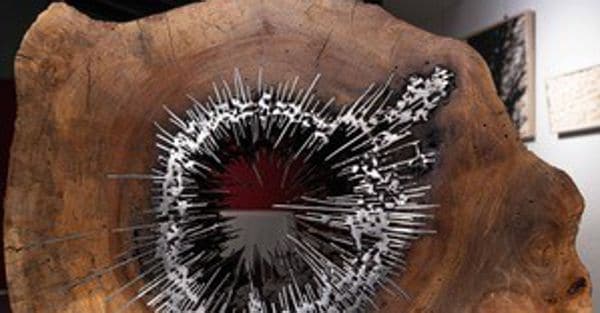
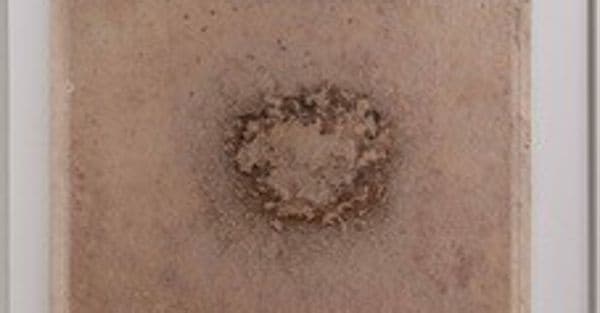
Whilst Chiara Cirio, with her Filtri, captures the processes of winemaking in organic forms on card, transcribed through blurred traces, Jacopo Mandich is the consummate interpreter of the poetic mystification of forms, which come together in evocative contrasts: his sculptures (Sezione, wood and iron, 2025), with their logs inlaid with luminescent metal, create disorienting juxtapositions, where the cold lines of the mineral intersect and break up into silvery filaments, enabling natural forms to engage in dialogue with the inlays of brilliant alloys. The natural and the artificial coexist osmotically in this work, which possesses the sculptural and evocative charm of both.
Ahmad Nejad
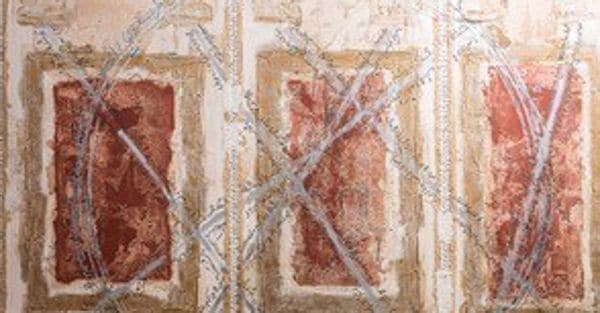
The Iranian artist Ahmad Nejad delves into the deepest roots of his native culture by transcribing ancient verses and highly topical inscriptions onto the ochre, beige and brown hues of his earth-toned palette, which he renders in outlines, (Les 4 coins du monde, 2010) that etch into the material, echoing, furrowing and almost excavating amongst the ancient poetics and evocative myths of his native land; and his technique of outlining is well suited to the evocative concept of memory, which runs through all his works, with the inscriptions in Farsi drawing on poetry and distant echoes from the very moment they materialise on the canvas. His works are meaningful even before, and far beyond, the myth-laden content they convey so intensely.
Gianni Depaoli
Urban Fossils, Fragments by Gianni Depaoli are sculptural core samples taken from cement aggregates and other materials, capable of capturing the decay and degradation of an environment ravaged by progress. The environmental disaster depicted by these sculptures is the inevitable nemesis of the social disintegration that forms its counterpoint, that is to say, the bitter fruit of a humanity that destroys environments and cultures, and which, without hesitation, rushes towards a future that climate change – and other factors – are making increasingly unliveable and unviable.
On display
The exhibition also features, amongst others, works by Marco Fiaschi, Marco Laganà, and above all the coloured enlargements (modern echoes of ancient Egyptian scarabs, or even cockroaches if you will, or rather Sternotominae and Curculionidae) entitled Sternotomis callais, Eupholus Bennetti, Eufholus cuvieri by Owen Zaccagnino, a poetic interpreter of artistic nature.

