
Art as convocation by Marinella Senatore
The Theatre of The Commons' exhibition is at the Teatro della Cometa until 31 May

Hierarchies she dismantles with needle and thread, with the illuminations that transform a phrase into destiny, with the choreography of hundreds of people who turn from extras into protagonists. Marinella Senatore's philosophy starts from a simple and radical premise: art not as a summit but as a shared horizon. The last people come onto the stage, enter her luminous sculptures, inhabit words that light up and come to life not as spectators, but as the engine of the work.
For more than twenty years, the artist born in Cava dei Tirreni, but adopted by Rome, has been building temporary communities through parades, videos, performances and monumental embroideries. Her lexicon holds theatre, music, cinema and pedagogy together.
School of Narrative Dance
In 2012, he founded the School of Narrative Dance, a school free of hierarchies in which learning becomes exchange and self-education. An open, non-academic method designed to generate skills, but above all relationships. A practice that has been nurtured in prisons, anti-violence centres, suburban neighbourhoods and places where art rarely takes root where, instead, it finds fertile ground in its work.
The Comet Theatre
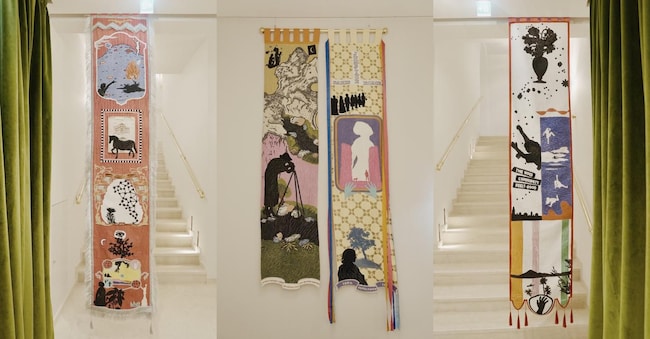
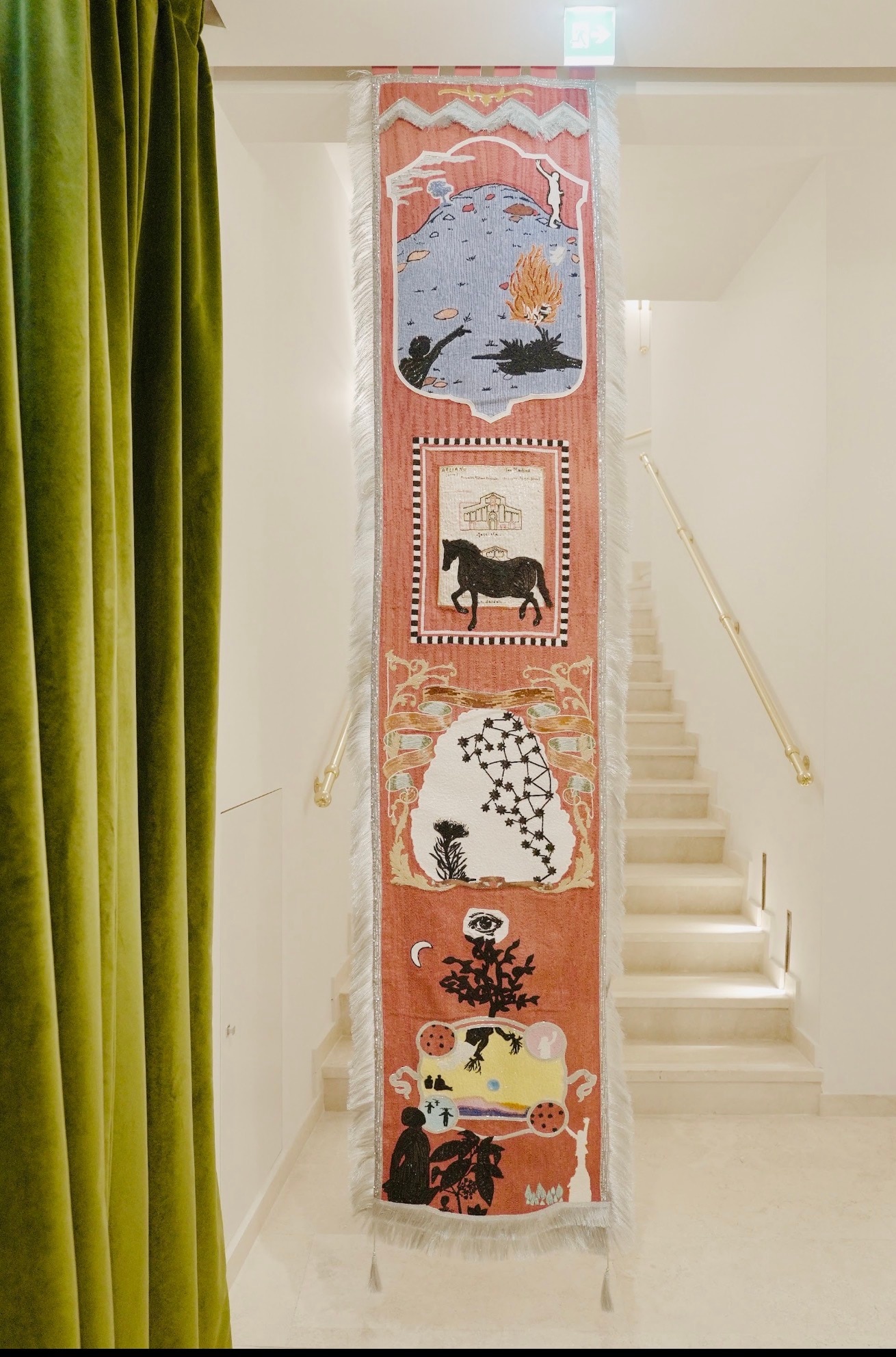
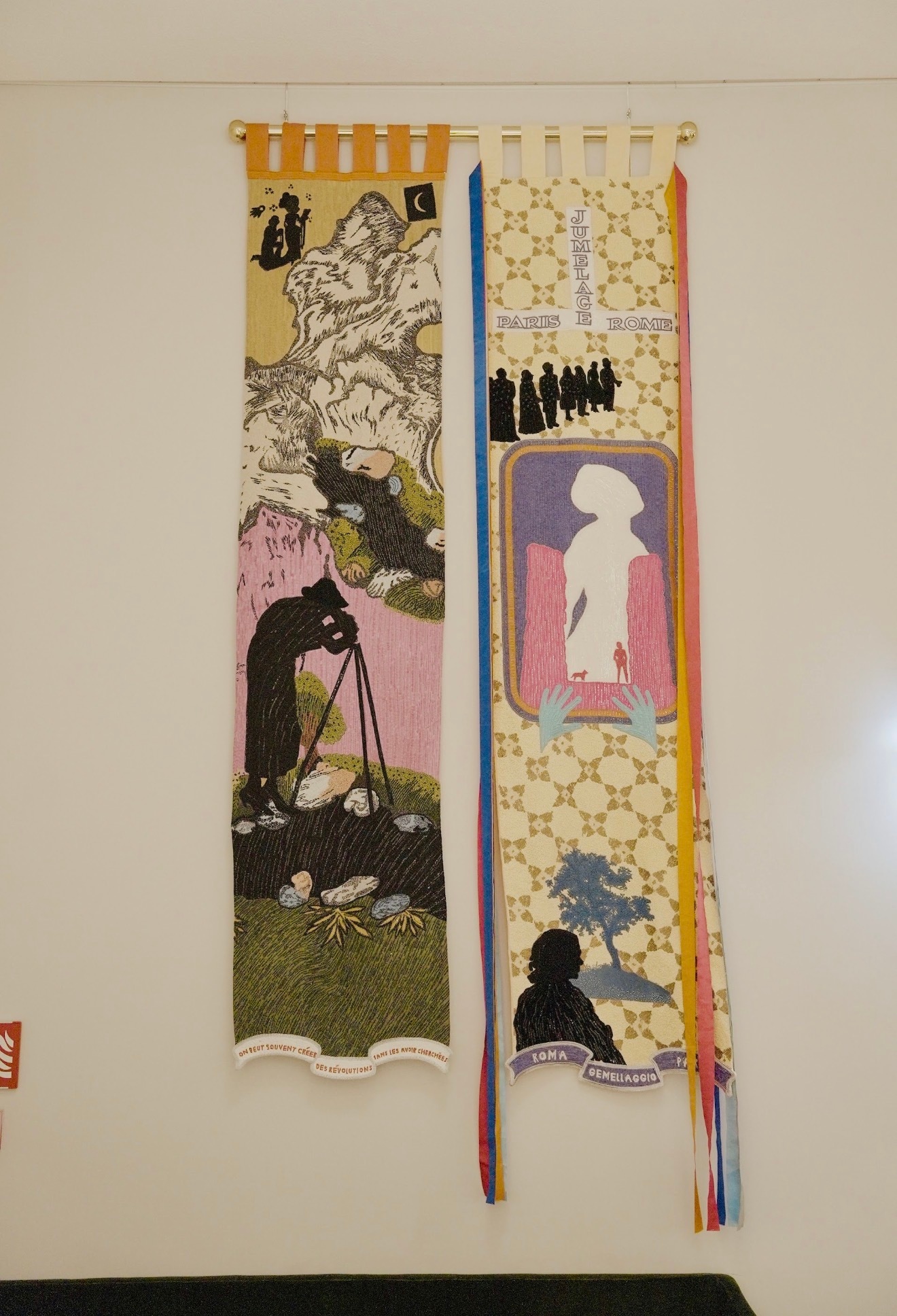
For the foyer of the Teatro della Cometa in Rome, Senatore has imagined a device capable of dialoguing with the history of the place. The project, entitled The Theatre of the Commons and curated by Paola Ugolini, stems from work in the theatre's archive among stage sets, fragments of a memory that does not remain dust but becomes living matter, and landscapes that - he tells us - "are my refuge". The artist goes through them and translates them into a series of hand-embroidered banners, made with the ateliers of the Chanakya School of Craft, a textile excellence in Mumbai with which he has been working for years. The banners replace the curtains, occupy the walls, overturn the perception of the foyer, "a space of passage - free of charge - that is transformed into a piazza, a meeting place, a possible party", he points out. "The term commons," he adds, "recalls shared goods, collective practices, but also the ancient dimension of the banner carried in procession, a sign of identity and public narrative. Each banner functions as a micro-scenography in which the landscape becomes a founding element of the community and the embroidery takes on an unexpected iconographic force'.
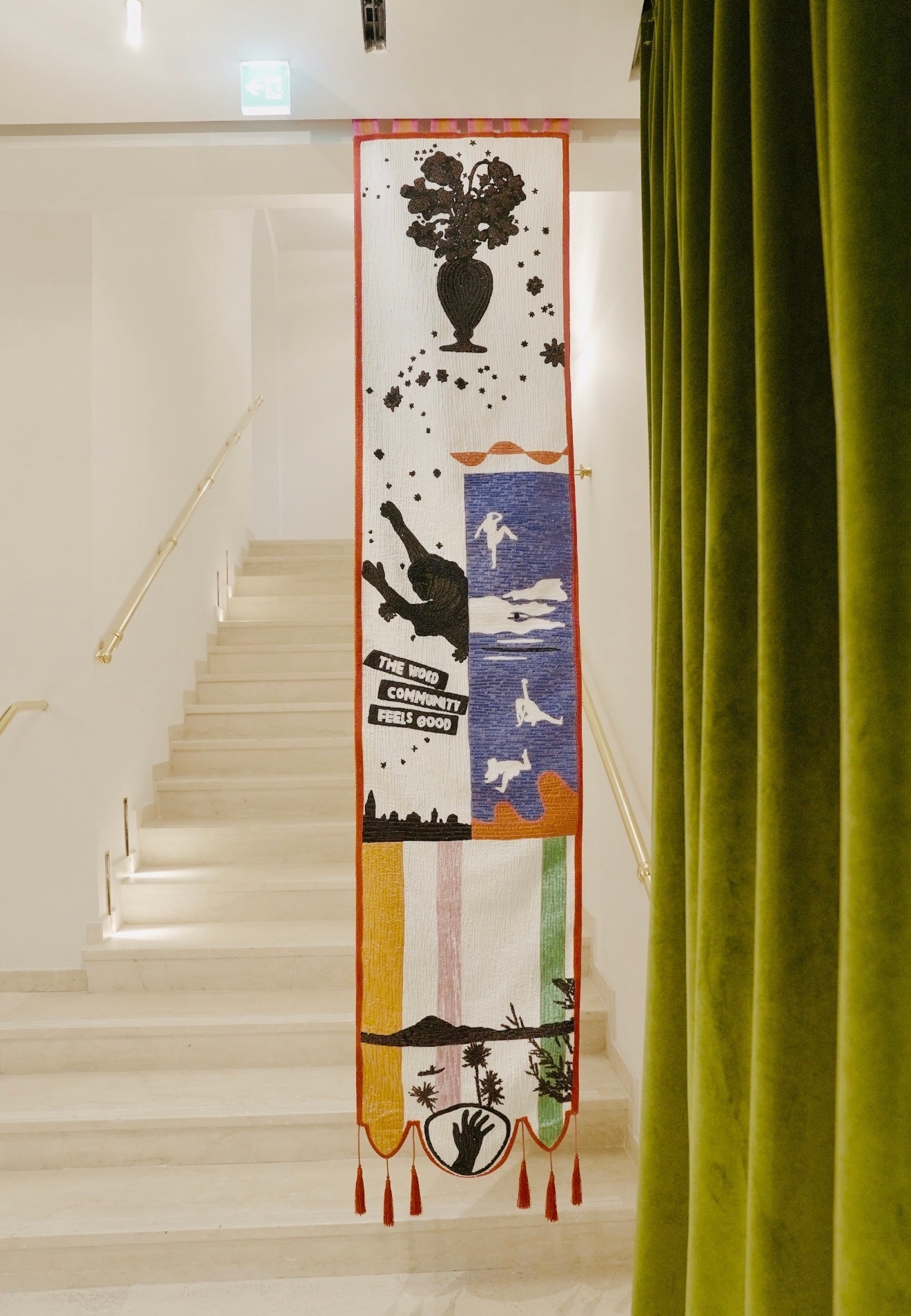
More than anything else I remember the future, goes one of the phrases that run through his work, an orientation and direction with words rather than mere ornamentation. "After the pandemic," he explains, "the need for beauty has become more urgent, almost physical, and my works, suspended between popular festival and contemporary installation, intercept that need. Beauty, in my vocabulary, is not escapism, but shared energy'.

