Art Basel: blue-chip works perform strongly, whilst the mid-range market shows signs of hesitation
Sales are good, although they’re slower when figures are below one million. Collectors from Europe, the US and Asia

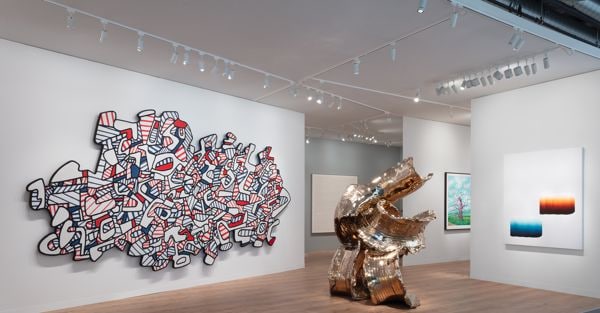
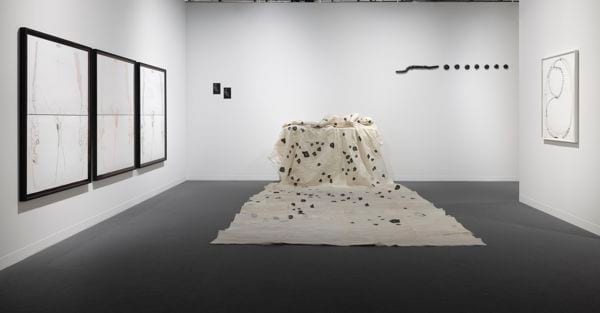
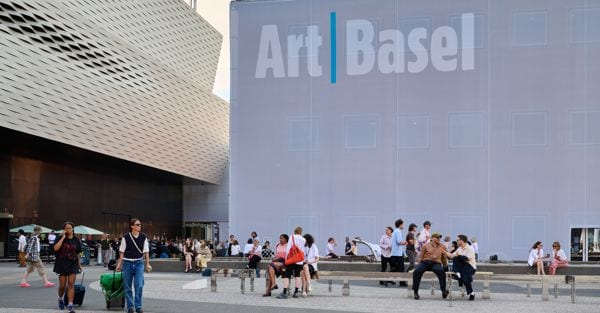
The floor plan for the 2026 edition of Art Basel in Basel (18–21 June) is a good reflection of the current state of the modern and contemporary art market. On the ground floor, from the very first hours of the preview reserved for collectors on Tuesday 16 and Wednesday 17 June, numerous sales of blue-chip artworks were recorded. The collectors who came to view the 290 galleries from 43 countries were mostly European, but there were also a number of Americans and Asians (in total, the fair welcomed 90,000 visitors, including 270 representatives from museums and foundations). The ‘Basel Exclusive’ initiative was well received by both sides, so much so that the selection focused on rare and important works – although only one gallery, amongst those we interviewed, kept as many as six works out of the previews sent in PDF format, whilst the others kept just one. In any case, a bit of a treasure hunt ensued, which proved fruitful.
Blue-chip works
The galleries on the lower floor have focused on more historically significant works. For example, Gagosian’s approach was: fewer works, but more significant ones; and, indeed, during the opening night, it has now sold a late De Kooning to an Asian collector for a seven-figure sum (closer to eight figures), whilst a large part of the stand was reserved for a monumental “Reclining Figure” by Henry Moore from 1972–73 (the sort that fetch the highest prices at auction, between 25 and 35 million dollars). In the gallery, however, it showcased more contemporary works, noting an incredible interest in female painters from various generations, from Frankenthaler (on display at the Kunstmuseum) to Jenny Saville, Jadé Fadojutimi and Rachel Feinstein.
The same strategy was evident at the Hauser & Wirth stand, where on the first day the selection leaned towards the historical, for example, with a painting by Gris that marked the birth of Cubism, offered at over ten million dollars. On the second day, the focus shifted to contemporary art. By four o’clock in the early afternoon, 35 works had been sold, including “Le peintre et son modèle dans un paysage” (1963) by Pablo Picasso at an asking price of 35 million dollars (this appears to have been the week’s highest-value sale), as well as a work by Nairy Baghramian, a German-Iranian artist invited this year for the project on the Messeplatz, which sold for 600,000 euros to a Swiss collector.
Pace also sold at least 22 works on the first day and perhaps even more the following day, including two editions of sculptures by Lynda Benglis priced at $1.4 million each. In the days leading up to the start of the fair, the gallery made headlines for cutting 50 artists and 50 staff members. But the decision appears to have been part of a well-defined strategy, namely to focus more closely on the essence of the programme – in a challenging context where it has become clear that growth for its own sake is not sustainable – by focusing on the artists who form the core of the programme and moving away from those with whom the ties are weaker, or who are already represented elsewhere.
The mid-range
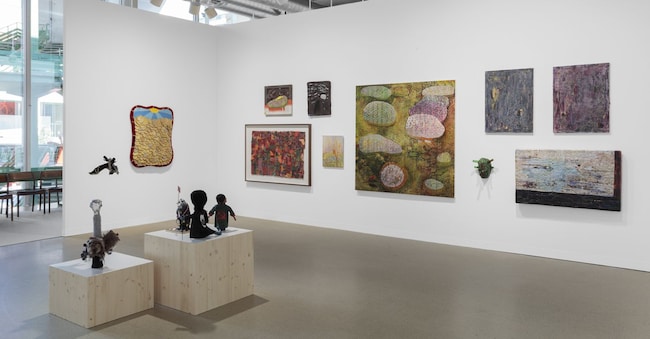
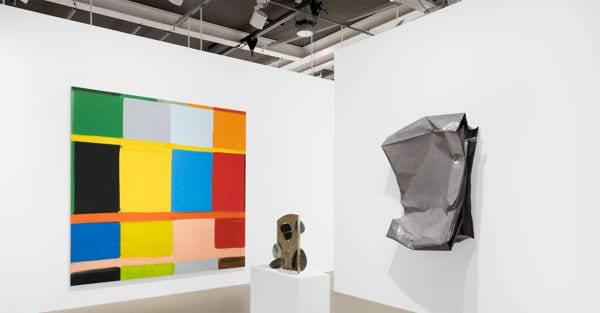
But as we went upstairs, the atmosphere changed and the enthusiasm was somewhat subdued. “It’s not the best year; there’s a lot of hesitation,” said Claes Nordenhake, who is celebrating the gallery’s 50th anniversary this year and has seen a lot of water flow under the bridge, not to mention market crises. “Blue-chip works are doing well, because at that level art is seen by buyers as a safe investment, but in the price range between 50,000 euros and under a million, things are more difficult. Collectors are affected by political issues, particularly Trump and the crisis in Iran. In the face of crises, the art market does not collapse (the 1991 crisis was far worse, followed by that of 2008), but prices do fall. In the 1990s, for example, this led to the introduction of a 10 per cent discount policy, which has now become the norm.” Despite this, Nordenhake also recorded sales on the very first day, including a work by Stanley Whitney, “The Ace of Hearts” (2026), for $450,000, one by Sarah Crowner, “Jaunesse” (2025), for $150,000, both sold to American buyers, and a work by Lap-See Lam, “Raft, Mandarin (III)” (2026), currently on display at the Henie Onstad Kunstsenter in Oslo after winning the 2025 Lise Wilhelmsen Art Award (€30,000, sold to a Norwegian institution).
This is confirmed by the Fortes D’Aloia & Gabriel gallery, which is also celebrating an anniversary this year – its 25th – so much so that on the first day of the celebrations it exhibited 25 works (they were the ones who had no fewer than six designated as ‘Basel Exclusive’, all of which were sold). “We had excellent sales yesterday,” said Alexandre Gabriel, partner and director, “but generally speaking, you can sense that the pace is different: collectors are taking their time; there isn’t that sense of urgency to close deals – which isn’t necessarily a bad thing; it’s just a different rhythm for the fair. Sales are happening, but they require more effort, more time and more attention. It’s certainly a more buyer-friendly market; it’s the collectors who are setting the pace.” Among the sales in the first hour were a collage by Beatriz Milhazes for $245,000, a wall installation by Ernesto Neto for $70,000, and paintings by Marina Rheingantz ($80,000) and Janaina Tschäpe ($65,000).