Art Basel Paris closes early: positive results for the major players, uncertainty for the mid-market segment
The market proved buoyant during the Vant-Prèmiere and the VIP Preview, with 200–300 transactions totalling around 100 million euros, including some 25 works priced above one million euros; the purchases were mainly of works by established and historically recognised artists. The early closure has penalised the smaller galleries

Key points
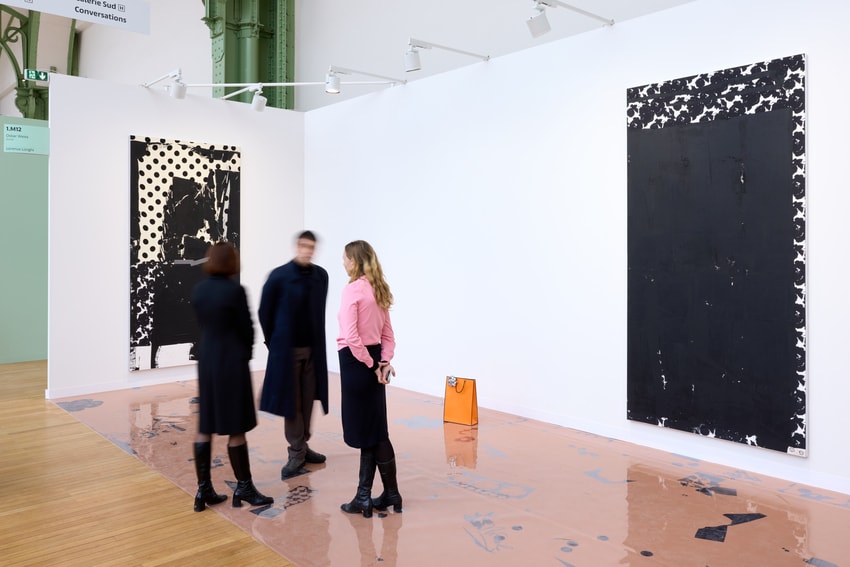
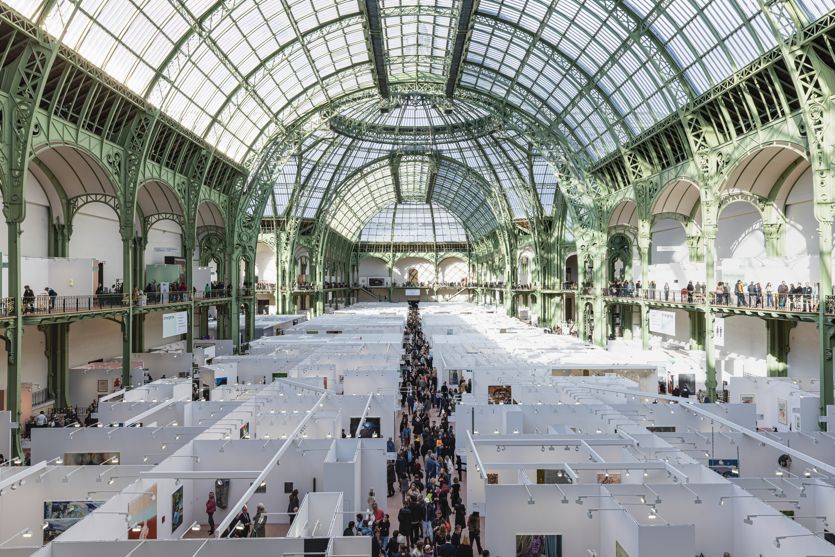
Whilst protests over the high cost of living and schools are taking place on the streets of Paris, inside the Grand Palais works of art worth millions of euros were traded at the 5th edition of Art Basel Paris, featuring 211 modern and contemporary art galleries from 41 countries. Throughout the week, there was little talk of the demonstrations in the corridors, even though there was a curfew in some areas in the evenings and, whilst out and about, one could hear police cars with their sirens blaring. Following last weekend’s unrest, some guests cancelled their trips to Paris, including a number of Americans, according to gallery owners, but there were collectors and curators from all over the world, including Asia, and overall the atmosphere was business as usual.
Closed at the weekend
Over the weekend, however, fears of protests – which had already been announced in recent days – led the organisers of Art Basel Paris to bring this edition to a close early, at 7 pm on Friday, keeping the fair closed on Saturday and Sunday. The exhibition, comprising around 1,700 works, continues and can be viewed online on the Art Basel Paris – Encore platform. Many Parisian museums also remain closed today, whilst Paris Internationale, which takes place further north in the Canal Saint-Martin area, has decided to remain open, having stepped up security measures.
When word began to spread at Art Basel, between Wednesday evening and Thursday morning, there was a great deal of confusion amongst gallery owners as they tried to organise the dismantling of their stands. Exhibitors’ reactions ranged from understanding the organisers’ concerns on the one hand, to dissatisfaction at the lost sales over the weekend on the other. Upon the announcement of the closure, a spokesperson for the fair responded as follows to our request for comment on possible compensation for gallery owners: “It is still too early to comment on any financial or contractual implications. We remain in direct contact with our galleries and will provide them with further information in due course.” Some are hoping for discounts at the next edition of Art Basel in June, but for the most financially vulnerable galleries, with results below expectations, this could pose a serious risk of closure.
Million-selling albums
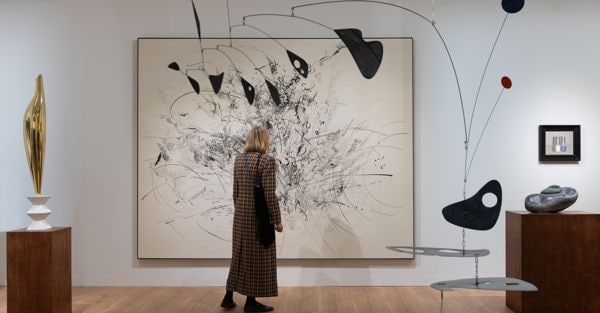
Upstairs in particular, the galleries were counting on those extra days to generate business opportunities, whilst downstairs, in the central aisle, the most influential players had already concluded deals worth millions during Tuesday’s Avant-Prèmiere – the afternoon event reserved for the crème de la crème of the art world – and Wednesday’s VIP Preview. In the very early hours, Hauser & Wirth sold the much-anticipated ‘Rococo Table’ by Gerhard Richter from 1965, from the collection of Swiss gallery owner Thomas Ammann, for around 10 million dollars; the same price was achieved for another rare painting, also from 1965, by his compatriot Baselitz. White Cube sold two works by Julie Mehretu for $7.85 million each, as well as a painting by Tracey Emin for £990,000, following the huge success her sculptures are enjoying at the Trocadéro, opposite the Eiffel Tower. Adding up the sales reported by the fair from the Avant-Première and VIP Preview, the organisers announced between 200 and 300 transactions over the first two days, totalling around 100 million euros, with approximately 25 works selling for over one million euros.
Inflation in the mid-market
And yet, the problems faced by ordinary people protesting on the streets – from inflation to the rising cost of living – are also affecting the art market. “The high end of the market, in terms of both galleries and collectors, is somewhat more sheltered,” explains Clare McAndrew, an economist and founder of the research institute Arts Economics, “though not entirely. Even the lower end of the market is holding up, although margins are increasingly tight. But the real problem is the mid-market: from the buyer’s perspective, this is the segment most exposed to the rising cost of living; these are the people most likely to postpone buying art, to think ‘I can no longer afford it’, or to opt for cheaper works. From the seller’s perspective, this is precisely where costs hit hardest – particularly those relating to transport and art fairs – and it is also where there is the greatest pressure on prices.”