Art Brussels, beyond the fair between KANAL, Bozar and Seven Cloud
The city is lively with exhibitions in public spaces and commercial galleries, many well-known artists and a few new discoveries

Key points
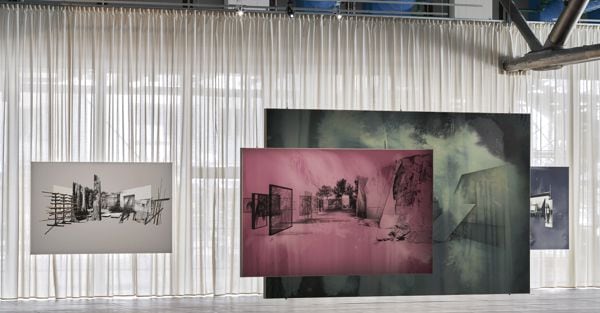
Art Brussels, which took place from 23 to 26 April, stepped outside the confines of its exhibition halls in Place de la Belgique, directly opposite the Atomium, to animate the Belgian capital. Gallery Night brought exhibitions in the most influential commercial galleries to the attention of collectors. The exhibition 'Is that All there is?' at Cloud Seven is a way to get a taste of Frédéric de Goldschmidt's vast private collection. Not to be overlooked are the exhibitions at BOZAR and Wiels. Definitely making waves is the new centre for modern and contemporary art KANAL which is taking up residence in the industrial spaces of the former Citroën garage and workshop and wants to try to stand out by offering an alternative to the already established temples of visual art in Europe, such as the Tate and the Centre Pompidou. In order to do so, it has relied on the latter museum to outline the exhibition planning for its first years.
BOZAR
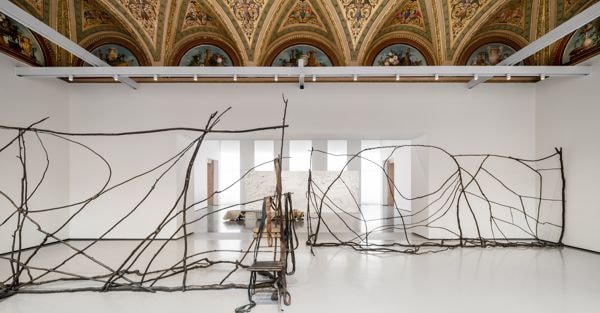
Speaking of large institutions, the exhibition offer of the museum Bozar, Palais de Beaux Arts does not disappoint. 'Beauty and Ugliness. Beauty and Ugliness in the Renaissance" (until 14 June) explores, through 90 works, the way in which Italian and Northern European artists between the 15th and 16th centuries represented these two extremes. "Ho Tzu Nyen. P for Power' is the solo exhibition dedicated to the Singaporean artist.
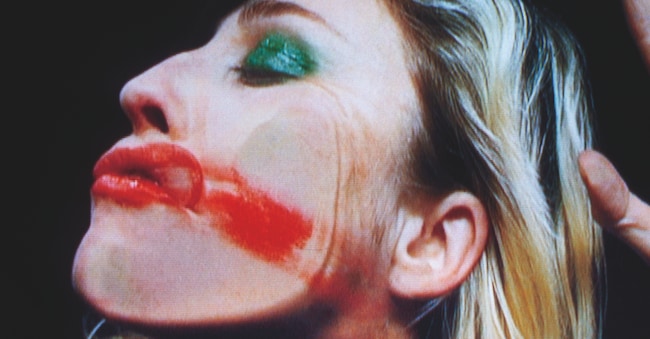
Worthy of praise is the exhibition 'Picture Perfect. Beauty through' at Contemporary Lens, which can be visited until 16 August, is deserving of praise. Indeed, it counterbalances the lack of photographic projects among the stands at Art Brussels. The question around which the exhibition - with works by 65 artists - revolves is: what role has the visual media played in creating, reinforcing or challenging the dominant Western canons of beauty? From the poster image, a frame from an iconic work by Pipillotti Rist, the exhibition boasts a fine selection of works by artists with different backgrounds, origins and languages. For example, the South KoreanSin Wai King with 'Essence' plays on perfume advertising by going against gender stereotypes and inviting us to reconsider the idea of masculinity.
Cloud Seven
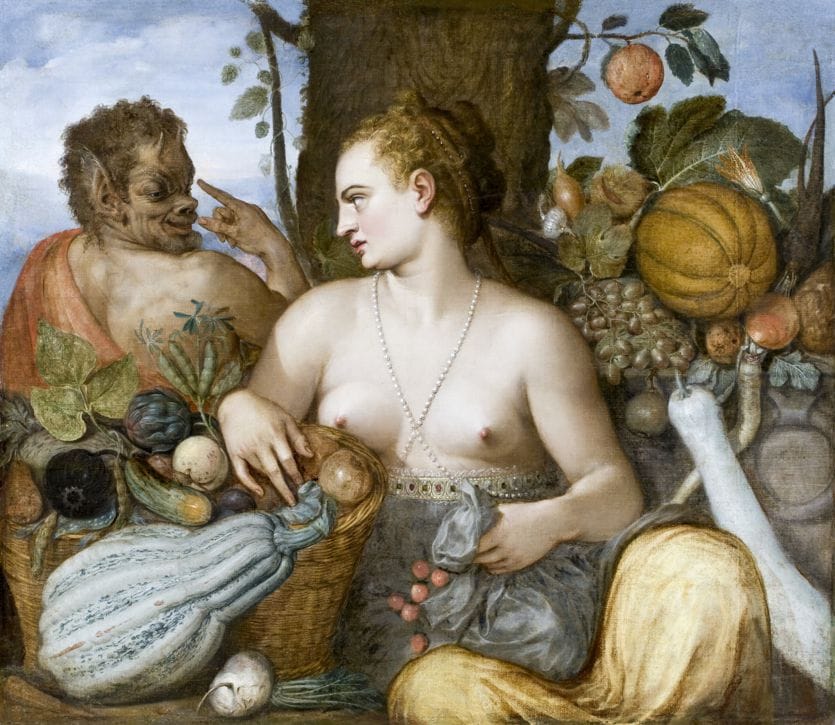
The concept of 'Palpitation', i.e. the dialectic between past and present of Nicolas Bourriaud, inspires the exhibitions held at 7 Quai du Commerce, in the building known as Seven Cloud, which, with its 7 floors, plays with the private collection of Frédéric de Goldschmidt, one of the most important collections in Brussels, after the large Vanhaerents collection.
The current exhibition is entitled "Is that All there is?" from a song by Peggy Lee about a woman disillusioned with life. The idea behind Grégory Lang's curatorship was to find different ways to answer the question of the title by including works that need no further explanation, either because they have an exhaustive title or because they represent fragments or phases of a larger project.
On the ground floor are mainly minimalist works, characterised by the monochrome of white or the play with light. To add chromatic complexity, a work by Alighieri Boetti takes shape from a colourfully striped deckchair.
On the first floor, the works become more conceptual, laden with references that are in some cases expressed in the titles themselves. A work by a South African artist, Bronwyn Katz, consists of three nets hanging from the ceiling filled with pebbles that were collected under the Barbès elevated underground bridge in Paris, where many migrants were trying to survive.
Roni Horn in "Key and Cue" etches the first line of a poem by Emily Dickinson - a work on paper by the artist sold for $945 in 2019 (about $1.160.61 in 2025), while a sculpture fetched $1.8 million in 2024 -, while Martin Desilets, like Roman Opalka, seeks to realise projects through a process of creation that coincides with everyday life: he photographs all the paintings in the world's museums - in this case the walls of the Musée d'Orsay -, a project that will therefore last a lifetime.
On the second floor, the works are united by being fragments, pieces of a larger project, often a body of action between art and politics. Jean-François Boclé, an artist from Martinique, who died a month ago, uses banana packaging to talk about colonisation and exploitation: the bananas are cultivated with chlorhexone that burns the soil and people's bodies. The aluminium cauldrons by Gabriel Chaile bear witness to social actions: the artist prepared meals for indigenous people and poor communities in Buenos Aires. The last plan traces the verses of Peggy Lee's song, trying to find a plan of action or a key, even an ironic one, following the acceptance of reality, often disappointing and with limited resources. The cast body of Antony Gormley embodies different concepts, from vulnerability to ecstasy, at auction the highest adjudications for Gormley are always at Christie's London: €5,892,502 for 'A Case for an Angel I' in 2017 and €3,887,289 for 'Angel of the North (Life-Size Maquette)'. The exhibition concludes with the self-portrait of Peter Wojnarowicz, whose face emerges from the earth as he is dying of AIDS, affirming his presence and his desire to leave an imprint. "I bought 'Desilets' last month for EUR 16,000 at Galerie Bigaignon (the only work bought specifically for the exhibition). Horn was bought at auction in New York in 2011 for $90,000. Wojnarowicz was bought at PPOW in New York for $15,000. The other artists mentioned here were bought directly from the artists or galleries for less than EUR 10,000,' explains Frédéric de Goldschmidt.
The Gallery Night
Trying to go beyond mere decoration, financial speculation and boycotting art as a commodity: 'Nothing' is the provocative title of Richard Tuttle's exhibition at Greta Meert. The artist questions the foundations of creation, the works start with the embryonic idea, rendered with tangled marks on white sheets, and then present the three-dimensional counterpart: the work becomes flesh and can be rendered with a string, broken wooden planks or a dish washing sponge. In Xavier Hufkens' more monumental venue, the star is Thomas Houseago - who fetched up to $462,286 at auction for sculptures and $154,956 for paintings - grappling with an existential journey in 'Journey. In Cosmic Snail (Shell Temple)" one is invited to enter an immersive spiral installation, evoking the labyrinth in which the Minotaur was locked. This mythological figure returns in the artist's work as it symbolises primordial fears, the tension that dwells in our psyche and in the shadows of the unconscious, the human being torn between reason and animal instincts.
Amongst the other destinations of Gallery Night are Sorry We're Closed and Mendes Wood DM with a group exhibition. A further mundane moment is provided by the opening of the exhibition promoted by Hermès in La Verrière, an exhibition space inside their boutique. The works in fabric, raffia, ceramics by Caroline Achaintre (represented by Secci, reached auction prices of up to $10,705 for paintings and $9,879 for sculptures) appear somewhat sacrificed in the "Extrazimmer" exhibition, although the dialogue with the works of Czech artist Anna Zemánková, brought to the fair by several galleries works well, the auction prices reached up to 42.240 dollars for works on paper and 5,286 dollars for paintings.
Frédéric de Goldschmidt's words convey the idea of a city that, without sticking up posters, offers what is needed, even on an artistic level: "Like many in Brussels, I arrived by chance and settled by choice. I fell in love with the diversity and openness of this city. Here, artists, collectors, gallerists, curators and art workers have the opportunity to meet and share their time and knowledge in a supportive and unpretentious atmosphere'.