
Art, cults and the melting pot between civilisations
The exhibition at the Doge's Palace analyses the sacred of the Etruscans and Venetians, tracing new lines of stylistic and cultural continuity between the Tyrrhenian and Adriatic seas
The ubiquity of the waters as the eternal return of men: Etruscans and Veneti worshipped them because they found care and comfort in them, and the Most Serene Republic of Venice carved glory on the fluidity of the seas. What other building but the Doge's Palace, which is land and sea together with its stone inlays, could host such a rich and all-encompassing exhibition as 'Etruschi e Veneti. Waters, cults and sanctuaries'?
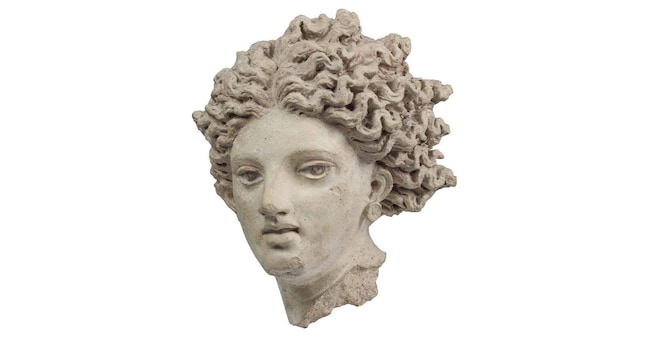
This is not a comparison between two civilisations of protohistoric Italia, but a documented search for affinities in the relationship with the sacredness of the waters, the junction of contact with the divine up to the request for protection along the perilous routes of the sea. The exhibition is a journey, from the 1st millennium B.C. to the first centuries A.D., from the Tyrrhenian to the Adriatic, between places of worship, which starts from the sacred landing places of the Tyrrhenian coast, Vulci and Pyrgi, and continues into inland Etruria between the thermal waters of Chiusi, Chianciano and San Casciano, to reach Marzabotto, Spina and Adria in Po Valley Etruria and into the territory of the Veneti, where the health-giving waters of Montegrotto and Lagole di Calalzo, the river goddess of Este are to be found, to end at Altino, a sacred Venetian landing place on the north Adriatic coast. It is a long journey that is accessible to a wide audience, the better to immerse oneself in the Doge's Apartment, which, swathed in the blue-green of the wind-swept Lagoon, becomes an understanding of the waters, also thanks to the more than 700 artefacts from dozens of museums around the country. With 57 previously unseen objects and some not-to-be-missed loans, such as, in the first room, the terracotta head of Thesan/Leucothea (350 BC), the "white goddess", the aurora found in the filling of the west well in front of Temple A of Pyrgi, the port of Caere, and belonging to a high relief of the pediment. The face almost blows in the wind and brings us back to Homer's verses (The Odyssey, V, vv. 336-8): 'Leucothea took pity on Odysseus, who wandered suffering on the sea / and, like a seagull, emerged from the sea, / climbed onto the raft' and saved Odysseus until he reached the land of the Phaeacians. Here, deities were sought for salvation and, in addition to cults, some localities, such as Pyrgi, also favoured cultural exchange between peoples who had landed on Italic soil from the shores of the entire Mediterranean. In the showcases, dozens of simpula, the ladles used to draw water, miniature vases, anatomical details, and oil lamps for nocturnal rites.
San Casciano, which has unveiled the Bronzes, true stars of contemporary archaeology, is here recounted with freshly excavated objects, which emerged from the sanctuary basin and were restored by the Muve Foundation just for the exhibition, returning, among other objects, a female bronze offerer with the inscription Fleres, "at the spring". Continuing northwards, we arrive at Marzabotto, whose fontile sanctuary can be dated to the 6th century B.C. and was decorated with the image of Daedalus, who also returns with Icarus in a gilded bulla from the sacred site of Adria, an Etruscan and multicultural city that arose in the ancient Po delta, on the border between the Etruscans of the Po Valley and the ancient Veneti. The mingling of the two peoples also returns in four gold laminettes, similar to bronze examples from the Veneto area with female figures and warriors.
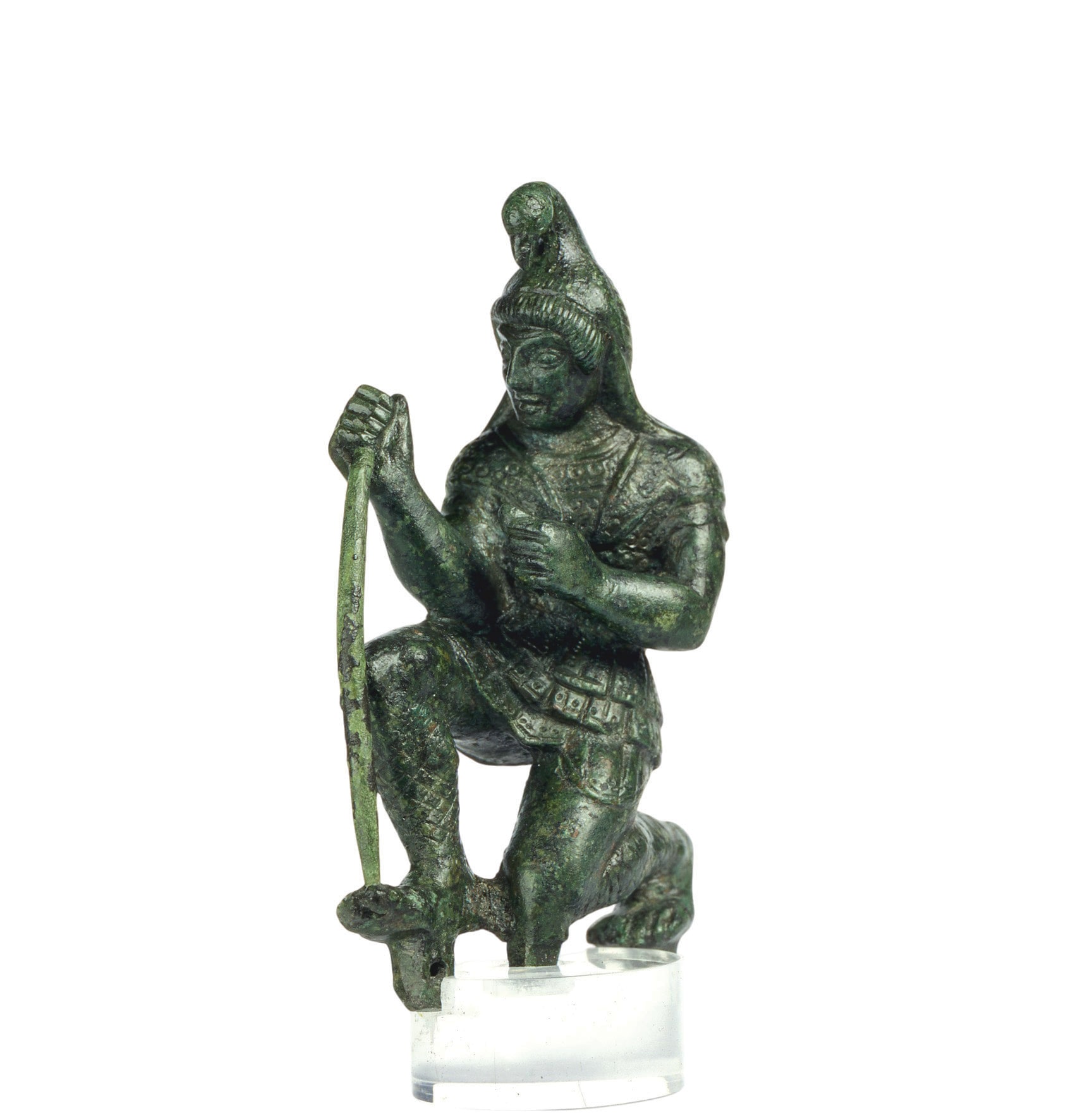
No city in Veneto was more sacred than Este: in the woods - as Strabo records -, by the rivers and sacred springs: people prayed and learned to write, as the alphabetical tablets show, to carve dedications, and in Roman times, Reitia, 'the goddess of the river', was succeeded by Minerva. But the image of a Lady of Nature in the disc from Montebelluna is believed to be the main deity of the Veneti. They seek contact with the divine mostly through male figures and with horse sacrifices, an iconic animal symbolised in the offered statuettes and on the foils. At Lagole di Calalzo, a border sanctuary, the sulphurous waters healed wounds and also brought forth weapons offered to Trumusiati-, a male deity later replaced by Apollo. The journey ends in Altino, a port for foreign sailors, Etruscans, Greeks and Magna Graecia. Under the tutelage of Altino/Altnus (who would later become Jupiter, reaffirming the continuity between the pre-Roman and Roman ages), they landed for trade, thanked the god and sacrificed horses and, among the engravings, the image of the ferocious and then pacified wolf returns, a reminder of the integration that this pliant society was able to achieve under the gaze of the divinity. How else to explain the bronze of Paris found at Altino? The hero is stringing his bow, protected by a helmet in the shape of a bird of prey, and his presence as a votive gift alludes to the Trojan genealogy of which the Veneti loved to glory, identifying themselves with the descendants of Antenor. To demonstrate, once again, as Pindar wrote (Olimpica, I, vv. 1-2) that 'the best thing is water'. It brings civilisation and mixes peoples to make them richer and more open.
THE EXHIBITION AND EVENTS


