Art Dubai 2026, the fair that turns the crisis into a model
Amid geopolitical tensions, cancellations and rising costs, the Emirati event scales back with an unprecedented risk-sharing scheme

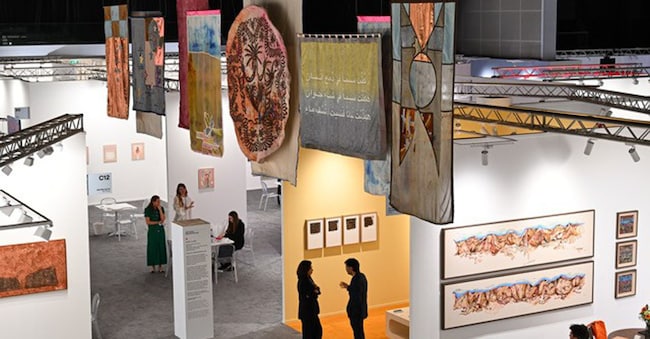
"Of necessity virtue" could be the unspoken motto of Art Dubai 2026. While many international fairs continue to chase the paradigm of permanent growth - more galleries, more stands, more events - the Emirati event inaugurates its 20th edition in a reduced format, in the midst of a regional context marked by geopolitical tensions, logistical difficulties and economic uncertainty.
Initially scheduled for mid-April, the fair was postponed from 15 to 17 May in an attempt to wait for a temporary easing of tensions in the area, but the downsizing proved inevitable. More than 75 international galleries cancelled their participation, held back by unstable transport and soaring cargo insurance costs. From around 120 exhibitors at previous editions, the number of galleries present dropped to around 50, a contraction of almost 60%. Yet it is precisely this apparent fragility that makes Art Dubai one of the most interesting cases in the global art system. With the drastic drop in the number of major Western and Asian collectors - blocked by the suspension of numerous air connections - the director Dunja Gottweis has redefined the event as a cultural gathering: a cultural gathering based more on institutional cooperation than on the strictly commercial dimension of the traditional fair model.
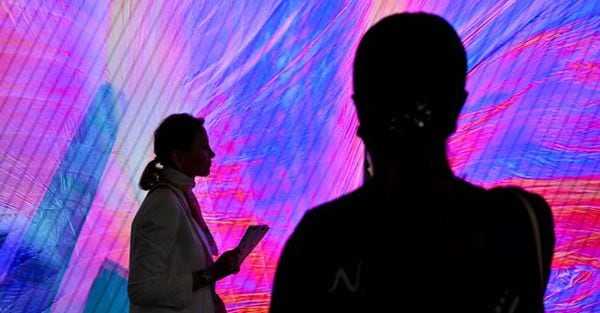
Approximately two thirds of the galleries present came from the Emirates or the Gulf area - from Leila Heller Gallery to Lawrie Shabibi to The Third Line - turning the fair into a platform of cultural preservation for the Global South rather than a hub for the Western market.
Five Italian galleries were present: Franco Noero (Turin), with works by Jason Dodge, Mario García Torres, Rami Farook and Olga Tamaribuchi; Galleria Continua (San Gimignano), with works by Michelangelo Pistoletto, Pascale Marthine Tayou and Alicja Kwade; Pinksummer (Genoa), which presented the video 'Poetic Cosmos of the Breath' (2013) by Tomás Saraceno; P420 (Bologna), with works byRiccardo Baruzzi andIrma Blank and, finally, Plan X (Milan/Capri), with the solo show of Yatreda, an Ethiopian family-run collective led by creative director Kiya Tadele, which creates digital works in the Titzite style, characterised by a strong sense of nostalgia and longing for the past.
In parallel, many institutional exhibitions directly reflected the surrounding geopolitical climate. The Dubai Collection's exhibition 'Made Forward' - which brought together works from 20 private collections and artists from West Asia, North Africa and South Asia - deals with themes of loss, belonging and uprooting, signalling how conflict has now also entered the curatorial language of cultural institutions in the Gulf.
Sharing the risk
The crisis has also forced a radical rethink in economic terms. In order to support the galleries, the organisers have reduced the fixed costs of the stands to zero - normally ranging between $15,000 and $60,000 - by introducing a risk-sharing system based exclusively on percentage commissions on sales concluded during the fair, up to the actual cost of the stand. This is an almost unprecedented model in the international art fair system, which transfers part of the economic risk from the exhibitors to the organisation itself and which could become a precedent carefully observed by the entire sector. "We received a lot of support, but also the wish that we would move forward with something, to continue to be a platform," says Dunja Gottweis, director of Art Dubai.
The galleries that decided to participate have, therefore, also calibrated the works presented on the basis of the economic context and the type of collectors present at the fair. "At a time like this, you go for something that is meaningful, but also logistically possible: you have to consider both aspects," notes Gottweis.
The business side of Art Dubai 2026
According to the organisers, there was no shortage of sales, albeit at relatively low price levels. Among the results recorded during the preview, Carbon 12 sold two works by Emirati artist Sara Almahairi for $12,000 each, one of which was destined for a corporate collection. Leila Heller placed a work by Maryam Lamei for $35,000 to a Dubai-based collector, while The Third Line sold several works, including a work by Farah Al Qassimi to a Lebanese collector and a work by Jordan Nasser for $75,000 to a corporate collection.
Zawyeh Gallery (Ramallah), on the other hand, sold several works by Palestinian artistNabil Anani - considered to be one of the founders of the Palestinian contemporary art movement - for up to $360,000, including a sale to a major collector in the Emirates.
Franco Noero (Turin) also concluded several sales, including Hassan Sharif's 'Rug, Cotton and Glue' (2013) for USD 45,000 to a corporate collection, as well as works by Rami Farook and Anna Boghiguian to private collectors.