Art is as necessary as the air you breathe. Word of Fady Jameel
The artistic process asks questions, investigates the complexity of our time, ignites debate. That is why today's world needs it more than ever.
by Patrizia Sandretto Re Rebaudengo
5' min read
5' min read
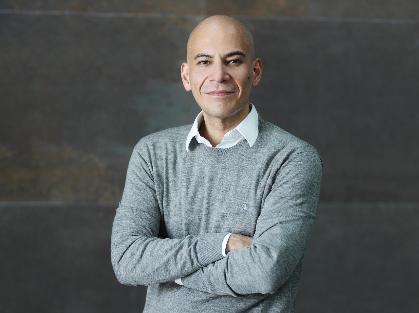
Fady Jameel is deputy president and vice chairman of the family business Abdul Latif Jameel and founder and chairman of Art Jameel. He was educated in Saudi Arabia, the UK and Japan and has always frequented the art world and museums, where he was fortunate to meet many mentors among artists and curators. He is a member of the Council for the Arts at MIT - Massachusetts Institute of Technology - and sits on several international museum boards and committees. In this interview, he talks to us about his journey as a collector and about Art Jameel, the Foundation he established in 2003 with offices in Jeddah (Hayy Jameel) and Dubai (Jameel Arts Centre), in continuation of his family's philanthropic tradition, to support the arts and creative communities and provide learning opportunities for people of all ages and backgrounds.
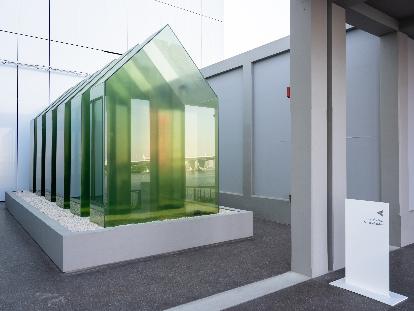
WHAT KIND OF COLLECTOR ARE YOU AND WHAT DO YOU LIKE TO COLLECT? I have a small personal collection, which I keep at home, and I chair the acquisitions committee of Art Jameel. My collection follows the inclinations I have developed during my travels. I am very interested in the Mono-ha movement, a historical Japanese avant-garde group of the 1960s and 1970s: its radical thinking, minimalist aesthetics and interest in materials attract me. My family has always supported Saudi and Arabian artists; we are witnessing remarkable changes in Saudi Arabia for arts and culture, which now play an increasingly central role in the life of the country. Decisions on the institutional collection are made together with the Art Jameel curatorial team. We focused initially on contemporary art from the Middle East, then on art practices from South Asia. Today the collection has an international scope and is structured by themes rather than geography.
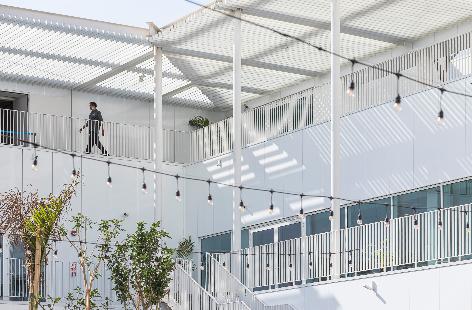
W WHEN AND HOW DID YOU START COLLECTING AND HOW DID YOUR PASSION FOR ART BEGIN? I come from a family of collectors and philanthropists, committed for almost 80 years to the preservation of the arts, education, health, climate... It's in our blood. For us, art is a powerful force within the community, a necessary resource that should be accessible to all. Art asks questions, investigates the complexities of our time, can ignite debate and help us to build active and participative societies, to connect with one another. In today's world, we need it more than ever.
HOW CAN WE START COLLECTING? COULD YOU GIVE US ANY ADVICE? I would recommend starting with galleries. In Dubai, for example, there is a fantastic group of galleries, such as The Third Line, Grey Noise, Green Art Gallery, Carbon 12, Lawrie Shabibi, to name a few, all based on Alserkal Avenue; in Jeddah, I would point out Hafez and Athr. Sometimes large commercial galleries in London, Paris or New York can be intimidating, especially at first; in the Middle East, galleries tend to be very friendly and happy to help and guide newcomers.
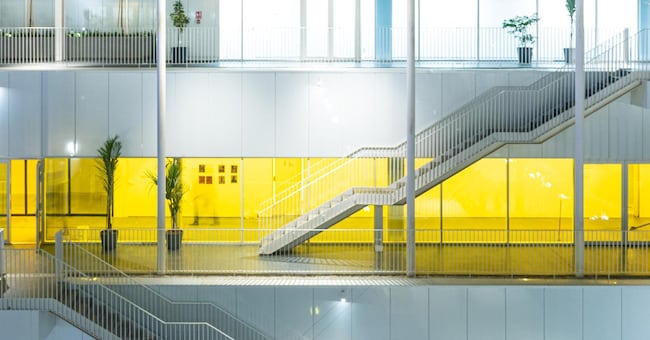
How do you choose your works? DO YOU Rely ON A GALLERIST OR A CURATOR? For my personal collection, I follow my instincts. For Art Jameel, we have an in-house team that takes a very precise and focused approach to acquisitions: today the collection has about 200 artists (I am about half of them), artists and collectives, and of many we have more than one work. We tend to collect by themes, some of which are related to the Jameel Arts Centre and Hayy Jameel exhibitions, such as cultural encounter and exchange, material heritage, biodiversity. We develop relationships with artists through exhibitions and production of works, which sometimes become part of the collection. We also follow a strand of 'radical collecting', which deliberately challenges traditional ideas of ownership and curation. For instance, every two years we ask an artist to create a garden at the Jameel Arts Centre in Dubai. Artists of the calibre of Shaikha Al Mazrou, Asunción Molinos Gordo, Zheng Bo and Lakshmi Nivas have taken the common concept of a garden to a whole new level; we acquire these gardens, or rather, the idea, the concept behind each one, and reflect on what it means for a museum to 'own' a garden concept, to possess and propagate nature.