
Art on the rise: the soft power of culture in Almaty
Two new cultural institutions born of private capital mark the city's transformation into an international art hub. Between multi-sector diplomacy and strategic investments, the country bets on art

4' min read
4' min read
Kazakhstan is the richest country in Central Asia. Its rapid economic growth occurred after independence in 1991, following the collapse of the Soviet Union, with large investments in the oil and energy sector and, as a result, exports of oil, gas, coal, chromium, uranium, zinc and lead boosted its GDP to around USD 260 billion by the end of 2023. In recent years, Kazakhstan has established itself as a key player in regional geopolitics through a 'multi-sectoral' diplomatic strategy that aims to maintain friendly relations and cooperation with a wide variety of international actors. Thus, the country has become a key player in regional geopolitics.
In this context, art also becomes a vector for diplomatic strategy. Thus, many companies have recently intensified their investments in the arts and culture sector to diversify their dependence on the oil sector. Supporting this vision of the country to promote the artistic and cultural scene are two wealthy entrepreneurs who have decided to direct part of their resources to culture and art through the creation of two institutions in Almaty, the cultural and economic heart of Kazakhstan, to be inaugurated next September. A private museum the Almaty Museum of Arts of the entrepreneur Nurlan Smagulov and the Tselinny Centre of Contemporary Culture headed by Kairat Boranbayev..
Almaty Museum of Arts
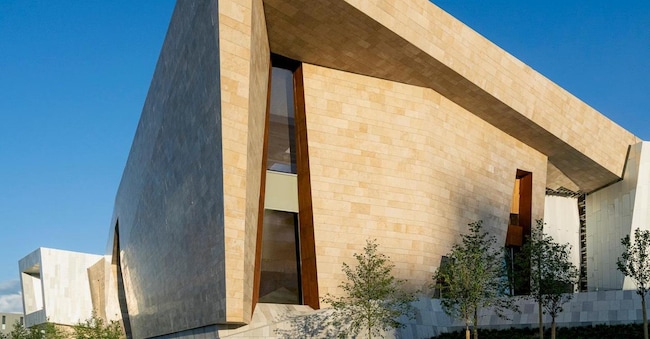
It will be Central Asia's first private museum of modern and contemporary art with a collection of over 700 works by Kazakh and Central Asian artists housed in a new 10,600 square metre building designed by British architects Chapman Taylor. Two cores of the collection alongside modern Kazakh artists such as Aisha Galymbayeva, Salikhitdin Aitbayev, Maktum Qisamedin and Shaimardan Sariyev are works by pioneering contemporary artists such as Rustam Khalfin, Sergei Maslov, Yerbossyn Meldibekov, Saule Suleimenova, Said Atabekov, Saodat Ismailova from Uzbekistan and Jazgul Madazimova from Kyrgyzstan. There is no shortage of international dialogue within the collection fostered by the works of artists such as Khadim Ali, Xu Zhen, Jadé Fadojutimi, as well as Fernand Leger, present with a ceramic mural, Richard Serra and a multi-channel audiovisual installation by video artist Bill Viola. Three currently commissioned works will welcome visitors to Alicja Kwade, Yinka Shonibare andJaume Plensa. The collection belongs to Nurlan Smagulov, an entrepreneur who heads the Astana Group, active in the automotive business and later also in shopping centres with MEGA Park in Almaty. In a statement Smagulov said that "art has the power to transform lives and, once, it transformed mine. The Museum is not just a museum: it is a bridge connecting the vibrant and diverse art of Central Asia with the global cultural scene. Our mission is to create an inspiring space where both the people of Kazakhstan and international visitors can experience contemporary art that resonates with universal human experiences, while showcasing the distinctive cultural voices of our region." The museum's artistic director is Meruyert Kaliyeva, an Almaty native with experience in Christie's post-war department, who founded Aspan Gallery in Almaty in 2015, specialising in contemporary Central Asian art. The museum's chief curator will beInga Lāce, a Central and Eastern Europe fellow at the Museum of Modern Art in New York until 2023, her other projects include the Latvian pavilion at the Venice Biennale in 2019, the Latvian contemporary art festival Survival Kit between 2017 and 2023, and at the next Venice Biennale she will curate the Latvian Pavilion together with Adomas Narkevičius. The first exhibition will be a solo show of Kazakh artist Almagul Menlibayeva, entitled 'I Understand Everything' curated by Gridthiya Gaweewong. It will be the first retrospective of the Almaty-born artist, and will showcase her work from the 1980s to the present day that addresses the themes of the role of women, identity politics, ecology and neo-colonialism. Simultaneously, the exhibition 'Qonaqtar' - meaning 'guests' in Kazakh - curated by chief curator Inga Lāce draws on the museum's collection to explore the traditions and tensions of hospitality and migration in Central Asia by bringing together modernist icons and contemporary voices.
Tselinny Centre of Contemporary Culture
Tselinny Center of Contemporary Culture is headed by Kairat Boranbayev, who has built his fortune through investments in oil and gas, real estate, pharmaceutical retail, as well as being a key figure in Kazakhstan's sports sector as president of FC Kairat, Almaty's most successful football team. With a design by British architect Asif Khan, the Kazakh entrepreneur has reclaimed an icon of Soviet modernism, a cinema built in the 1960s that has undergone several transformations over the years, to create the Tselinny Center of Contemporary Culture. The centre has been operating on a regular schedule since 2018, but with the opening of the new building it occupies a purpose-built space. The inaugural programme begins with a series of events entitled 'Barsakelmes', a former island in the Aral Sea, now an area in the Aral region of Kazakhstan, whose approach is based on the nomadic and performative character of Kazakh culture. This first phase focuses on performances, concerts, events and initiatives and has been realised in collaboration with local musicians, scholars, architects and artists including Samrattama, Gulnur Mukazhanova and Dariya Temirkhan. For its founder, Kairat Boranbayev, the Tselinny is an experimental institution whose flexibility allows it to explore diverse and multidisciplinary directions to offer programmes for both the general public and professional audiences, and its aim is to make a significant contribution to the development of contemporary culture in Kazakhstan and Central Asia as well as to make Almaty attractive to locals and tourists "by stimulating an influx of capital and exceptional talent".

