
A journey through the magic of Dae, a university at the heart of European game design
In Flanders, one of the world’s leading universities for gaming and film: it is a state university (€1,181 per year) and has no entrance exams. Here’s how it works

Key points
It is dominated by triangular shapes – a tribute to the 3D world – by the enormous staircase – halfway between Giovanni Battista Piranesi and Harry Potter – and by the raw concrete walls that are very ‘FPS’ (first-person shooter). Stepping onto the black, boxy campus of “The Level” at Howest DAE (Digital Arts Entertainment) truly represents a unique journey into the heart of gaming. For three reasons.
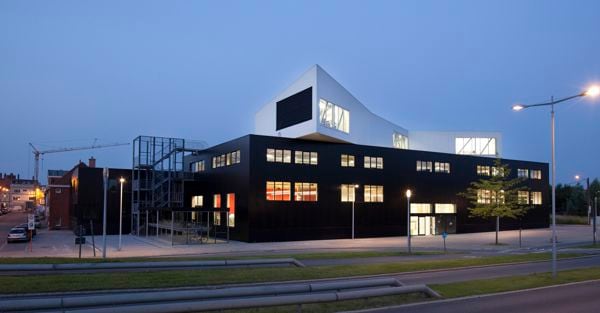
The Level, la sede del DAE: progettata dallo studio di architettura belga AVDK, è stata inaugurata nel 2013. Il design si ispira alla geometria 3D, ai videogiochi sparatutto in prima persona e alle scale monumentali di Hogwarts.
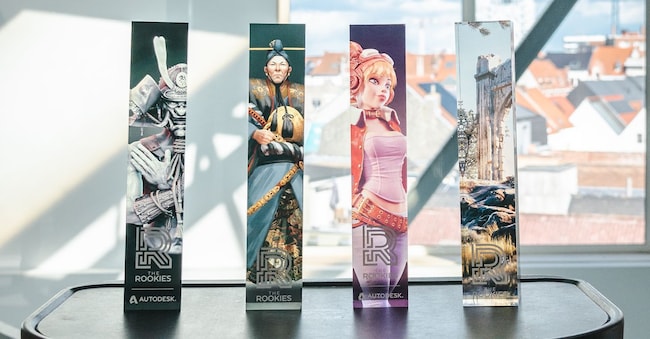
Firstly: it is one of the world’s best universities for Game Design. According to the legendary The Rookies rankings, it was the world’s best in 2017, 2018 and 2021 (and remains firmly in the global top 10). In 2024, it came first for Production Excellence in Mobile Games and second as a Game Design & Dev School. This year, it is sixth in the world for Game Design and Development.
Secondly: it is a public university with incredibly low tuition fees. Just €1,181.40 a year for EU citizens.
And it’s not in London or Paris, but in a delightful Belgian town in Flanders called Kortrijk, close to the French border (Lille and Roubaix are just a stone’s throw away). Finding accommodation, therefore, is easy and affordable.
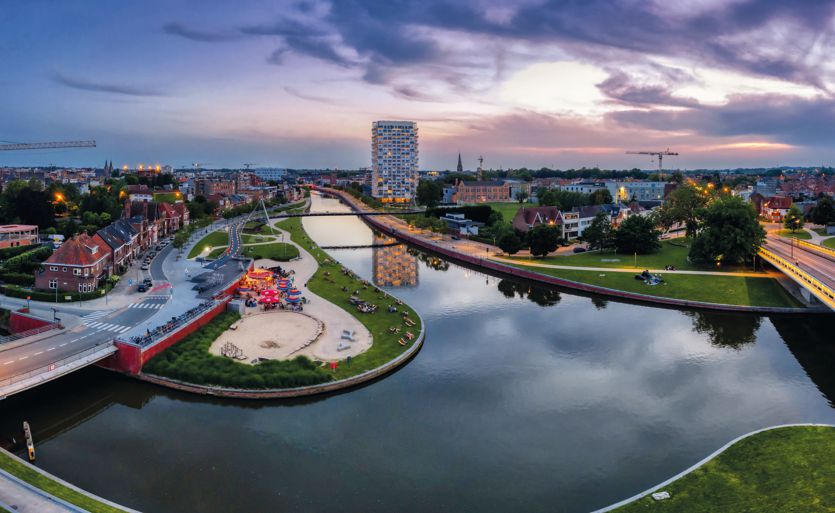
Una veduta di Kortrijk, la cittadina belga che ospita il DAE Howest: è vicina al confine francese (Lille e Roubaix sono a due passi).
Third: no entrance exams . No TOLC, no tests apart from, of course, a B2-level English certificate . But that doesn’t mean it’s a walk in the park. Many drop out after the first semester: the course is tough and technical, with plenty of maths and physics, as well as endless creativity.
Working on blockbusters (films and games)
Howest DAE is a hidden gem for aspiring game and film designers who believe that the sector consists solely of expensive private schools such as the Paris-based New3dge in Paris or the London branch of the legendary Californian Gnomon.
To give you an idea, former DAE students have worked on cinema and gaming blockbusters such as Avengers: Endgame, Avatar: The Way of Water, Avatar: Frontiers of Pandora, Star Wars: The Rise of Skywalker, Star Wars: The Mandalorian, Aladdin, 007 No Time to Die, Ghostbusters: Legacy, Captain Marvel, Game of Thrones, Spider-Man: A New Universe, Assassin’s Creed, Moana 2, Gladiator II, Thor: Love and Thunder, Mission: Impossible – Dead Reckoning, The Matrix Resurrections, Guardians of the Galaxy, Spider-Man: No Way Home.
And on the video games front: Assassin’s Creed Valhalla, Assassin’s Creed Mirage, Grand Theft Auto V, Fortnite, Mafia, Sackboy: A Great Adventure, Divinity: Original Sin II, Arcane: League of Legends, Overwatch, Riders Republic, Baldur’s Gate, Horizon Forbidden West, Hogwarts Legacy, Total War: Warhammer, Cyberpunk 2077, Forza Horizon 5, World of Tanks, Battlefield, Prince of Persia. As many as 65 DAE alumni worked on Baldur’s Gate 3.
But let’s take a step back to understand when and how this gem of European game design came about.
Twenty years of history
DAE was founded twenty years ago, in September 2006, to train “technical artists” and developers at the cutting edge – roles that were in high demand at the time and rapidly evolving within the video games, film and 3D animation sectors.
At the time, there were 100 students, 10 lecturers and just one course. Today, the DAE has 1,700 students (500 new students every year), of whom 50 per cent are international students from all over the world, 80 lecturers and 15 researchers in the school’s R&D division.
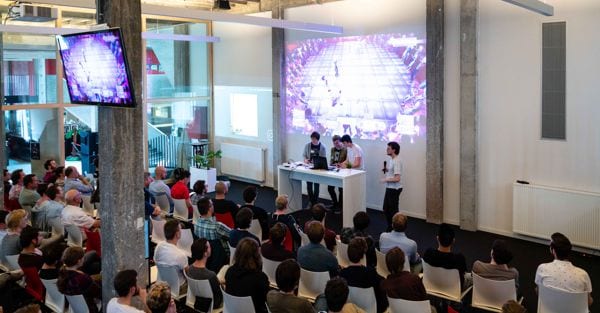
Fondata vent’anni fa, oggi il DAE ha ha 1700 studenti (500 nuovi ogni anno) di cui il 50% internazionali da tutto il mondo, 80 docenti e 15 ricercatori nella divisione R&D della scuola.
Technically, it is a European bachelor’s degree comprising 18 weeks of work placement. There are six specialisations (majors), to be chosen right at the start of the course: Visual Effects, 3D Animation Production, Game Graphics Production, Game Development, Independent Game Production and (the only one of its kind in Europe) Game Sound Integration.
Co-ordinated by experienced lecturers who, in addition to their professional and teaching experience, have a pure and total passion for the subjects they teach.
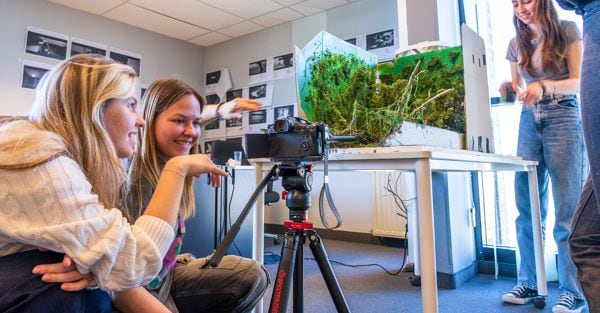
DAE è stata premiata dalla mitica classifica The Rookies come migliore scuola di game design al mondo nel 2017, 2018 e 2021. Costa 1.181,40 euro l’anno e non prevede esami di ammissione, a parte la certificazione di inglese B2.
“There is great interest amongst Italian students in Belgium,” explains Lonnie Holders, founder of the agency Going Dutch – Studying in Belgium, which represents Howest in Italia – a less well-trodden path compared to the Netherlands but one that is growing in popularity, partly due to the excellent value for money compared to other destinations (both in terms of tuition fees and the cost of rent)’.
At the DAE, quality is on a par with that of a private university, Holders emphasises, “an excellent opportunity for those who want to try their hand at working for the big names in gaming without having to pay exorbitant tuition fees”.
All specialisations, one by one
Let’s now take a closer look at the six specialisations.
Major Game Graphics Production
One of the long-established specialisations, with around 500 students and around twenty lecturers. It is a paradise for Technical Artists: it trains 3D digital artists capable of understanding the technical limitations of game engines to create assets perfectly optimised for real-time 3D rendering.
“A programme that requires a good grasp of mathematics,” explains Jonathan Absil, a former member of the DAE’s founding team and still co-ordinator of the degree programme today.
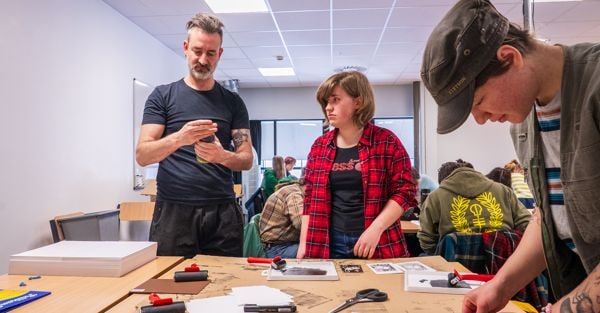
Jonathan Absil, fondatore della specializzazione in Game Graphics Production dal 2006 e ancora oggi coordinatore del major, al lavoro con i suoi studenti.
In the second year, the course is divided into two sub-specialisations: “Style”, focusing on advanced character design, artistic anatomy and the creation of stylised worlds; and “Tech”, focusing on the automation of 3D production processes and pipeline scripting.
The course covers the management of polygon budgets, the correct topology for animation, and the creation of physically consistent materials.
‘Among the subjects, for example, are “procedural 3D” (generating thousands of objects using the 3D software Houdini), ‘digital sculpting’ (where you ‘sculpt’ using a tablet) and ‘environment’ (creating environments using Houdini).’
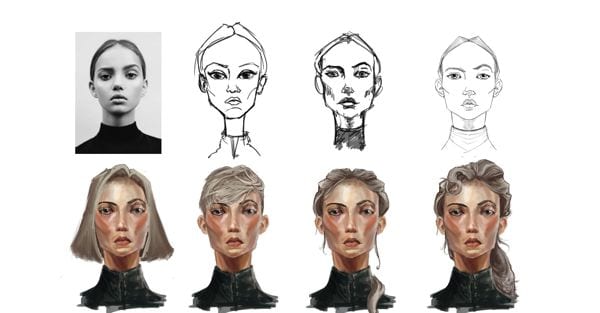
L’elaborazione grafica del volto di una studentessa (dai passati portfolio del DAE). Game Graphics Production prevede due sub-specializzazioni: «Style» e «Tech».
In the ‘style’ graphic design specialism , artists draw in the Renaissance style , with great attention to anatomy but also to stylisation: they call it ‘digital craft’ (digital craft).
In the fourth semester there is a game project, then in the third year a major project carried out in collaboration with students from other specialisms. Finally, there is the graduation project on a specific topic (for example, how to ‘age’ objects, or how to change the seasons), as well as masterclasses and real-world projects with companies not limited to the video games industry (police, hospitals, schools, fire services).
What are the potential applications? As well as gaming itself, there are also design, architecture, engineering, the medical sector, safety training and digital museums.
The international players come mainly from Bulgaria, Hungary, the Baltic States, the Netherlands, Germany and the United States. There are few French players, despite the geographical proximity.
“Italians are strong, very talented, open-minded and friendly,” explains Absil. “I particularly remember some very gifted young women with a solid grounding in the classical approach to art.”
Major 3D Animation
Another historical specialisation, with around 350 students, many of whom are international (60–65 per cent) and a predominance of female students. It is the least technical (so to speak), with a relatively limited emphasis on mathematics and physics. It focuses on pre-production pipelines: the study of movement, digital acting and kinematics for films, animated series and video games.
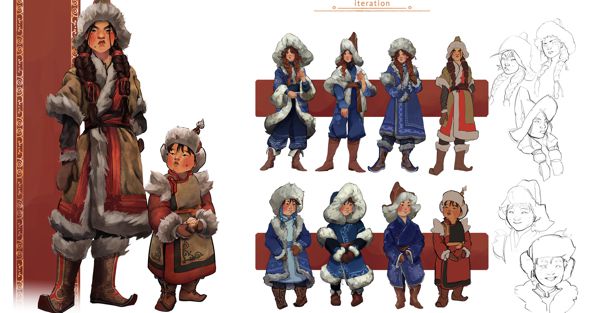
Uno studio di Mari Gallet per Giant of the Steppe, corto realizzato in 12 settimane, che ha vinto il premio Rookie of the year 2023
The course covers muscle anatomy and facial expression. A huge part of the programme is devoted to “advanced rigging”, that is, the creation of the “logical skeleton” and the mathematical controls that enable the animator to move the model.
“This programme does not focus exclusively on the animation of cartoon characters,” explains the course’s long-standing coordinator, Dirk Lambrecht, one of the founders of DAE in 2006. “We also work for the film industry and are active in a variety of sectors, including gaming, advertising, theme parks, architecture, healthcare and scientific research.”
‘On average, our final-year students work on around ten group projects. These are mostly concepts devised by the students themselves, but also external projects, such as collaborations with research centres linked to university teaching hospitals, visualisations of urban architecture, museum projects and even the pilot for an animated series for a children’s book publisher”, continues Lambrecht.
‘And we have our own stars: in 2023, Mari Gallet won the ‘Rookie of the Year’ award as Best Concept Artist, showcasing her artistic work in the 12-week project Giant of the Steppe».
Major Independent Game Production
The most ‘horizontal’ and entrepreneurial degree programme : it is designed to train all-rounders for the video game industry but, above all, future founders of indie game design studios.
Founded in 2017, it combines technical knowledge with business skills. There are around 350 students, 30 per cent of whom are international, with 80 per cent being male.

Alexander Delagrange, coordinatore del major Independent Game Production, la più «orizzontale» delle specializzazioni: unisce le nozioni tecniche a quelle di business per creare da zero un proprio videogame da mettere sul mercato su piattaforme come Steam.
It is headed by Alexander Delagrange, who previously worked as a developer for Guerrilla Games and Airborne Studios.
“Our curriculum is well-rounded: here, you’ll study game design, coding, art, management, communication, entrepreneurship and teamwork.” Game design is also covered – that is, how to make a game fun, balanced and accessible, with the aim of creating fully playable prototypes, from conception right through to monetisation and commercial distribution on platforms such as Steam.
“Historical studios are struggling due to the costs of large-scale productions and the excessive length of the games – explains Delagrange – with young people preferring to tinker with free titles even if they may be less polished or refined. 80 per cent of successful video games on today’s platforms come from micro-studios comprising fewer than 10 people, sometimes just one.”
It is the democratisation of gaming, the breaking down of barriers (thanks in part to AI). “Take Ballatro: it has sold over 3.5 million copies, overtaking mobile market giants such as Minecraft, and on mobile it has generated around $4.4 million in a short space of time – Delagrange points out. It was developed by just one person: a Canadian programmer working under the pseudonym LocalThunk.”
The flip side of a gaming world with no barriers to entry is the saturation of the indie sector: ‘There are 100 new releases every weekend on the platforms; on Steam alone, there are 50–60 new titles a day – sighs Delagrange – and the ‘war for attention’ amongst gamers is becoming increasingly fierce’.
Major Game Development
The most technically challenging: this area is dominated by applied linear algebra, physics for graphics engines, algorithms and data structures.
The major in Game Development represents the purely engineering and logical pillar of the DAE, as it focuses on writing the code that governs the software.
Here, we don’t ‘create worlds’, but build complex technical architecture from scratch.
“In the first year, we study trigonometry, vectors, matrices, algebra, transformations and diagrams,” explains the coordinator Koen Samyn, “but we also focus on soft skills.”
The main programming language is C++, followed by C#. Among other things, you will learn how to extend and modify the architecture of Unreal and Unity, and how to develop editing tools for the team’s graphic designers.
There are around 200 students. Career prospects? “Game engine programming, graphics programming, tool development, game AI programming. But many find work as pure computer programmers”.
Major in Visual Effects (VFX)
It is one of the specialisations that is most recent: it has only been in existence for three years, with just 30 students who get on very well with one another. It boasts excellent employment rates.
It teaches all the magic behind blockbuster films, specialising in the seamless integration of digital elements into live-action footage or the simulation of complex natural phenomena.
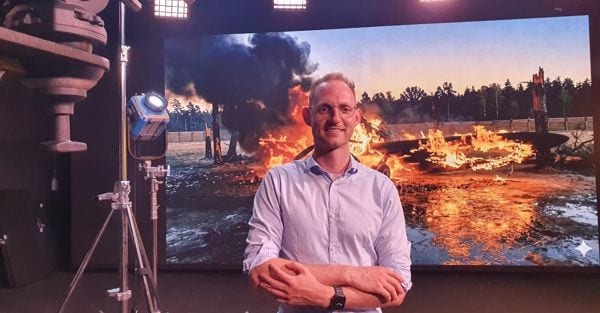
Bert Steyaert, coordinatore del major in Visual Effects, all’interno del Virtual Production Studio della DAE.
The coordinator, Bert Steyaert, formerly a VFX supervisor in Antwerp, proudly shows off the Wall of Fame featuring the blockbusters his students have worked on: these include, amongst others, Ghostbusters, Thor, The Matrix, The Avengers and Mission: Impossible. And it really does seem like a mission impossible to create from scratch a specialisation capable of challenging the expensive private schools such as ARTFX in Lille and Gnomon in London, but the results speak for themselves.
“There is huge demand in the sector,” explains Steyaert. “Some students are hired even before they finish. The best end up at the industry’s giants: Industrial Light and Magic (founded in 1975 by George Lucas), Ghost VFX (Copenhagen), Framestore (London) and the legendary DNEG in London, winner of eight Oscars for best visual effects.”
Mathematics and physics are covered, but the programme focuses in depth on cutting-edge technologies, such as Virtual Production and the appropriate use of machine learning (AI) tools within the workflow. The course covers lighting management (lighting), colour theory and matchmoving (tracking the real camera in 3D space).
Students learn to simulate realistic building collapses, fluid dynamics, smoke and fire, clothing, muscles and hair.
Bert proudly shows us the Virtual Production Studio, the DAE’s flagship facility, which cost one million euros: a small film set with spotlights, huge fans to simulate wind, a 4-by-10-metre LED screen, Unreal Engine and Python/VEX scripting to automate visual effects within the production pipeline.
Major Game Sound Integration
Last but not least, a gem that is unique in Europe: founded in 2019 and attended by just 40–50 students (with only 5–10 graduates per year).
It is coordinated by the dynamic Alexander Deweppe, a musicologist with a PhD, who was appointed by the DAE to develop a completely new curriculum, experimental and cutting-edge in which computer engineering and acoustic art come together to train well-rounded sound designers.
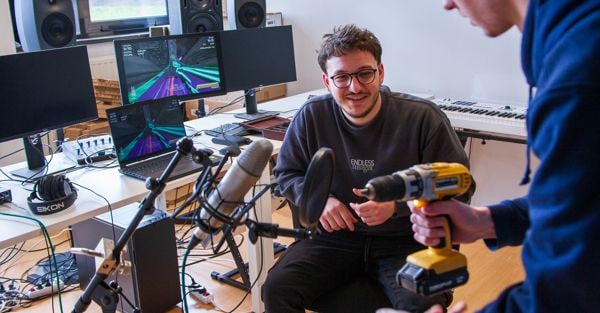
Studenti della specializzazione in Game Sound Integration al lavoro sulla realizzazione di effetti sonori.
“It’s not for musicians or composers, but for ‘sound programmers’ who implement sounds in video games (we’re talking about sound effects, voices, ambient sounds or music),’ explains Deweppe, ‘which are then integrated into engines such as Unreal (in technical terms, this is known as “database building for game engines”)’.
Students analyse acoustic physics and the propagation of sound in virtual enclosed or open spaces. The programme includes courses in Foley (field recording and manipulation of real-world sounds) and programming basics for managing audio streams. Students learn about the logical architecture of ambient sounds, branching dialogue systems and adaptive music (which changes tempo when the player enters combat).
It is essential to be able to create sounds of various kinds: ‘spells’, ‘vehicles’, ‘creatures’ and ‘weapons’ being the main ones. All created from scratch, as in the short film Skycrawwlr.
“A solid grounding in fundamentals of C++ is essential, but so too are 3D, soft skills, maths, physics and sound design,” continues Deweppe, “and there’s also specialisation in audio editing and synthesis.”
Whilst the actual music is composed by students from the conservatoires in Brussels, Antwerp and Ghent.
Events, career days and conferences
The DAE organises and hosts events and conferences of international significance, underlining its close ties with the video games and VFX industries.
Its flagship event is the Unwrap Festival, organised in partnership with the Flanders Game Hub: now one of the largest festivals for digital innovation, gaming and entertainment in Belgium. It features a packed programme of technical talks, panel discussions and hands-on workshops.
As well as the festival, DAE regularly hosts guest lectures featuring leading figures from the worlds of film production and 3D art (often former students of the school who now work for companies such as Pixar or Epic Games)
Then there is the Career Fair, featuring major international studios (Ubisoft, Guerrilla Games, Larian Studios) which send recruiters to DAE to review the students’ portfolios.
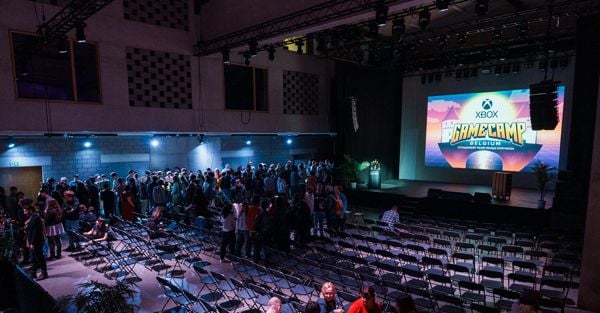
L’Xbox Game Camp Belgium è stato un importante evento di formazione e sviluppo di videogiochi: Microsoft ha scelto il campus della Howest DAE a Kortrijk per ospitarlo.
Study Nights: Strength in Unity
These are supervised evening study sessions held every Thursday: they are designed to help students cope with the heavy workload of the DAE.
The key element is mutual support, with second- and third-year students (who make up the Study Night Team) offering assistance, advice and project reviews to their first-year peers.
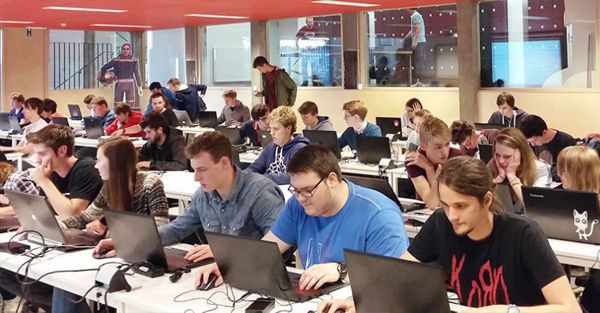
Durante le Study Nights gli studenti del secondo e terzo anno (che formano lo Study Night Team) offrono assistenza, consigli e revisioni dei progetti ai compagni del primo anno.
There’s no shortage of Gaming Nights and eSports events, Nerf gun battles in the campus corridors, and even a food festival where students set up food stalls to share traditional dishes from their home countries.
At Study Nights, former students or professionals working in leading European development studios are often invited to give talks and presentations.
Italian students: Federico (Visual Effects)
Federico Cocconcelli is 27 years old, comes from Como and, when he set off for Kortrijk, he had a bachelor’s degree from the Politecnico di Milano in industrial product design. He is currently studying for a major in Visual Effects, which he discovered almost by chance on the internet.
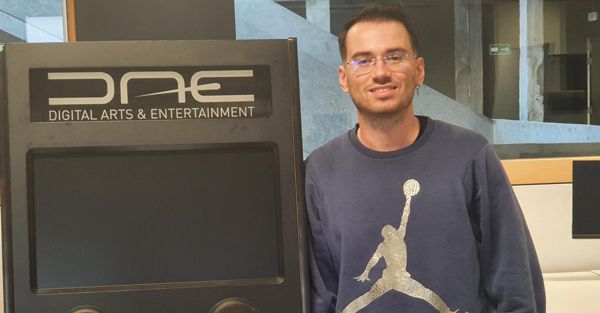
Federico Cocconcelli, 27 anni, studente alla DAE nel major di Visual Effects.
What’s your view on the DAE? “I enjoyed it: they give you the basics for everything, then you have to specialise in something. The programme is tough, and many students drop out after the first semester. Compared to Poli, the classes are smaller and teaching is based on practical projects, giving you the chance to learn more. And an experience abroad is always important.”
“Kortrijk is a pleasant and peaceful little town, safer than other Belgian cities, with good rail links to France and the airports in Brussels and Charleroi. The cost of living is similar to that in Italia when it comes to groceries but not when it comes to rent: here I pay 385 euros a month for a 20-square-metre room, whereas in Milan I used to pay 750 euros for 8 square metres”.
Italian students: Alessandro (Game Development)
Alessandro Alberto Manzini is 26 years old and has just completed his major in Game Development. “Although it uses games as a teaching tool, I see it primarily as a course in C++ and software engineering,” he explains.
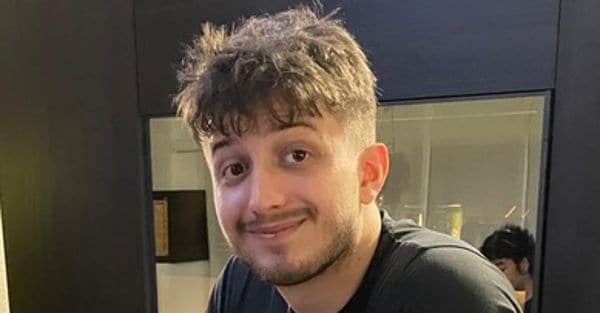
Alessandro Alberto Manzini, 26 anni, ha appena finito il major in Game Development. Study trip a Los Angeles e stage Triumph Studios di Delft, in Olanda.
“The lecturers are truly talented: for example, Matthieu Delaere worked with James Cameron on the production of Avatar, Tom Tesch and Koen Samyn are regular speakers at CppCon (the world’s leading conference on C++)”.
‘Despite this, they remain extremely easy-going people: it was very often the case that after class, in the evening, we’d go for a beer together.’
The DAE also organises a wide range of events, including excellent study trips, explains Alessandro: “They took me to Los Angeles, where I came into contact with companies of the calibre of Netflix and Riot Games.”
The work placement? “I did it at Triumph Studios in Delft, the Netherlands: real professionals. I really enjoyed it; I couldn’t have asked for a better learning experience.”
Key strengths of the degree programme? “It introduces you to many areas of game development and software engineering, so you can really work out what you enjoy doing. Technically speaking, it’s almost unrivalled: as far as I know, there’s no other course that goes into such detail on C++. The lecturers are of the very highest calibre and the degree is highly regarded in the professional world.”
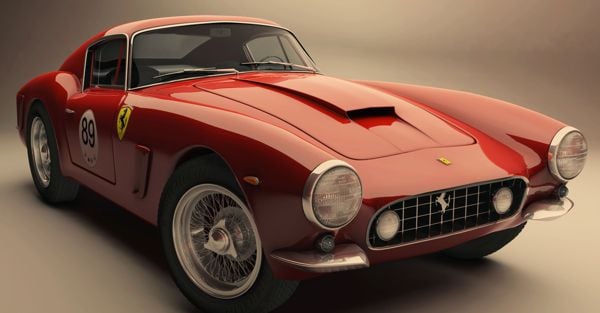
Uno degli elaborati degli studenti di DAE Howest: l’immagine digitale di una Ferrari 250 GT Berlinetta Passo Corto, uno dei modelli più iconici della storia di Maranello, prodotto tra il 1959 e il 1962.

Brand connect

