Germany

One hundred years of Bauhaus revolution seen from Dessau

A century ago the extraordinary school led by Gropius landed in the city of Saxony-Anhalt: here's how to relive the Bauhaus magic in the round

by Enrico Marro

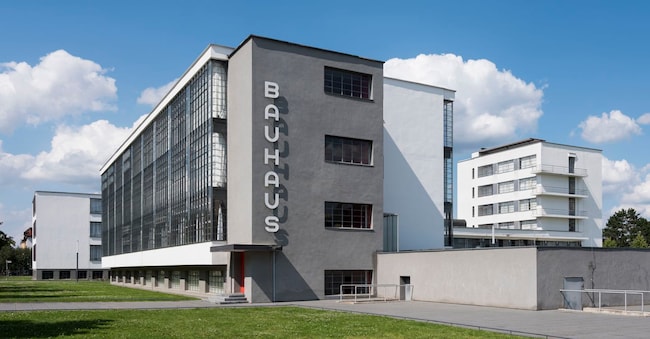
Il celebre complesso della scuola Bauhaus a Dessau, costruito tra il 1925 e il 1926.

3' min read

Translated by AI
Versione italiana

3' min read

Translated by AI
Versione italiana

Take a time machine and fly 100 years ago to Dessau, in the heart of the Bauhaus Revolution.
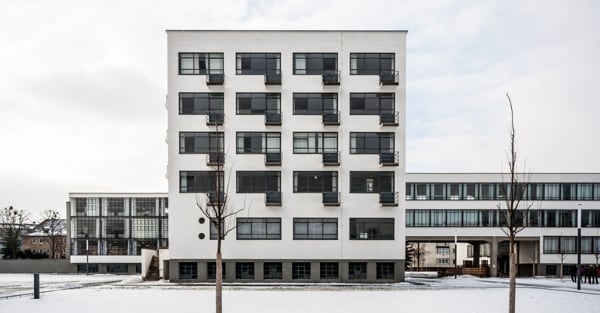
La Prellerhaus, lo studentato Bauhaus con 28 camere da 24 metri quadrati ciascuna progettato da Walter Gropius e integrato nel complesso della scuola di Dessau: oggi è possibile trascorrerci una notte rivivendo l’esperienza dei “bauhauser” di cent’anni fa.

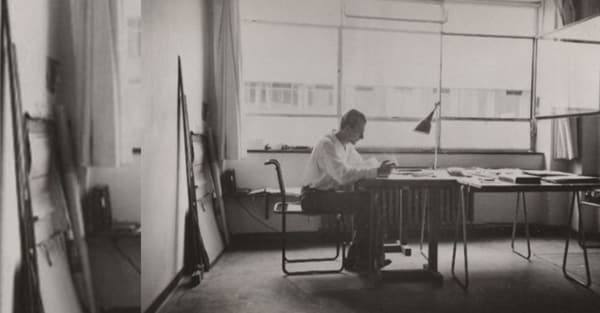
For a few tens of euros (55 to 75 per night) it is now possible to experience a true "bauhauser", in one of the 28 rooms of 24 square metres (with original furnishings) where the students of the extraordinary school led by Walter Gropius slept.
Loading...

Una foto storica di una delle camere dello studentato Bauhaus: disponibili a prezzi contenuti (da 55 a 75 euro a notte), le stanze oggi riaperte al pubblico raccolgono arredi in buona parte originali.

Dessau, the Bauhaus Manifesto City

Founded in 1919 in Weimar from where it was 'expelled' by the Nazis, Bauhaus landed one hundred years ago in Dessau, in the beautiful but little-known Saxony-Anhalt, German region with a record of Unesco heritage sites (not far from Berlin).
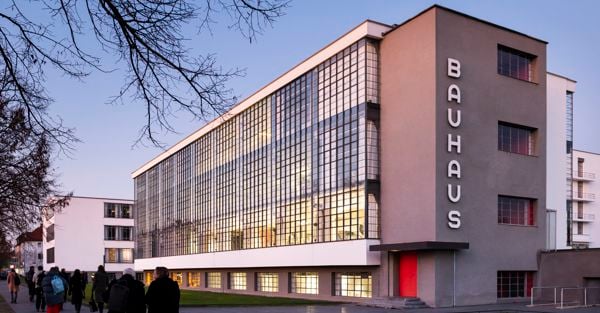
Il complesso Bauhaus di Dessau: Gropius non voleva dargli una facciata, ma l’immensa e rivoluzionaria vetrata dell’ala laboratori è diventata l’icona della scuola (foto Thomas Meyer)

In the Saxon town we find first and foremost the school complex designed by Gropius, a triumph of the Bauhaus philosophy: form becomes subordinate to function in a revolutionary approach aiming at the transversality of the arts and integration with industrial technology. In the name of total experimentation.

A Revolutionary School

Looking at it today, one hundred years later,the Bauhaus Unesco World Heritage Site doesn't show a wrinkle.
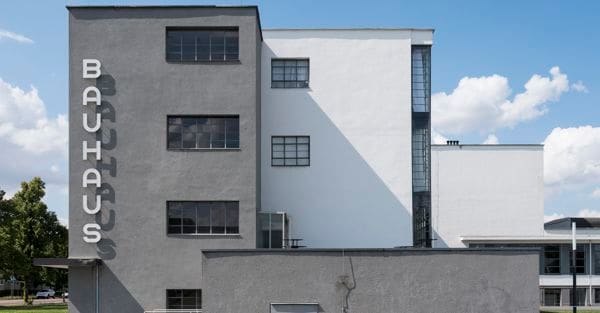
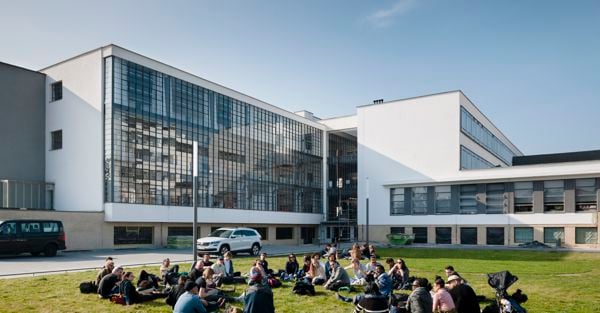
It floats lightly in space with the steel frame, the small windows, the compenetrated buildings, the industrial aesthetics, the futuristic lettering of the 'Bauhaus' lettering at a time when Gothic dominated.

Un dettaglio del complesso costruito tra 1925 e 1926, con la scritta «Bauhaus» dal lettering così innovativo in un periodo in cui in Germania dominavano i caratteri gotici (foto Thomas Meyer).

Gropius's masterpiece, a true manifesto of the movement, is divided into its various functional parts: in all five bodies of the building, including the student residence now open to the public, which magically reassemble (even with two-storey bridges) in a linear manner without a privileged viewpoint.

In fact, the Berlin architect and designer did not want a 'façade', but the huge, revolutionary glass window in the laboratory wing has become the school's icon: light, transparent, essential.

Con Bauhaus la forma diventa subordinata alla funzione: è un approccio rivoluzionario che punta alla trasversalità delle arti e all’integrazione con la tecnologia industriale (foto Thomas Meyer).

Even inside, functionalism dominates.

From the future steel grey radiators suspended on the walls to the absence of colour, from the auditorium to the canteen to the Gropius studio: every fold of the complex is sober, linear, technologically harmonious.

Un gruppo di allievi Bauhaus su uno dei balconi della Prellerhaus, lo studentato in cui oggi è possibile trascorrere una notte da vero “bauhauser”.

Starting with the chairs. The famous Wassily Chair in tubular steel, designed by Marcel Breuer in 1925, was created by observing the most advanced aviation production technology of Junkers.

Klee, Kandinsky and the Masters' Villas

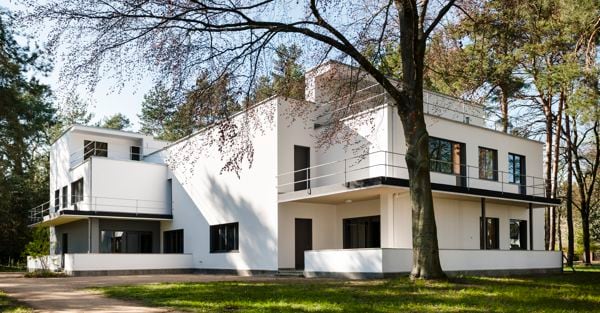
Not far away, surrounded by nature, are the cubic silhouettes of the white Master's Villas.

Due delle Ville dei Maestri (quelle di Gropius e di Moholy-Nagy), distrutte dai bombardamenti durante la guerra e ricostruite nel 2014 in questa “reinterpretazione” dello studio Bruno Fioretti Marquez Architekten di Berlino.

They were also designed byGropius, who allocated them to the big boys of the school: in the duplexes lived Paul Klee, Wassily Kandinsky and Oskar Schlemmer, among others, together with their families. A unique concentration of creativity.

L’ampia villa bifamiliare che ospitò Paul Klee e Wassily Kandinsky con le loro famiglie.

But somewhat all Dessau is caressed by the hand of the Bauhaus architects.

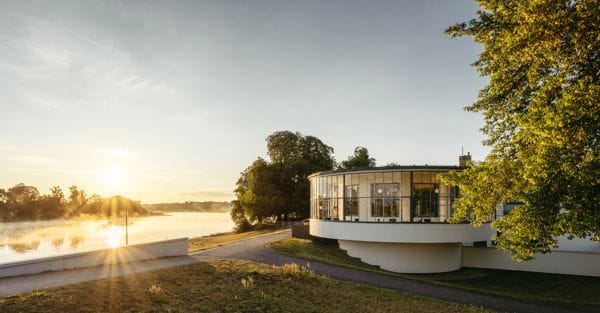
There are the condominiums designed by Hannes Meyer, the iconic half-spherical employment office by Gropius, and the original Kornhaus restaurant that still embraces the Elbe, designed by Carl Fieger.

La Kornhaus, locale Bauhaus disegnato da Carl Fieger nel 1929 sulle rive dell’Elba: ancora oggi ospita un ottimo ristorante con specialità locali (foto Felix Meyer).

After passing through dreadful decades - from the advent of Nazism, which closed the school in 1932, to the bombings and the communism of the GDR - today the buildings have returned to their former glory thanks to attentive renovations.

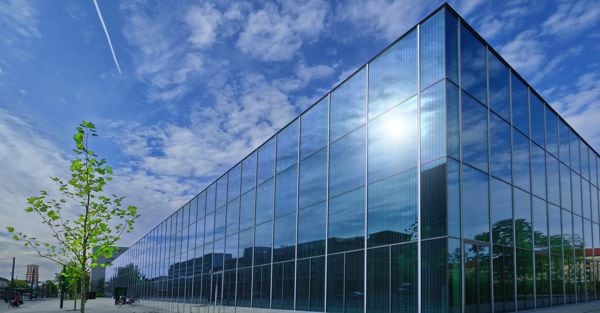
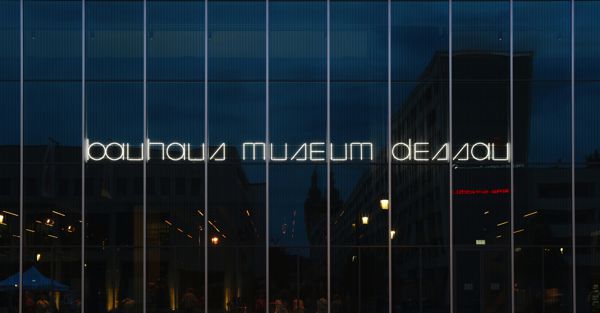
As of 2019, Dessau is also home to the Bauhaus Museum: it brings together something like 49,000 objects, the biggest collection in the world.

Il Museo Bauhaus, inaugurato a Dessau nel 2019 su progetto dello spagnolo González Hinz Zabala: raggruppa qualcosa come 49mila oggetti, la più grande collezione al mondo (foto di Danny Kurz).

The centenary celebrations

It is really worth admiring them in person, these masterpieces, especially in the centenary year.

The celebrations will continue for all of 2026 alternating exhibitions, concerts and events of all kinds.

Tante le celebrazioni previste per il centenario di Bauhaus a Dessau: mostre, concerti ed eventi (foto di Michael Deutsch).

The Amazing Magdeburg

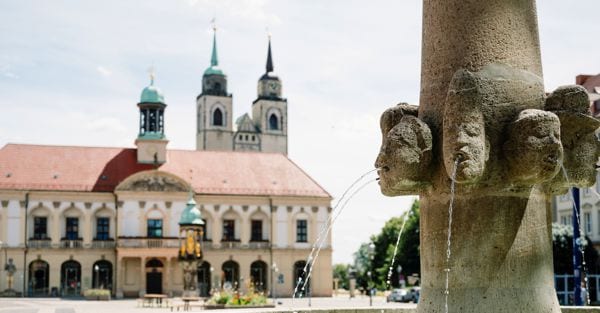
But Saxony-Anhalt is not just Bauhaus: there is no shortage of attractions for every palate. Starting with the capital city of Magdeburg, Prussian in soul, the birthplace of Telemann and the fourth greenest city in Germany.

Il municipio di Magdeburgo, città natale di Telemann nonché quarto centro più verde della Germania (foto di FelixPaulin).

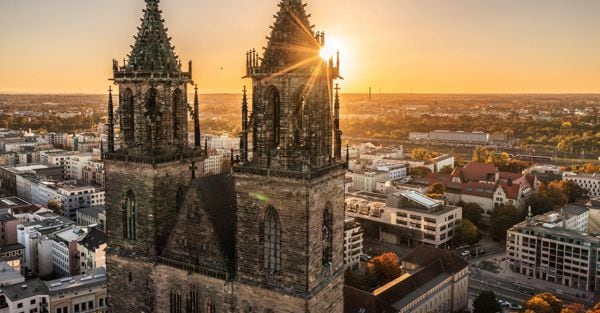
It boasts, among other things, the oldest Gothic cathedral on German soil (consecrated in 1363) and the crazy pink Green Citadel complex, opened in 2005 on the site of a hideous DDR building.

La cattedrale di Magdeburgo, la più antica in terra tedesca: venne consacrata nel 1363 (foto di Nilz Böhme).

Wörlitz: park, buildings and artificial volcano

Those who love the 18th century cannot miss the 'Garden Kingdom' of Wörlitz, the largest English-style park in Europe.

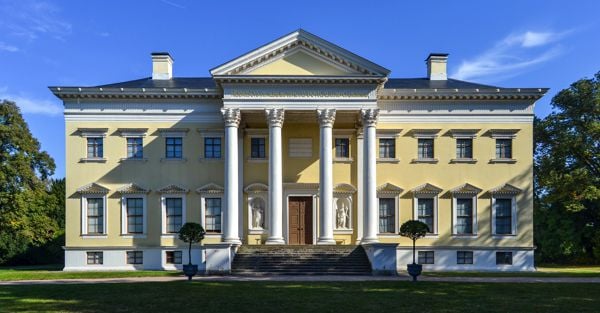
25 kilometres long, inspired by the philosophy of Rousseau and the aesthetics of Winckelmann, it is home to countless architectural gems: from the splendid Neoclassical palace with its Rubens and Canaletto to the Neo-Gothic churches and Villa Hamilton, a smaller twin of the Posillipo villa.

Il “Castello di Wörlitz”: ultimato nel 1773 per Leopoldo III all’interno del Regno giardino, rappresenta il primo palazzo neoclassico in terra tedesca.

The highlight of Wörlitz? The largeest artificial volcano in Europe, built in the eighteenth century at the behest of the 'philosopher duke' Leopold III after a trip to Naples.

A pyrotechnic German Vesuvius from two and a half centuries ago. Perfectly functional even today.

Copyright reserved ©
Loading...

Brand connect

Loading...

Newsletter

Notizie e approfondimenti sugli avvenimenti politici, economici e finanziari.

Iscriviti