City break

A tour of Wroclaw, an unknown pearl of Mitteleuropa

For two German centuries, Poland's third largest city has a long history, a charming centre and hundreds of bronze dwarfs. Let's discover it together

by Enrico Marro

4' min read

4' min read

If you love the magic of Prague's sights or the energy of Krakow's squares, here is a little-known pearl of Central Europe, on the border and at the same time in the centre of everything: Wroclaw or, as we say in Italian German, Wroclaw. Historically disputed between Germany, Poland, Bohemia, Prussia and the Austro-Hungarian Empire, Poland's third largest city is a geometric centre of Europe open to the world, 300 km from Berlin and 300 km from Prague.
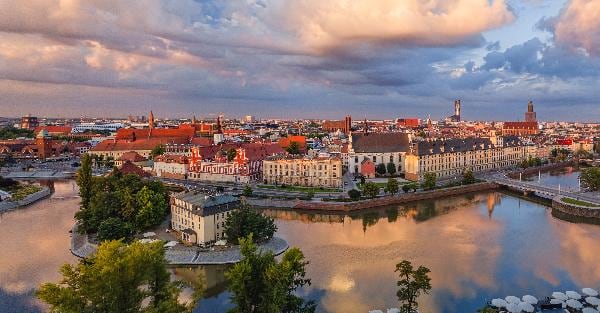
Brteslavia è una città d’acqua, ricamata da 120 ponti sull’Oder, il “fiume dell’ambra” che nasce in Moravia, scivola in Polonia, quindi sconfina in Germania per morire dolcemente sul Baltico.

A small Gothic masterpiece where you can find everything from the oldest brewery on the continent (1332, there Goethe and Chopin, among others, raised their glasses) to a leading-edge technology centre. A city of water, embroidered by 120 bridges over the Oder, the 'river of amber' that rises in Moravia, slips into Poland, then trespasses into Germany to die gently on the Baltic.

Loading...

The Market Square and the Fourteenth Century Brewery

.

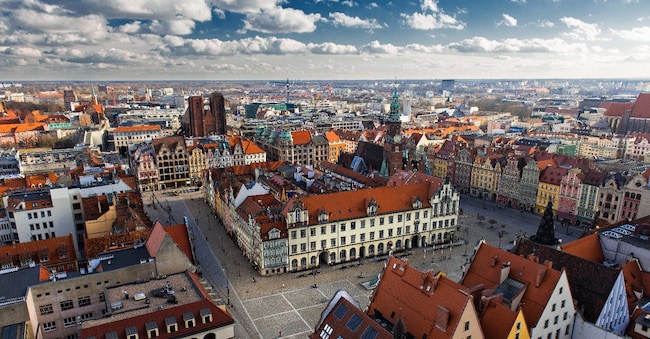
The heart of the city is the medieval Market Square, one of the largest in Europe, designed in the late 13th century after the Mongol invasion. A huge rectangle of almost 3.8 hectares with two town halls: the Gothic one (begun in 1299 and finished three centuries later) next to the 19th-century one. In the middle, the crystal fountain sprung up in the year 2000.
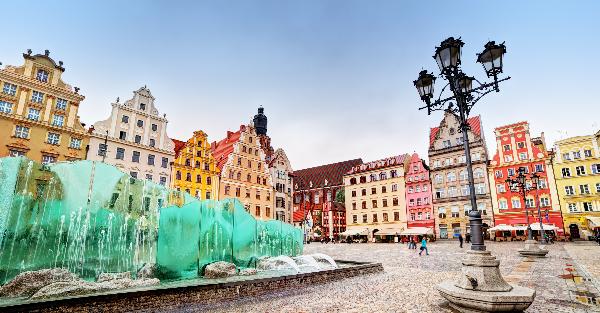
La Fontana di Cristallo, spuntata nel Duemila al centro della Piazza del Mercato.

A delight for the eyes and palate that spreads from Mannerism to Baroque, from modernism to Gothic: it is always full of life and energy among restaurants, boutiques, museums and breweries such as - precisely - the legendary Piwnica Swidnicka from 1332, all worth a visit before drowning in a sea of hops.

Population shifts

.

The centre was rebuilt after the Red Army's bloody three-month siege of the city, which only surrendered to the Soviets on 6 May 1945. Annexed to Poland and emptied by the Germans at the behest of Stalin, Wroclaw was forcibly 'repopulated' with Poles from the eastern regions, those in turn annexed to the Soviet Union (with cities such as Lviv and Brest).
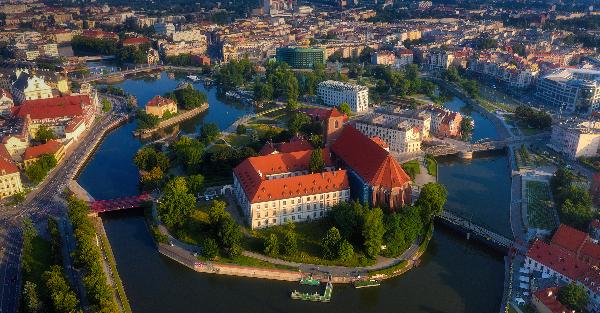
Uno scorcio del centro di Breslavia: la città venne in buona parte distrutta durante la seconda guerra mondiale.

Moral: some of the inhabitants of Wroclaw came from today's Ukraine or Belarus. They were forcibly transported in their thousands on freight wagons, as the beautifulDepot History Centre, the city's historical museum housed in the MPK bus depot (former birthplace of Solidarnosc), reminds us.

The Dwarf Invasion

.

Speaking of history: what do anti-communist movements have to do with the thousands of amusing dwarf figurines that populate the city? In the 1980s Wroclaw was the birthplace of the Orange Alternative (Pomarańczowa Alternatywa), a non-violent protest movement destined to become famous.

In order to avoid arrests and persecution, the 'oranges' sported a nonsensical counterculture of dwarf graffiti and absurd flashmobs adored by the youth.

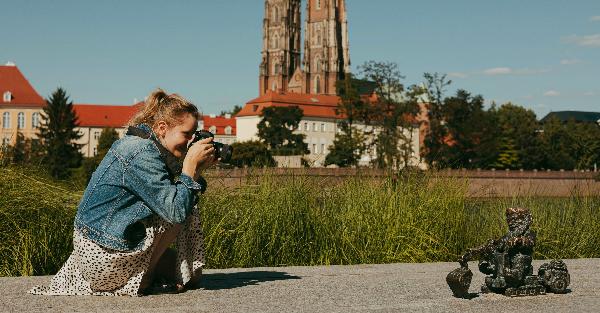
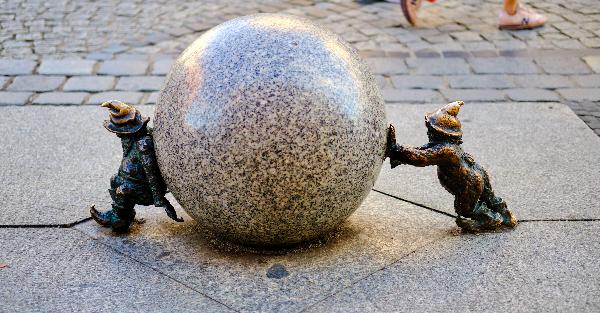
A Breslavia negli ultimi vent’anni sono spuntati centinaia di nanetti in bronzo, omaggio al movimento di protesta non-violenta Alternativa Arancione, attivo dagli anni Ottanta.

It was a success: from Wroclaw, the silent dwarves painted on the walls dilaginated in the rest of Poland and then in Czechoslovakia, Hungary and even the Soviet-era Ukraine.

Le centinaia di nanetti sono divertentissimi da cercare (soprattutto con i bambini al seguito).

As a reminder of Alternative Orange, for the past 20 years 20-30 centimetre tall bronze dwarfs have been popping up almost everywhere in Wroclaw. Today there are hundreds of them: great fun to look for, especially with children in tow. There is also the Italian one, obviously equipped with a Vespa and pizza.

The University of Brahms, Paganini and Liszt

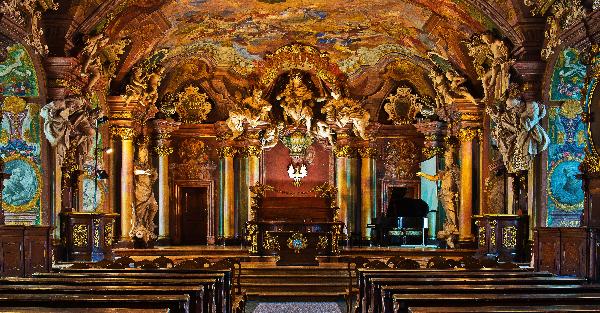
But let us return to the centre. The only Baroque spot amidst so much Gothic is the University, where we find the Aula Leopoldina, a 1731 trompe-l'œil jewel, but above all the Marian Oratory: it was built in 1728 as a chapel but soon became a concert hall with impeccable acoustics where Paganini, Liszt, Grieg, Berlioz, Robert and Clara Schumann performed in person.

L’Aula Leopoldina, gioiello del 1731 interamente affrescato nella sede storica dell’Università di Breslavia: è l’interno barocco più grande della Polonia.

But above all Brahms, who in 1879 received an honorary degree in that huge baroque hall (and thanked in his own way by composing an overture).

Polish pantheon and temple of contemporary art

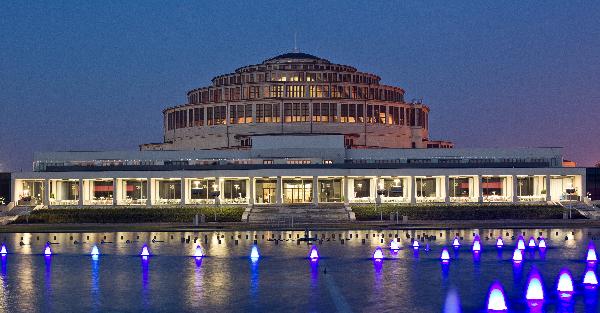
If you like the 20th century, then there is the grandiose Centennial Hall, a Unesco heritage site, designed by Max Berg and built in 1913 in the then German city of Breslau to celebrate the centenary of the victory over Napoleon. its dome (69 metres in diameter) was the first in history to 'beat' that of the Pantheon in Rome. Today it can accommodate up to ten thousand people and hosts everything from concerts to basketball matches, from volleyball to boxing.

La Centennial Home, costruita nel 1913 per celebrare il centenario della vittoria su Napoleone. La sua cupola fu la prima nella storia a “battere” quella del Pantheon di Roma (foto Maciej Kulczynski).

Next door is the modernist Four Pavillion Dome, with the country's largest Museum of Contemporary Art: among the more than 21 thousand works are masterpieces by Wojciech Fangor. Just outside we find the Japanese Garden and the shows of the splendid Music Fountains opened in 2009 with their three hundred water jets (and three flame throwers).

A historical film in the form of a painting

.

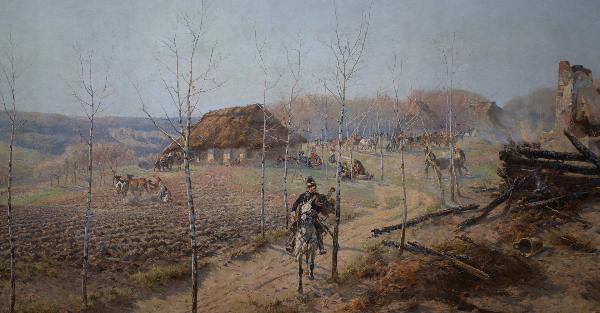
A chapter apart is the Panorama of the Battle of Raclawice (1794), recounting the victory of the Polish insurgents over the Russian army. It is a huge painting 120 metres long and 15 metres high that is displayed in a circular form, 'embracing' the viewer.

Un dettaglio del Panorama della Battaglia di Raclawice, enorme dipinto lungo 120 metri e alto 15 che viene esposto in forma circolare “abbracciando” lo spettatore.

It was finished in 1894 after nine months of work and seven and a half quintals of paint. Reopened to the public in 1985 after being barricaded by the Soviets for forty years, it has been visited by four million people, including many children. It is a symbol of Polish pride.

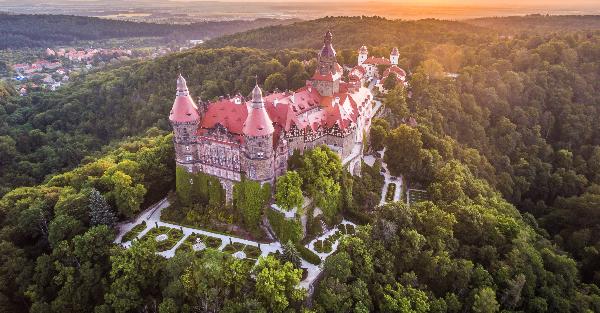
Il fiabesco Castello di Ksiaz, in Bassa Slesia, a un’ora di auto da Breslavia.

Europe's largest wooden church

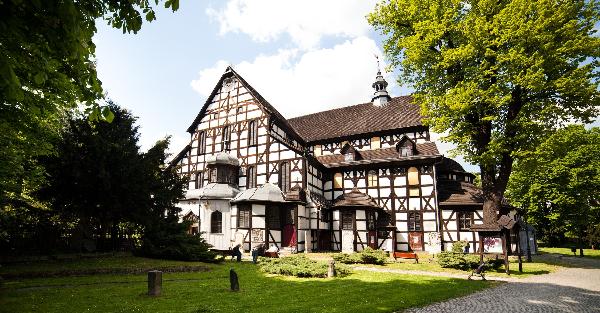
Wroclaw is connected with direct flights from Rome, Milan, Turin, Bologna, Treviso, Pisa, Naples, Brindisi and Palermo. But the wiser slow travellers will choose the car to enjoy the Jewels of Lower Silesia not far from the city. Like the fairy-tale Castle of Ksiaz or the incredible Peace Church in Swidnica, the largest all-wooden church in Europe, a UNESCO World Heritage Site (along with the one in Jawor).

L’esterno della Chiesa della Pace di Swidnica, patrimonio Unesco: spoglia e frugale come una casa contadina tedesca del Seicento.

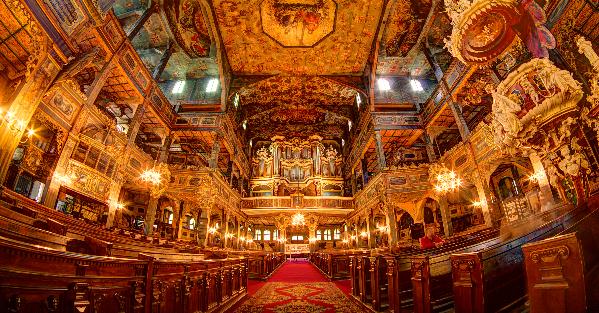
Outside it is bare and frugal like a German peasant house of the 17th century, inside it reveals itself to be a triumphant explosion of baroque in which wood manages to perfectly 'imitate' marble, gold and bronze. So incredible that in 2016 even the Dalai Lama wanted to visit it.

L’interno della Chiesa della Pace (la più grande d’Europa interamente lignea) è un trionfo barocco in cui il legno riesce perfettamente a “imitare” marmo, oro e bronzo.


Copyright reserved ©
Loading...

Brand connect

Loading...

Newsletter

Notizie e approfondimenti sugli avvenimenti politici, economici e finanziari.

Iscriviti