The interview

Parmitano: Artemis III will be an ‘exciting and complex’ mission

Interview with the Italian astronaut appointed as pilot for the next mission in the lunar programme: two landers to be manually docked in orbit, procedures yet to be drawn up, and the possibility — which cannot be ruled out — of walking on the Moon in the future.

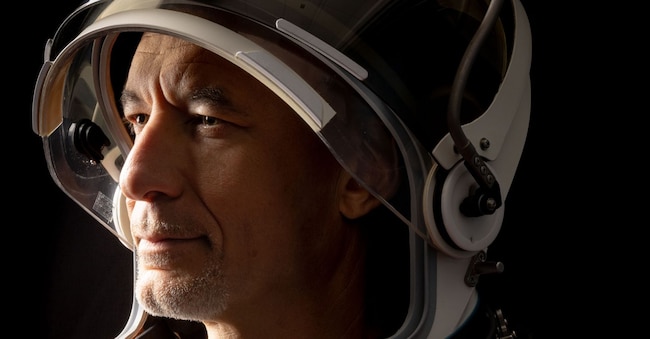
by Emilio Cozzi

Luca Parmitano   (PHOTO CREDIT:  NASA / BILL STAFFORD)

6' min read

Translated by AI
Versione italiana

6' min read

Translated by AI
Versione italiana

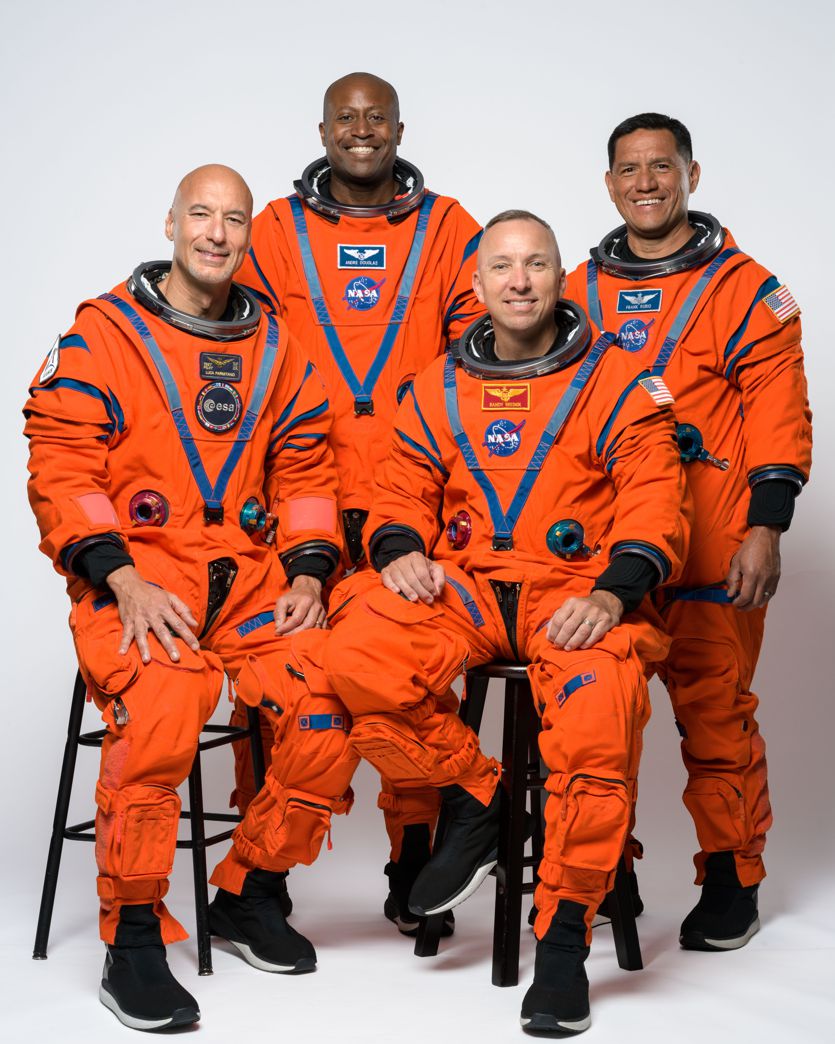
Luca Parmitano will be the pilot of Artemis III. NASA announced this on 9 June at the Johnson Space Centre in Houston: the 49-year-old Italian astronaut from the European Space Agency (ESA), originally from Catania, will fly in the Orion capsule alongside commander Randy Bresnik and mission specialists Frank Rubio and Andre Douglas on the next mission of the US lunar programme. He is the first European to hold a primary operational role in the programme.
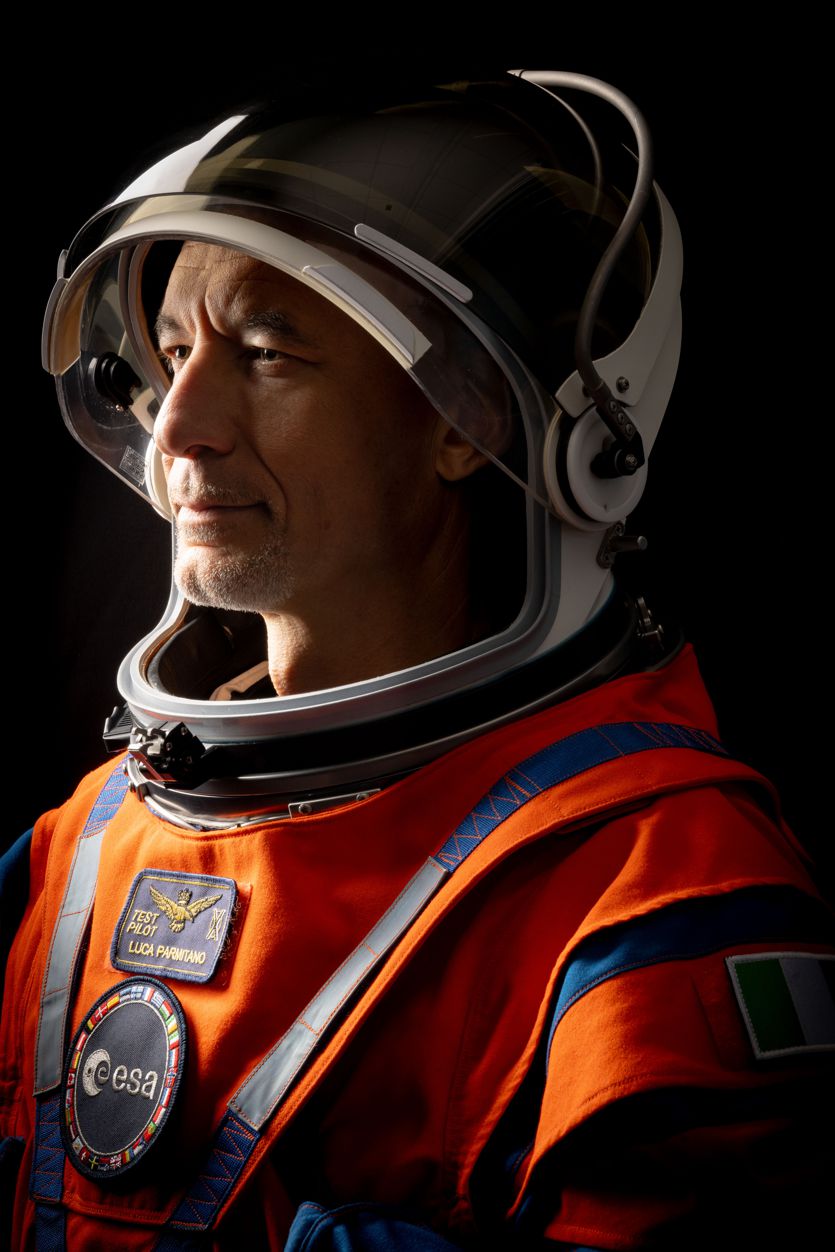
PHOTO CREDIT: NASA / BILL STAFFORD

In low Earth orbit for around two weeks during the second half of 2027, the mission will need to demonstrate that Orion is capable of performing proximity manoeuvres, docking and undocking with the two lunar landers, Blue Origin’s Blue Moon and SpaceX’s Moonship. Operations which, as Parmitano confirms, will largely be carried out manually. And which will constitute a crucial step towards a human moon landing, planned for the Artemis IV mission in 2028.

Loading...

The technical picture, however, is fraught with uncertainties: the only launch pad available for Blue Moon has been damaged by an explosion of the New Glenn rocket a few days ago. It could take months to repair. Starship, for its part, has not yet completed a full orbital flight. “Both landers will be flying for the first time on Artemis III,” says Parmitano, highlighting, without even too much emphasis, the complexity of the mission. “There is no alternative to optimism,” he adds, with that calmness that has come to be recognised as his professional hallmark – that of an astronaut capable of holding his own even in moments of extreme crisis.

Parmitano, how much do you think the way you handled your second extravehicular activity – when a suit malfunction left you at risk of drowning in orbit – and your experience as an experimental test pilot with the Air Force played a part in your selection?

“From zero to a hundred? A hundred. I believe my experience was key to my selection, not just for Artemis III, but for my specific role. I couldn’t be happier, because, long before I knew I’d be part of it, I’ve spoken of Artemis III as one of the most interesting and exciting missions in the entire programme.”
What do you mean?

The engineering work required to tackle this successfully is an extremely complex process, and I personally have great respect for those who, perhaps far removed from the limelight that a moon landing brings, work quietly behind the scenes to achieve that goal. Just think about what happens in the world of aviation: everyone knows the ‘Mavericks’, but almost no one knows who prepared their aircraft. For us, it is and will be the same: everyone remembers Apollo 11, but without Apollo 9, Neil Armstrong, Buzz Aldrin and Michael Collins would not have gone anywhere. That is why my role in Artemis III, as a test pilot, is a privilege for me.”

Yet she has the perfect CV for a Moonwalker. Do you really have no regrets?

“No one; I just feel a joy that’s hard to contain. Not least because I can’t see why I should be sorry: the new lunar adventure is just beginning, and we’re merely the first step. In the absence of other data, I can only rely on history, namely how the Apollo programme astronauts were assigned to different missions, and I realise that fifty is the new thirty. In other words, when I look at the astronaut corps of NASA or ESA, I see that experience is held in high regard. What’s more, Artemis III will provide me with skills and specialisations I couldn’t acquire otherwise. By nature, I’ve never set limits on what’s possible; should I start doing so now?”

Has the training already started? Can you confirm?

“Yes, yesterday – 10 June, ed. – marked the first official day of the journey, lasting over a year, that will lead us to the flight. This morning, in NASA’s Building 9, I entered the Orion capsule and was able to examine it in two configurations, to start familiarising myself with the control system, the displays and the controls. I’ll be doing it all again today; I have little time not only to get to know a spacecraft from scratch, but to reach a level of familiarity that will allow me to operate it within an operational envelope that doesn’t yet exist.”

Photo credit: NASA/Helen Arase Vargas

Don’t you know anything about your next space capsule?

“It’s a spacecraft that’s radically different from the ones I’ve flown in before. I reached the International Space Station on Russian Soyuz spacecraft, which were designed decades ago and, even in their most up-to-date version, are still a generation and a half behind Orion. Orion is a system that’s constantly evolving, and I look forward to playing my part in that development.”

Let’s turn to the downside: one of the two landers you’ll need to dock with has lost its launch ramp, which was destroyed by an explosion during a test. The other has never completed a full orbital flight. How much confidence can we have?

“It’s an industrial challenge; the companies involved will have to demonstrate their capabilities. For our part, we’re approaching this with a willingness to be flexible and to work towards achieving whatever results are required of us. We’re expected to work as a team to become a crew ready for any kind of mission. The challenge for the industry is to provide us with the equipment. I don’t think there are any alternatives to optimism.”

Will the landers fly autonomously before your mission, or will Artemis III be their debut?

“They’ll be flying with us for the first time.”

It is no coincidence that flight director Norm Knight has described Artemis III as the most challenging mission NASA has ever planned. Do you agree?

“It’s not just about the challenges of the mission itself; the logistics will also need to be handled with great care. We will have three separate launches, to be planned within a relatively short timeframe to allow us to complete everything in two weeks. First we will go, on Orion at the head of the Space Launch System, then Blue Origin’s lander will be launched, followed by SpaceX’s. That’s why the simulations will be integrated across different teams and locations, and with different spacecraft: we’ll be based in NASA’s Buildings 5 and 7, whilst the contractors will use their own simulators, with their specialists connected remotely. It’s something that’s never been done before.”


It seems that most of the rendezvous, docking and undocking manoeuvres will be manual; will you be the one carrying them out?

“That’s likely. In the next few hours I’ll be having my first tabletop – an operational planning meeting, ed. – with the whole Artemis III team, to start working through the procedures. It’s all still taking shape, and for a test pilot, it’s the best thing you could imagine. We still need to determine how many phases will be automated, but I believe that many of the critical ones will be manual. At that point, it’s the pilot who takes the helm and takes control of the spacecraft.”

Once you’ve docked, are you expected to enter the landers to check their systems?

“The idea is that this will be done using Blue Origin’s lander — Mark One or Two, we’re still not sure. After docking, we’ll need to carry out internal operations. The second lander, a modified version of Starship, has a docking module but no life support system or internal operations capability. In this case, we will only carry out a dynamic docking and undocking manoeuvre.”

Parmitano, China aims to reach the Moon by 2030. Many, including NASA Administrator Jared Isaacman, do not rule out the possibility that it might do so sooner. How much does this pressure influence the decisions and timelines of the Artemis programme?

“A great deal, without a doubt. The current US administration wants to maintain its leadership and present itself as the dominant force in the aerospace sector.”

And we, as Europeans allied with the United States, want to stand by them at this stage. With one important clarification: NASA serves the American geopolitical desire to demonstrate technological supremacy; we, as the ESA, uphold European values: collaboration, cooperation and openness. It is a bridging role, both technological and ideological. I believe we are succeeding in this.”

Copyright reserved ©
Loading...

Brand connect

Loading...

Newsletter

Notizie e approfondimenti sugli avvenimenti politici, economici e finanziari.

Iscriviti