
Mission Artemis, the year 2026 paves the way for the lunar economy
Nasa and Esa are scheduled to launch on 6 February. SpaceShip, SpaceX's launcher, is delayed

Key points
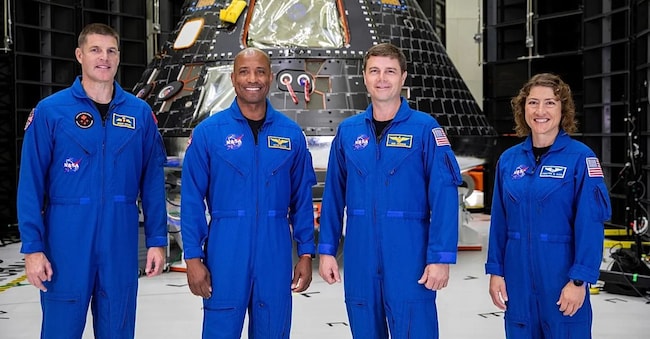
Back to the Moon in 2026, and in a big way too. In the meantime, NASA, with Esa and many other partners, are re-starting the Artemis programme: it will go around our natural satellite with the repeatedly postponed Artemis II mission, which will take four astronauts to skim the lunar surface for the first time in over 50 years. It could be launched from 6 February onwards, until late April.
Throughout the year, however, there will be a succession of lunar landings by private operators, Jeff Bezos in the lead with his Blue Moon lander, who will attempt to arrive both in the face we see from Earth and on the other side, where so far only China has managed to lunar land, in 2019.
Ten Days Mission
The Artemis II mission will last about ten days and will take the astronauts further into space than any Apollo mission. The crew includes Nasa commander Reid Wiseman, pilot Victor Glover and mission specialist Christina Koch. A second mission specialist, Jeremy Hansen of the Canadian Space Agency, will also be on board.
It may seem a bit frustrating, especially for the astronauts who have prepared for it in intense and tiring months, to have to get there, look at the Moon through the window, almost as if they were space tourists, and then go back to Earth, but the mission is a crucial step, as was the similar one for the Apollo programme, to test the whole system and means before the actual descent to the ground.
Not just a landing: going to the Moon to stay there
However, it must be remembered that Artemis is an entirely different programme from the glorious Apollo of the 1970s. This time, in fact, it is about paving the way back to the Moon to stay there, building dwellings, roads, laboratories, landing and take-off runways, and even opening mines to extract valuable materials for terrestrial technologies. In sum, to start a real lunar economy open more and more to private individuals and capable of sustaining itself.


