
Why the Fed may keep interest rates on hold
The uncertainty surrounding the situation in the Middle East does not, for the time being, warrant a rally, not least because it is the markets that are ‘tightening’

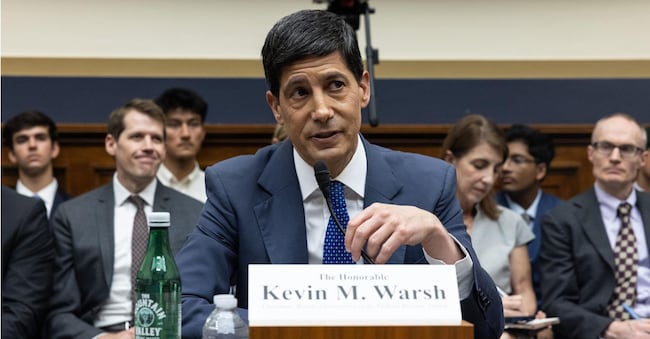
Interest rates remain unchanged, yet again. The July meeting of the Federal Reserve’s Monetary Policy Committee (FOMC) is expected to conclude with the Fed Funds target range – the benchmark interest rate for the United States – remaining unchanged at 3.50–3.75 per cent. This is in line with market expectations and the available information on the central bankers’ intentions: the ‘dots’ – the forecasts by individual governors (excluding Chairman Kevin Warsh, who declined to participate) on the trend in the official cost of borrowing – showed a median of 3.75 per cent in June, compared with 3.25–3.50 per cent in March, December and September 2025, with an average – which is more sensitive to outlier data – just slightly higher.
There do not appear to be, at present, any indications pointing in a different direction, one way or the other. It is true that tensions in the Middle East are escalating, but long-term inflation expectations do not yet indicate any significant shifts that might prompt the Committee – and its chairman, who is rather inclined to keep the official cost of borrowing at levels that are not too high – to adopt a tighter stance.
Inflation – as measured by the PCE (Personal Consumption Expenditures) index – appears to have been rising for at least three months (the figures are current as of May: the next set will be published on Thursday 31 July, the day after the July meeting), but at present this is mainly due to the rise in energy prices. Experience from recent years also suggests that these price rises should not be regarded as ‘temporary’ for too long.
However, the markets are, at least in part, doing the Federal Reserve’s job. Yields have risen compared with recent months: whilst the very short-term segment – which reflects and implements monetary policy – has remained relatively low and does not appear to pose a risk of the markets and the Fed moving in different directions – although it will be necessary to monitor developments closely – the medium-term segment, which is relevant for investment, has returned to levels last seen in mid-2024. Financial conditions, as measured by the Chicago Fed’s index across the entire monetary policy transmission chain, continue in any case to become less tight.
The recent decline in lending to the commercial and industrial sectors – although significantly less pronounced in the United States than in Europe – is one of the factors highlighting just how crucial prudence and balance are at this stage. Lending has been falling since mid-May. This is nothing to be alarmed about; year-on-year growth remains robust but – combined with the current sluggish, albeit highly volatile, trend in recruitment – it calls for a degree of caution.


