Agriculture

Halaesa and the avocado’s successful venture in Sicily

Founded in 2022, the benefit corporation has established a production model across the provinces of Messina, Palermo and Syracuse, based on technology, regenerative agriculture and sound management. With the acquisition of a further 210 hectares, it now has a total agricultural footprint of around 300 hectares

3' min read

Translated by AI
Versione italiana

3' min read

Translated by AI
Versione italiana

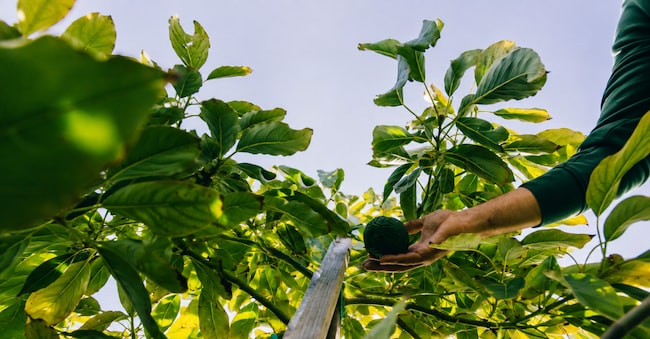
Sicilian avocado production is moving from the experimental stage to organised large-scale production. Leading the way is Halaesa, an agricultural company founded in March 2022 and which became a benefit corporation in June 2024; with the acquisition of a further 210 hectares, it has expanded its landholding on the island to around 300 hectares.

The company was founded by a group with expertise in agriculture, sustainability and finance. Some of the founders had already gained over ten years’ experience in growing tropical fruits in Sicily. The first capital increase, supplemented by a bank loan, enabled the company to acquire and develop its first plots of land in Tusa, in the Messina area, and in Noto, in the Syracuse area.

Loading...

One hundred hectares under cultivation, with the rest to follow by 2027

The 300 hectares refer to the land owned, not the land that is already fully productive. The completed plantations currently cover around 100 hectares, divided almost equally between Tusa and Noto. The 210 hectares acquired are spread across these areas and the Palermo region, and will be planted progressively by the end of 2027.

The business model combines soil selection, precision irrigation, digital monitoring and managerial process management. The first harvest, amounting to around 200 quintals, confirmed the estimates and was sold in its entirety on the Italian and European markets through distributors who supply large-scale retailers.

The product is not yet marketed under the Halaesa brand: plans for its launch under its own brand are being considered for between 2027 and 2028. Once fully operational, the expected yield is 130–140 quintals per hectare in the seventh year. The 300 hectares will gradually reach full production from 2029; the business plan targets 500 hectares by 2032 and revenues of between 23 and 25 million in the two-year period 2033–2034.

Water, energy and organic farming

Production is certified organic and follows regenerative farming practices, including permanent grass cover, minimal tillage and a reduction in chemical inputs. The drip irrigation system is supplied by storage reservoirs and the farm’s own wells, and is regulated by control units that measure soil moisture.

In 2025, water consumption stood at 806 cubic metres per hectare. A 50 kWp solar power plant came into operation in Tusa, and 96 per cent of the electricity used by the farm came from renewable sources. The plan for 2026–2027 includes three solar power systems with a combined capacity of 180 kWp and a more accurate system for monitoring water consumption.

Staff numbers set to double

Halaesa has 27 direct employees, of whom 25 are production workers; there are two agronomists. It does not currently employ seasonal workers, whilst certain functions are outsourced through ongoing consultancy arrangements. As part of the expansion, a further 25 production workers are to be recruited, along with three managerial staff, bringing the direct workforce to 55 people.

The benefits also extend to the wider economy. In 2025, the company purchased goods and services from Sicilian suppliers worth 1.37 million euros. Local purchases accounted for 62 per cent of total procurement, whilst Sicilian businesses made up 59 per cent of suppliers. Halaesa also offers free technical support to small-scale farmers interested in experimenting with avocado cultivation.

Nine million in private capital

To support the project, Halaesa has raised nine million euros through capital increases subscribed by investors from industry in Northern Italia, the pharmaceutical sector and the private equity sector. In addition to these funds, the company has received approximately three million euros in non-repayable grants under the Ministry of Agriculture’s fifth ‘Supply Chain Contracts’ call for proposals.

Loading...

The new 20 million mortgage loan was granted by UniCredit, Crédit Agricole Italia, Mediocredito Centrale and BdM Banca. The loan also consolidated four million in existing debt and was structured without public guarantees or any additional support measures.

“This transaction is a positive sign, not only for our company but also, more generally, for the development of the Italian agricultural sector,” says Francesco Mastrandrea, Chief Executive of Halaesa. “The support of four leading banks demonstrates how sound governance, a clear development strategy and effective management can provide access to increasingly sophisticated financial instruments.”

From cultivation to the supply chain

A product sorting facility is due to be built between 2028 and 2029. Halaesa is also working with the University of Palermo on the recovery of second- and third-grade avocados and waste for use in the nutraceutical sector.

“The support provided to Halaesa is a concrete example of the bank’s commitment to backing projects capable of attracting capital and combining innovation, sustainability and economic growth for the region,” emphasises Salvatore Malandrino, UniCredit’s regional manager for Sicily. “Through its Agribusiness Team, UniCredit has provided the company with specialist expertise and financial solutions tailored to this key sector for the regional economy.”

Copyright reserved ©
Loading...

Brand connect

Loading...

Newsletter

Notizie e approfondimenti sugli avvenimenti politici, economici e finanziari.

Iscriviti