Science

Artificial intelligence can now create viruses – a warning about the risks

Researchers say the study offers hope for new medicines, but also raises urgent questions about biosafety

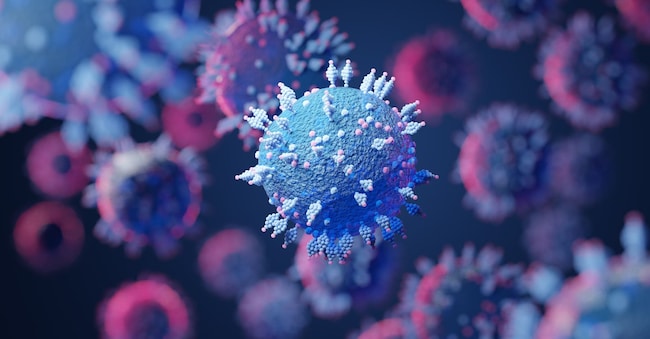
 Yingyaipumi - stock.adobe.com

3' min read

Translated by AI
Versione italiana

3' min read

Translated by AI
Versione italiana

Scientists have created the first viruses designed by artificial intelligence, a milestone that offers hope for new medicines but also raises concerns about how to ensure the safety of this technology. This is reported in the online edition of The Guardian.

These are a specific type of virus, known as bacteriophages, which infect only bacteria and are used worldwide to treat patients with persistent infections. In laboratory tests, a cocktail of viruses designed by AI killed E. coli bacteria that were resistant to natural bacteriophages.

Loading...

Dr Brian Hie, a chemical engineer at Stanford University in California, has used genomic language models – the genetic equivalent of the large language models that underpin AI-based chatbots – to design functional genomes for bacteriophages. The viruses were then created in the laboratory and tested against E. coli in a culture dish.

Good news in the fight against bacterial diseases...

The ability to ‘rapidly design’ genomes and optimise them for specific bacteria, whilst overcoming their resistance, could ‘transform phage therapy’ and ‘expand the range of biotechnological tools available’, the researchers wrote in the journal *i* *Science* .

However, whilst acknowledging the potential benefits, the scientists stated that the work raises ‘important issues of biosafety and biocontainment’ and urged anyone designing whole genomes to ‘consult safety and biocontainment experts throughout the project’.

... but a risk to potential malicious users

In an accompanying article, Professor Tom Inglesby and Dr Moritz Hanke of the Centre for Health Security at Johns Hopkins University in Baltimore reiterated the warning, writing: ‘Whilst this is promising for applications in the life sciences, it also raises urgent issues of biosafety and biocontainment. The capability to assemble viral genomes using generative artificial intelligence now exists; the governance to manage it safely does not yet exist.’

Hie and his colleagues used the Evo1 and Evo2 artificial intelligence models to design the new viral genomes. The models were trained using genetic data from 2 million bacteriophages. The genetic code of viruses capable of infecting plants, humans or other animals was deliberately excluded from the AI training to reduce the risk of it creating dangerous viruses.

The AI generated thousands of potential genomes, from which the researchers selected around 300 to be reproduced in the laboratory. These were introduced into bacteria, which read the genetic code and produced the new bacteriophages. The process proved inefficient: only 16 bacteriophages were found to be viable, but a combination of them quickly overcame the resistance of two different strains of E. coli.

Scientists’ warning

Bacteriophage genomes are tiny, but Inglesby and Hanke stated that the work had nevertheless demonstrated that generative AI can create functional viral genomes. It is not known whether the same approach can be applied to other viruses, but the researchers stated that research into pathogens capable of infecting humans, animals or plants should not be pursued.

“Such genomes could encode new pathogens that… cannot be contained using existing countermeasures,” they wrote.

Loading...

Tom Ellis, a professor of synthetic genomics at Imperial College London, said the work was impressive, but pointed out just how difficult it would be to create more complex genomes. “What has been achieved is literally the smallest and easiest genome to create,” he said.

Working to mitigate risks

Artificial intelligence trained on the genetic code of dangerous bacteria could be used to design more harmful viruses, Ellis said, but controlling access to genetic data and imposing restrictions on the creation of genomes that appear dangerous would help. “Governments are already working hard on this,” he added.

‘But honestly,’ he said, ‘the threat posed by the design and complete sequencing of a virus’s or bacterium’s genome using artificial intelligence is greatly exaggerated when we consider that taking existing pathogens and modifying their genomes to achieve additional functions is much simpler and far more likely to pose a real pathogenic threat.’

Dr Filippa Lentzos, a lecturer in international science and security at King’s College London, stated that the most crucial time to intervene is during the DNA production phase. “It is essential to have an overview of the project’s governance and not to focus regulation solely on the artificial intelligence model,” she said. “A multi-tiered approach makes more sense: safeguards regarding the development of and access to models, responsible research oversight, screening of syntheses, and robust biosafety and biocontainment measures in the laboratory.” (f.s.)

Copyright reserved ©
Loading...

Brand connect

Loading...

Newsletter

Notizie e approfondimenti sugli avvenimenti politici, economici e finanziari.

Iscriviti