
Artificial intelligence for fleets and fleet managers
On the horizon lie not only smarter cars, but a broad ecosystem that begins with the connected car and extends to include predictions and automated actions

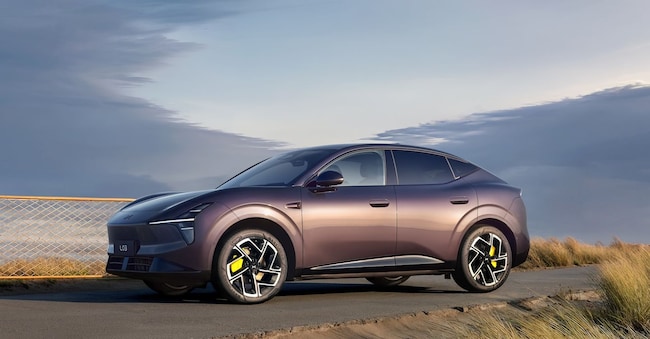
Predicting faults, anticipating operational needs, optimising routes and providing responses in natural language. Artificial Intelligence promises to benefit fleets in a number of ways, starting with applications in the car-hire sector. On the horizon lies not simply a ‘smarter’ car, but a broad ecosystem that begins with the connected car – a continuous source of data – and then develops through predictions and automated actions to offer a simpler user experience for fleet managers and drivers. However overused the expression may be, modern cars are essentially computers on four wheels.
In fact, everything hinges on connectivity, which generates a constant stream of data to be analysed in real time in order to improve services: AI is called upon to transform this stream into useful information and concrete actions. The most mature application is predictive maintenance, which, by monitoring the early warning signs of ongoing deterioration, enables action to be taken even before a fault occurs. Making the most of it helps to reduce sudden breakdowns, replace components before they fail and take pre-emptive action, rather than having to react to emergencies as they arise.
There are numerous applications, and there is no shortage of new features. Michelin Connected Fleet recently launched the Michelin AI Assistant, an assistant integrated into the MyConnectedFleet platform designed to help fleet managers simplify their day-to-day operations. The aim is to enable users to interact with the platform using natural language: rather than having to consult and interpret a complex report, the response is provided directly in text form or via a graph, making the information more immediate and accessible. Ford Pro AI, meanwhile, following its debut in the United States, has arrived on the European market with the aim of transforming data generated by commercial vehicles into immediately actionable insights, helping fleet managers make faster, more informed decisions and improve operational efficiency. AI for fleets also took centre stage at the latest IAA Transportation 2026 in Hanover, with Webfleet (Bridgestone) presenting Fleet Insights, a solution that helps identify ways to improve performance through a combination of benchmarking and AI-based recommendations. The real challenge for hire companies and fleet managers is therefore to efficiently manage the complex interplay between workshops, parts suppliers and logistics operators, coordinating information and activities that are often stored in different systems. To meet these needs, Targa Telematics offers Maintenance Excellence, a solution that overcomes this fragmentation by integrating data from telematics devices, OEM systems and external platforms within a single ecosystem, capable of monitoring vehicle status in real time and supporting more effective and coordinated maintenance management.
In the background lie the challenges of the electrification transition, which continues to make progress in Europe, albeit unevenly and without the structural conditions yet in place to support the mass electrification of private households. Whilst the market share has reached 35 per cent in France, 29 per cent in Germany, around 27 per cent in the United Kingdom and 11 per cent in Spain, in Italia it does not exceed 6 per cent. It is therefore crucial, once again, to look at vehicle fleets and, in particular, to draw inspiration from successful electrification case studies, such as those compiled by Motus-e, the first Italian association set up to accelerate the transition. Among the success stories of electrification is that of Codognotto Italia Spa, which has recently embarked on this journey. The Treviso-based company, a leader in logistics and transport, introduced the first BEV into the Italian heavy-duty fleet in 2025, embarking on electrification with a pragmatic approach, focusing on standard routes that can be optimised for recharging. The fleet, intended for international transport, aims to have 15 per cent electric vehicles by 2030. Trentino Trasporti, an in-house company of the Autonomous Province of Trento, began introducing BEVs into its fleet as early as 2017, reaching over 15 per cent of the total (eleven vehicles out of 72). Charging is managed via points at its own premises and using a company card for public charging. As a publicly owned company, the objective is to achieve 50 per cent zero-emission vehicles, optimising range, charging cycles and battery management. This is a pioneering approach – and it could hardly be otherwise – for Edison too, which has been introducing BEVs into its fleet for around ten years and, through a strategy that includes leasing, free charging and staff training, aims to achieve 100 per cent electrified vehicles by 2030.

