
Artificial intelligence at the wheel of fleets
From telemetry to coaching, from route management to predictive maintenance, Ia revolutionises fleet management

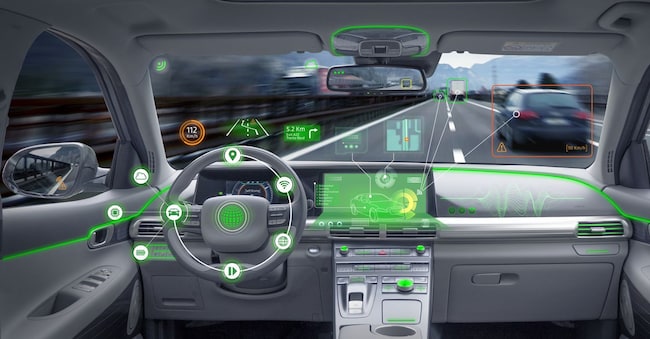
In the world of corporate fleets, data has become the new fuel. Each vehicle produces real-time information on consumption, wear, routes, driving styles, transactions and even suspicious behaviour. A huge amount of information that risks remaining inert if not translated into operational decisions. This is where artificial intelligence is carving out an increasingly important role: the market for AI-enabled fleet management systems is set to grow significantly in the coming years, driven by the need for efficiency, safety and sustainability.
Algorithms make it possible to predict breakdowns before they occur, reduce downtime, optimise routes according to traffic and weather conditions, and monitor and correct driver behaviour. Ia also becomes an ally in the energy transition, with tools that analyse emissions, optimise battery management of electric vehicles and suggest charging strategies to balance time and costs. It is a new phase of fleet management, which goes beyond the logic of simple tracking and enters that of forecasting and operational guidance.
Ad hoc solutions have been on the market for some time now, also in Italy. Geotab, which today connects over four million vehicles worldwide, has introduced Ace, an assistant based on generative artificial intelligence. After an initial test with a hundred or so companies, Ace is now already used by over 1,500 organisations. And the most frequent questions fleet managers ask Ia with their prompts show that it is no longer just a tool for control: data analysis becomes key to encouraging virtuous behaviour.
LoJack also introduced significant innovations. Crashboxx AI, for example, detects an accident in real time, reconstructs its dynamics and estimates the damage with an algorithm that combines acceleration parameters, vehicle characteristics and history, drastically reducing false alarms. In parallel, the AI-Powered Risk Detection function signals abnormal routes or suspicious movements, immediately alerting the fleet manager and activating recovery procedures if necessary.
The adoption of these systems, however, is proceeding at different speeds. According to a survey conducted by Geotab at the end of 2024, 81% of European fleet managers already use data analysis for strategic decisions, and in Italy the percentage rises to 89%. Only 26 per cent, however, say they have complete and reliable information at their disposal: 37 per cent would like more extensive coverage, while 18 per cent complain of poor reliability. Ia is perceived as an answer to this gap, but not without fears: 51% believe it will simplify access to strategic information, while 40% fear it will introduce complexity.

