
Artificial intelligence improves fundraising
Sos Mediterranee communicates in a personalised way with donors. Dynamo also aims to use it for interactions with beneficiaries

3' min read
Key points
3' min read
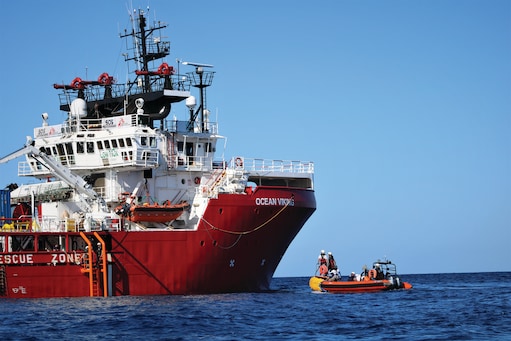
Making donations continuous, offering attractive information, seeking new potential donors. The third sector looks to artificial intelligence with confidence while being aware that the process needs to be thought out and guided. Sos Mediterranee, a humanitarian relief organisation in the Mediterranean Sea, has always worked on data management and has a high level of digital expertise. It has therefore been able to throw itself headlong into the use of artificial intelligence thanks to its collaboration with Skillando, a non-profit that accompanies the third sector in the digital domain.
Emails customised according to the archetypes
."The starting point was to ask ourselves: if Sos were a person, what characteristics would he or she have? We identified three Jungian archetypes: the wise man, the hero, the rebel,' explains Greta Granzini, fundraising manager of Sos Mediterranee Italia. 'Then we instructed Gpt to produce different versions of the same information mail according to the three archetypes, so with slightly different styles. Mails that we sent to our donors divided into four groups according to the opening rate of the mails'. By sending customised communications, the mail open rate increased by 10 per cent. Not only that. Different versions of the same email - the contents of which are in any case controlled by the organisation - make it possible to get away from the somewhat glossy and standardised information that characterises so many third sector organisations. "Moreover, we work in emergency, it would be impossible without artificial intelligence to send personalised mails to our donors within two or three hours," adds Granzini.
Reading and writing communiqués
.Sos Mediterranee's experience reflects the results of the Donare 3.0 qualitative survey conducted among the top management of non-profit organisations. The area of greatest use of artificial intelligence is precisely the revision/writing of communiqués, emails and reports. But also more targeted aspects such as defining the most effective subject for an email communication or adapting the communication and tone of voice according to the organisation and the specific profile of the donor it is sent to. Secondly, Ai is used for data analysis, especially in the identification of profiles, both individuals and companies, or in the definition of the most potential targets.This is the case of the Dynamo Camp Foundation, which offers free recreational therapy programmes to children suffering from serious or chronic illnesses.
Porcari (Dynamo): We have invested in technology and people
"As digital donations increased both in number and value, we felt the need to re-engineer ourselves to make the most of the information coming in from the donations themselves and to be ready for our transition. - explains Serena Porcari, CEO of Fondazione Dynamo - That is, we are an organisation that lives a lot on donations from companies and foundations, but now donations from individuals are growing a lot. And then the big challenge is the transformation of donations from sporadic to continuous'. The latest available figures of the 5 per mille - for the year 2023 - report a collection of over 929,000 euro against 20,175 signatures.
The Foundation has therefore invested heavily in digital architecture, software and hardware. The database has been made responsive and segmentable. Then Dynamo's 70 people are being trained and the foundation is about to publish a policy on the ethics of artificial intelligence.


