
Artificial intelligence in schools: its use amongst teachers rises from 57.4 per cent to 69 per cent
The second national survey by INDIRE and La Tecnica della Scuola, conducted on a non-representative sample of 2,105 teachers, was presented today at Didacta Italia – Abruzzo edition. Among those who responded, the use of AI in teaching has risen from 57.4 per cent to 69 per cent. Its use as a compensatory tool for inclusion has almost doubled

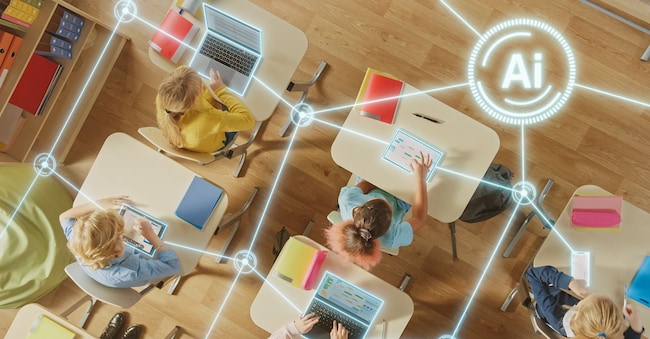
The use of artificial intelligence in teachers’ work is on the rise, but so too is caution regarding its impact on learning and its use by pupils. This is the finding of the second national study on the relationship between AI, teaching and the teaching profession, carried out by INDIRE’s PATHS Research Group and the publishing house La Tecnica della Scuola, and presented today at Didacta Italia – Abruzzo edition.
The analysis
The analysis is based on the complete responses from a sample of 2,105 teachers at all levels, compared with the 1,803 participants in the 2025 survey. Although not representative of the Italian teaching population, the results describe the experiences and opinions of the respondents and provide useful insights into the evolving relationship between schools and artificial intelligence.
69 per cent of the teachers who responded stated that they had used AI in their teaching (57.4 per cent in 2025), representing an increase of 11.6 percentage points. These tools are used for activities such as lesson planning and the personalisation of teaching materials.
Inclusive education
One finding of particular interest concerns inclusive education: the use of AI as a support tool for pupils with special educational needs or disabilities has risen from 10 per cent to 18.8 per cent, almost doubling compared with the previous survey. Furthermore, 56.8 per cent of respondents state that they use AI to support teaching activities, such as drafting reports, minutes and personalised teaching plans.
Teachers’ concerns
This increase in usage is accompanied by greater caution. 44 per cent of teachers – compared with 36 per cent in 2025 – express concern about the risk that virtual assistants might distract pupils and lead them to accept incorrect or unfounded answers without checking them.
Conversely, the proportion of those who believe that a virtual assistant available to every pupil could improve overall academic performance has fallen from 56 per cent to 48 per cent. 47 per cent of respondents consider these tools to be a valuable aid for independent study at home.
How to access
The way in which teachers access these tools is also changing: the proportion of teachers who rely exclusively on free solutions has fallen from 85 per cent to 66.1 per cent, whilst 21.4 per cent say they use integrated institutional school accounts.

Brand connect


Newsletter Scuola+
La newsletter premium dedicata al mondo della scuola con approfondimenti normativi, analisi e guide operative
Abbonati