Culture

Artificial intelligence, untapped potential in museums

Only 30% of institutions use it and in an unstructured way, according to the PoliMi Observatory
by Alessia Maccaferri

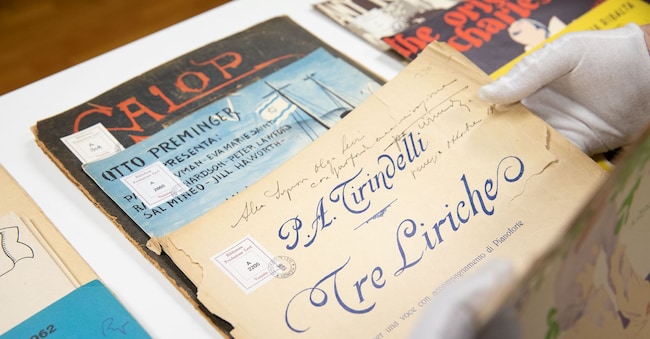
Laboratorio di Digitalizzazione LeviDigiLab della Fondazione Ugo e Olga Levi”

3' min read

3' min read

Artificial intelligence, slow ahead: only 30% of Italian museums, monuments and archaeological sites use it (compared to 20% last year). But use is predominantly individual (26%) on the part of employees who use generalist tools (from ChatGpt, Gemini, etc.) for their own activities. On the other hand, in terms of more structured initiatives, we are still in our infancy: only 1% of museums and theatres have already started projects with IAGen, and 6% of museum and 5% of theatre institutions say they are investing in this area.

The crucial problem of structured data

.

"There are two major steps to be addressed. The first concerns data. An organisation that does not have a structured database on its assets obviously cannot feed the Ai,' explains Eleonora Lorenzini, director of the Digital Innovation in Culture Observatory at the Politecnico di Milano. The survey, which will be presented today in Milan, points out how, however, the lack of a data strategy and the unavailability of data in the right format to be processed are perceived as obstacles to the adoption of AI by only 9% of museums and 12% of theatres, whereas probably, the Politecnico scholars assess, this is the real crux of the problem for fully exploiting the opportunities of this technology.

Loading...

What skills for Ai?

.

"The second aspect concerns skills. On this we are working hard to understand both those that will be most impacted by a possible substitution effect,' Lorenzini explains, 'and the augmentation effect, i.e. how human skills will be enhanced by Ai and how to take advantage of it.

Alongside the more intuitable technical user skills, there is also a need to develop - reports the Politecnico di Milano document - the ability to interface with technology providers by understanding their language and being able to transfer specific needs to them. Hybrid figures such as digital humanists would therefore be necessary for many stakeholders.

The most widespread applications of artificial intelligence concern internal staff and consist mainly of content creation activities (69%) and operational support for improved individual productivity (56%). New Ia assistants integrated in graphics software speed up image manipulation, allowing creatives to spend more time developing new concepts. Ai-based advertising tool suites enable organisations to manage communication on different social media in an integrated way with customised ads, leading to often significant improvements in campaign results.

Among the most popular tools are chatbots, used by several organisations to support and enrich the visitor experience (26% of cases). Such as Julia, the chatbot assistant launched in March by the Municipality of Rome. Or Nerone, an artificial intelligence software in the guise of the emperor Julius Claudius' avatar, is designed to accompany the public in requesting information on the opening hours of the Colosseum Archaeological Park and to provide in-depth historical information on the many monuments and sites that are part of it.

The Planetarium breaks down language barriers

.

Ia also helps to break down language barriers: 'Since the Expo, the number of foreign visitors to Milan has increased,' explains Riccardo Vittorietti, president of the LOfficina association that runs the Civic Planetarium, 'so we felt the need for a simultaneous translation for our live dissemination meetings. Last year, they launched a web app - usable from smartphones by connecting to wifi - that gives access to translation in 12 languages and also offers a text for the deaf. "For the future, we plan to use Ai for an avatar service that translates lectures into Italian sign language," Vittorietti adds.

The Levi Foundation's talking archive

.

But it is in digital archives that artificial intelligence can best express its potential not only to optimise but to improve scientific research by providing new correlations. This is what is happening in Venice, where the Ugo and Olga Levi Foundation has started a massive digitisation process of its musical heritage in 2022, also thanks to the Pnrr calls. The foundation has set up the European research project (ESF) 'Invisible Cultural Heritage' with Iuav and Ca' Foscari. It is experimenting with ChatGPT to analyse the illustrated covers of one thousand digitised scores from the archive collection, in order to extract data useful for cataloguing. In addition to reconstructing the history of the collection, some curious facts have emerged, including Ravel's passage from the home of the Venetian couple. "We believe that artificial intelligence helps us even more to shorten time, to lighten human work, and to allow us to publish and share heritage online, overcoming physical and time barriers, giving a great boost to research," explains Giulia Clera, Head of the LeviDigiLab Digitisation Laboratory. Furthermore, with the collaboration of Made in Heritage, the foundation designed an artificial intelligence that navigates through the digitised audio heritage (magnetic tapes, audiocassettes, Vhs about the foundation's conferences), making transcriptions, summaries and extracts names of places, people, topics, making the archive speak.

Copyright reserved ©
  • Alessia Maccaferri

    Alessia MaccaferriCaposervizio Nòva 24 - Il Sole 24 Ore

    Luogo: Milano

    Lingue parlate: italiano, inglese

    Argomenti: innovazione sociale, impact investing, filantropia, fundraising, smart cities, turismo digitale, musei digitali, tracciabilità 4.0, smart port

    Premi: Premio Sodalitas (2008), premio Natale Ucsi (2006), European Science Writer Award (2010)

Loading...

Brand connect

Loading...

Newsletter

Notizie e approfondimenti sugli avvenimenti politici, economici e finanziari.

Iscriviti