
Artificial intelligence, the Italian way through supply chains
Confindustria's mapping shows how the adoption of Ai is effective when it enters from strategic alliances with the supply chain

4' min read
Key points
4' min read
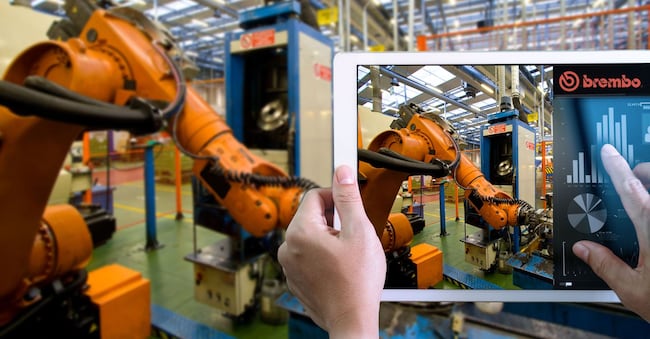
In the heart of Emilia's motor valley district is a factory of the future that can put almost ten million electric vehicles on the road each year. We are in Soliera, fifteen thousand souls north of Modena.
Corcione (Reinova): "Electrical components and software"
.This is where batteries are created that power cars, articulated vehicles, tractors. "We do traction electrification. Electric motors and all power electronics. Development, testing, homologation. We are the only ones in the world to offer an integrated solution. To start, we needed a connection of over ten megawatts and here there is a water part with an aquifer that helps us to cool the systems,' says Giuseppe Corcione, CEO of Reinova, a company that received the '100 Italian Excellence Award'. Corcione is a returning talent: because this mechatronic engineer born in Naples worked abroad for twenty years. Then the return to try to rethink engines starting with the electric and hybrid powertrain. Today the company employs a hundred or so professionals for a 70% international market, and its customers include the main players in the automotive industry worldwide. The turnover is 12 million euros, with a forecast of over 15 million for this year. The engineers living in the hi-tech factory surrounded by vineyards are in good company.
Artificial intelligence has always been allied to their work. From intelligent planning to cybersecurity, via advanced testing and customised autonomous driving. 'Ia makes it possible to connect electrical and software components in an integrated system, to carry out dynamic testing, to foster integration between hardware, software and cybersecurity within intelligent vehicles. Each level of the vehicle talks to the other in a cohesive, intelligent system,' Corcione points out. Thus the Ia road becomes a fast track, feeding a widespread, networked, pervasive Italian supply chain. It allows companies to improve performance, optimise processes, manage workflows, internationalise supply.
The Street of Districts
.Meanwhile, the technology chain is expanding with EUR 5 billion already invested in data centres and EUR 10 billion planned for 2025 26. But what is striking is the adoption in the various sectors, according to the data emerging from the report 'Artificial Intelligence for the Italian System', produced on the initiative of Confindustria's Artificial Intelligence Sounding Board. The document offers a mapping of over 240 active use cases in more than 70 Italian companies. The Italian way to AI passes through strategic alliances with the supply chain supporting established companies. For the Italy of districts, this is an operational evolution beyond metropolitan centres for a horizontal technology capable of penetrating every sector and process, as claimed by Ia pioneer Andrew Yan-Tak Ng, a professor at Stanford University. Research shows that generative Ia is stuck at 18.3 per cent.
Tripi: 'Digitisation must be extended to the whole of Italy'
.It is as if the communication hype is giving way to other applications. "Italian companies have already been using Ia for years in their production processes. The recent wave of generative has created new applications, but in reality these are further steps in a path that has already begun and which has seen Italian companies digitise in order to meet today's challenges and remain globally competitive. It is clear that we have to make sure that digitisation is not only a prerogative of certain realities, but that it extends to the whole of Italy: SMEs and large companies, public administration and citizens,' says Alberto Tripi, Special Advisor of Confindustria. Health and life sciences are among the sectors that most adopt Ia, followed by manufacturing and transport. These are less visible solutions because they are more process-oriented. "Ia cannot replace the human element, but it can help people perform their tasks faster and more efficiently, taking over repetitive tasks and contributing - through great computing power - to effective decisions made by people. The applications in use in Italian companies reflect this logic,' says Tripi. Meanwhile, operations lead the game with 37.3%. We talk about manufacturing, tourism or mobility. "The prevalence is due to the ability of Ia to adapt to the needs of individual sectors. We are therefore talking about applications tailored to the specific needs of industries. And it is precisely here that Ia can bring the greatest added value,' Tripi points out.

