Letter to the saver

Artificial intelligence: on the Tsmc race the danger of China

The chip manufacturing giant is exploiting demand for new technologies. Profits on the rise, but there is the unknown factor of new tariffs

class="dinomecognome_R21"> Vittorio Carlini

6' min read

Translated by AI
Versione italiana

6' min read

Translated by AI
Versione italiana

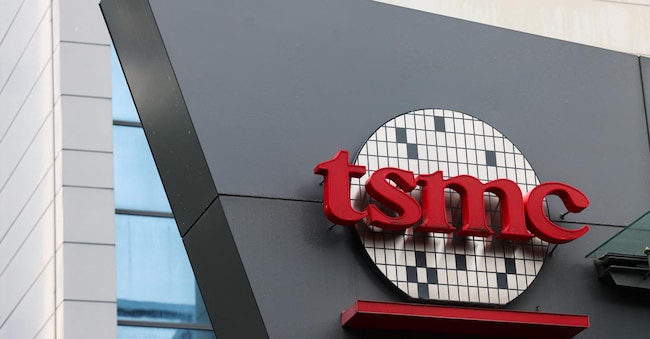
On the one hand, the expansion of corporate business, also in the wake of demand for microchips for Artificial Intelligence (Ai). On the other, the risk posed by China's moves with respect to the island of Taiwan and the tariffs war pushed by Washington. All with the focus on the frontier of innovation, in order to counter the competition. This is how the context of Taiwan Semiconductor Company's (Tsmc) business can be portrayed.

Yes, Tsmc. This, it should be remembered, operates as a so-called 'pure-play foundry'. In other words: the group concentrates exclusively on the manufacture of chips for third parties. In this way, the technology giant does not compete with customers, guaranteeing - according to it - a more effective and transparent collaboration.

Loading...

Technological evolution

The Taiwanese multinational company, as part of its strategy, relies heavily - precisely - on technological evolution. In 2024, capitalised investments (Capex) are expected to be just over USD 30 billion.

Well: between 70 and 80 per cent of the jobs in question are directed towards advanced process technologies. What are these? These are the most sophisticated methodologies and tools to produce chips with extremely small and complex transistors and integrated circuits. This approach allows for products characterised by higher performance, lower power consumption and higher transistor density. Each process technology is indicated in the nanometre (nm) size. For example: 7 nm, 5 nm or 3 nm. These, in the past, represented the actual physical size of the gate of a transistor. That is: the gate/switch that controls whether or not current can pass between two parts of the transistor itself. By applying a voltage to the gate, the path for current flow is opened or closed, allowing the transistor to function. Today, however, the use of the number in nanometres has a more commercial significance and serves to distinguish each generation of process technology.

This is a context in which - as the race for ever more miniaturisation is on the increase - companies in the sector, on the one hand, try to have technologies with fewer nanometres; and, on the other hand, want to increase the revenues generated by these.

TRIMESTRI A CONFRONTO

Loading...

Thus, in the third quarter of 2024, Tsmc indicates that it achieved 69% of its total turnover from wafers (the silicon base on which the chip is built) with the most advanced technologies. That is: from 7nm on down. Specifically: 17% and 32% of sales are the prerogative of 7 and 5 nanometres respectively. The remaining 20%, on the other hand, is attributable to 3 nm technology. A goal for the future? To start the 2 nanometre process. This, according to company indications, should be launched in 2025.

Let's be clear, the strategy in general does not imply that production with more nanometres is sidelined. The factory opened in Germany (Dresden) in the area of specialised activities - automotive and industry - also includes process technology with a higher number of nanometres. Having said that, however, the underlying consideration regarding greater miniaturisation remains valid. One example? The fact that the 3nm node is the basis for the realisation of highly efficient processors for data centres and artificial intelligence applications. That Ai which - it should be remembered - is largely behind the current boost to Tsmc's accounts.

The geopolitical risk

All roses and flowers, then? The reality is more complicated. For some time now - when talking about the Taiwanese chip giant - the geopolitical issue has been central. Now, however, with the return of Donald Trump to the White House, the question of relations between the island of Formosa and China becomes even more relevant. The proof? The share price dynamics on the stock exchange offered it.

RICAVI PER PIATTAFORMA E AREA GEOGRAFICA

Loading...

On 17 July, Trump (then still a mere US presidential candidate) said that Taiwan should pay the US for the defence umbrella granted to the island. In the wake of that statement, Tsmc lost 7.98% in a single session. A big thud that, moreover, is an indication of how the market is not really discounting the risk of military escalation by Beijing. Certainly, several experts consider an invasion of the island unlikely. It would be a no-win move, given the very interconnection between the two powers. The PboC, it is recalled, has an important share of the US public debt. Not only that. The military operation would 'disrupt' global microchip production and supply chains. An event which, on the one hand, would affect important American hi-tech companies (and not only); and which, on the other, would impact the very economy of the former Middle Kingdom. All with a drop in global GDP of up to 10%, according to Bloomberg estimates. That said, however, the geopolitical issue - given that Tsmc itself is diversifying the presence of its production base outside the island - must be taken into consideration.

The tariffs front

But it is not just a question of the risk of military conflict for Taiwan. Another aspect is the trade war between Washington and Beijing. Trump indicated during the election campaign that he might define - on exports from the former Middle Kingdom to America - new tariffs on specific sectors. This would be a further escalation of the tensions that already run through the hi-tech sector. In this sense, it is enough to recall what happened on 18 October 2024, when news broke of a US investigation into the possible violation - by Tsmc - of the rules prohibiting the sale of Ai chips to China's Huawei. On the stock market, the group's share price suffered only a slight skid. And yet, the event signals how new tariffs would exacerbate already existing geopolitical tensions.

So far, some considerations regarding technological developments and the trade war. The saver, however, turns his eyes to the income statement itself. The Taiwanese multinational reported rising revenues and profitability in the third quarter of 2024. Turnover was USD 23.5 billion, up 36% compared to the same period in 2023. Earnings per diluted share, for its part, rose to $1.94 ($1.29 EPS a year earlier). These are expanding numbers that the company says are due - in fact - mainly to the demand for smartphone chips and Ai. It is precisely the latter technology that is the main driver of Tsmc's business growth over the past year. Nevertheless, some experts are sending out an 'alert': the company's cruising speed in the last quarter, compared to the previous one, has slowed down (+12.9%).

INVESTIMENTI IN CONTO CAPITALE

Loading...

Stock market performance

The concern, at first sight, might appear excessive. However, the do-it-yourselfer should always monitor a company's growth rates and profitability. The reason? Because Tsmc's share price (+93.3% in 2024) has rallied a lot and the current share price - apart from the China risk - is sustainable if the group's running speed remains high. According to Seeking Alpha, some indicators signal that the shares are not at a discount. For example: the ratio of enterprise value to sales (both over the rolling 12 months and estimated over the year) is above - over 9 times - the industry median, just over 3 times. The group's own non-GAAP forward P/e (i.e. the ratio of price to estimated 2024 earnings) is higher than that of the benchmark industry. Conversely, however, the non-GAAP forward PEG - which normalises the P/e to analysts' expectations of future earnings trends - is lower than that of the sector. In other words: the market's bet is that the continued growth in corporate profitability will, on the one hand, justify the current multiples; and, on the other hand, bring them back to more appropriate levels in the coming years. Obviously, time will tell whether this approach is correct. In the meantime, more on the short term, the company - which in November reported sales up 34% on 2023 and down 12.2% compared to October - indicates the following estimates for the fourth quarter of 2024: revenues are expected to settle between USD 26.1 billion and USD 26.9 billion; the gross profit margin, calculated with the exchange rate of one US dollar against 32 Taiwanese dollars, should be between 57% and 59%. Finally, the operating profit margin, again using the indicated exchange rate, is estimated to be in the range of 46.5 to 48.5%.

Further reading

The stock trend

Copyright reserved ©
Loading...

Brand connect

Loading...

Newsletter

Notizie e approfondimenti sugli avvenimenti politici, economici e finanziari.

Iscriviti