Poland

Lublin, a magical journey to conquer the East

Multicultural, welcoming, young, rich in art and history: on the other side of the Vistula one of the most fascinating and unknown faces of Poland

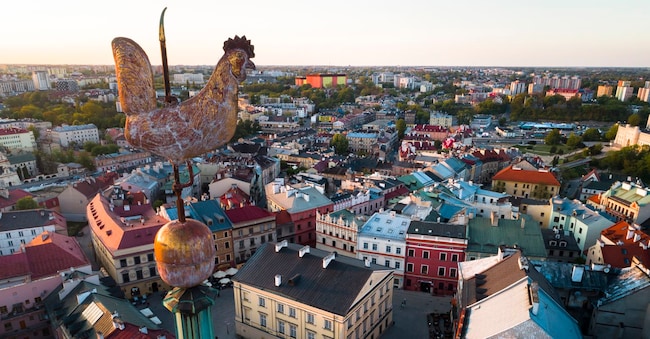
by Enrico Marro

Colpo d’occhio sulla Città Vecchia di Lublino, vista da un drone.

5' min read

Translated by AI
Versione italiana

5' min read

Translated by AI
Versione italiana

The Poland that few people know stretches east of the Vistula, caressing plains and cities, revealing a thousand-year-old dialogue between East and West, an ancient drive for peace and integration between cultures.
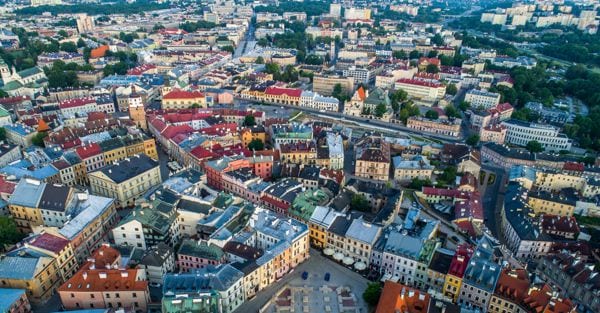
La città vecchia di Lublino vista dall’alto: con più di settecento anni di storia e oltre 320mila abitanti, è la più grande città polacca a est della Vistola (foto Lublin Metropolitan Tourism Organisation).

With more than seven hundred years of history and over 320,000 inhabitants, Lublin is the custodian and symbol of this legacy: eighth Polish city, European Youth Capital 2023 - also thanks to the city's nine universities - and future European Capital of Culture 2029. Connected to Italia with a modern airport and direct flights from Milan Orio.

Loading...

The place where East and West talk to each other

Here, just 150 kilometres from Warsaw, you won't findthe Austro-Hungarian atmosphere of Krakow or the Prussian experiences of Breslavia and Poznan. Lublin is rather"the place where East and West learned to talk to each other" as historian Jerzy Kłoczowski masterfully summarises.
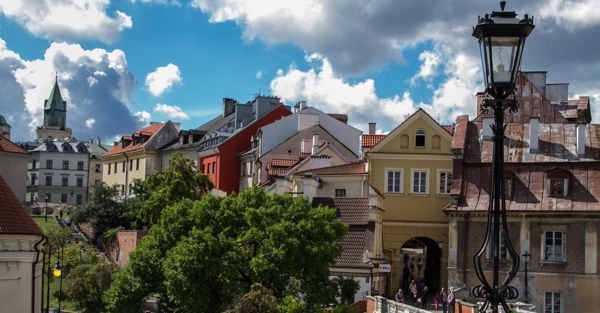
L’ingresso della Città Vecchia attraverso la Porta Grodzka, che conduce al quartiere ebraico (foto Lublin Metropolitan Tourism Organisation).

"The 'City of inspiration', as it likes to call itself, should be sipped calmly: observed, listened to, tasted.

Cradle of the European Union

Take the Medieval Castle, now rebuilt in a neo-Gothic version, which became a tsarist, then a Nazi and then a Soviet prison: inside it houses the Holy Trinity Chapel, with a Gothic interior but with Byzantine-Romanesque frescoes from the early 15th century.
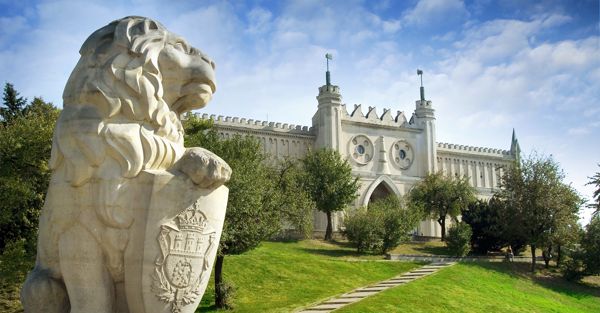
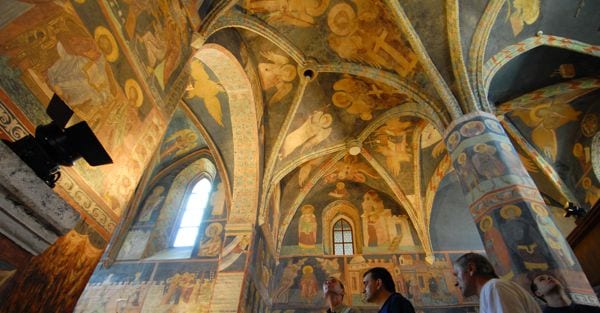
Behold, within these walls on 1 July 1569 was signed the Union of Lublin, the peaceful merger between the Royalty of Poland and the Grand Duchy of Lithuania.

La facciata del Castello medievale di Lublino, ricostruito in versione neogotica nell’Ottocento: domina la collina a fianco della Città Vecchia (foto Polish Tourism Organisation).

A gigantic confederation comprising, in addition to Poland and the Baltic States, parts of today's Russia, Belarus, Ukraine, Romania, Moldova and Slovakia.

It dominated eastern Europe for almost two and a half centuries, until the partition in 1795 by Austria, Prussia and Russia (with Poland disappearing from the map for 123 years). It is considered the first brick of the future European Union.

La Cappella della Santa Trinità, dall’interno gotico ma con affreschi bizantino-rutenici di inizio Quattrocento: qui nel 1569 venne firmata l’Unione di Lublino, confederazione pacifica che comprendeva buona parte dell’Europa orientale (Polonia e Stati baltici, anche parte delle attuali Russia, Bielorussia, Ucraina, Romania, Moldavia e Slovacchia) (foto Lublin Metropolitan Tourism Organisation).

The Jewish Quarter

From the Castle, go through the Grodzka Gate and you will find yourself in the Jewish part of the Old Town: it takes us back to the Lublin of 1939, one of Poland's largest cities, with 40% of the population Semitic.

So cultured and refined as to deserve the nickname 'Jewish Oxford', thanks to schools dedicated to the study of Talmud and Kabbalah.

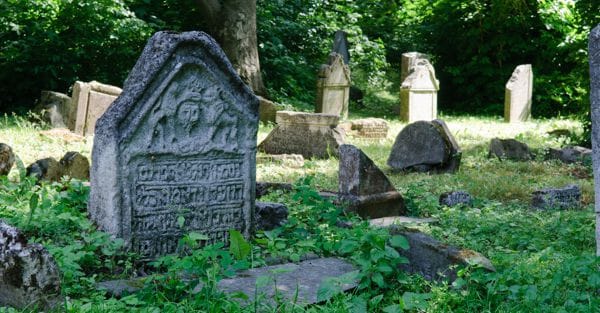
Il cimitero ebraico di Lublino è uno dei più antichi d’Europa. Venne profanato dai nazisti: molte lapidi furono usate per pavimentare il terrazzo della villa di Odilo Globocnik, capo dell’Operazione Reinhard (lo sterminio degli ebrei polacchi) (foto Lublin Metropolitan Tourism Organisation).

Today Jews have disappeared: only a few dozen remain. But a visit to the NN Theatre Centre: Lublin. Memory of the Place' tells their story well, as does a walk through one of the most ancient Jewish cemeteries on Polish soil.

Cebularz and klezmer music

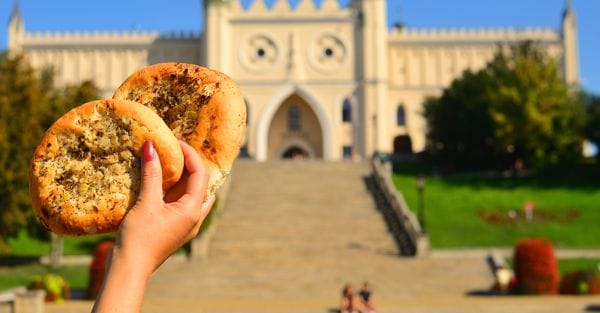
In the Jewish area, a stop at Kuźmiuk, the city's traditional artisan bakery, to taste the famous Cebularz, a wheat dough pancake typical of Polish and Ashkenazi Jewish cuisine, with diced onion and poppy seeds, is a must.

La Cebularz, frittella di pasta di grano tipica della cucina polacca e ebraica ashkenazita, con cipolla a dadini e semi di papavero (foto Polish Tourism Organisation).

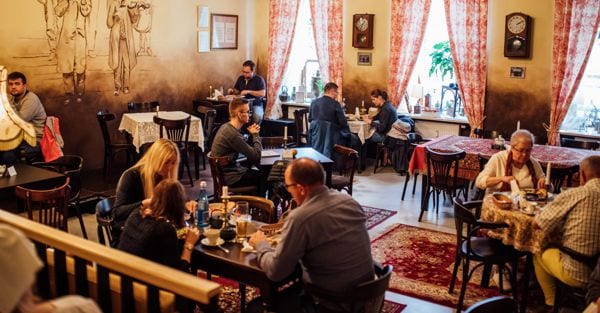
Or sit among the tables of Mandragora, a restaurant that is more of a cultural than gastronomic experience: a journey through time to the roots of Jewish cuisine (from roast duck wings to liver with dumplings and onion sauce), with klezmer music.

An Oscar Award in Lublin

This is where 'A Real Pain', the multi-award-winning masterpiece byJesse Eisenberg that last year gave Oscar to Kieran Culkin, was filmed. Set largely in Lublin, it is the story of two American Jewish cousins in search of their Polish roots.

L’interno del ristorante Mandragora, specializzato in cucina (e cultura) ebraica: è stato il set di alcune scene del film «A Real Pain» di Jesse Eisenberg (2024), premiato con un Oscar a Kieran Culkin (foto Lublin Metropolitan Tourism Organisation).

The Old Town, to be discovered simply by getting lost in its alleys, reveals the cultural polyphony of the magic city. Catholic and Jewish, Gothic and Baroque, with a dash of eclecticism, brutalism and communist realism.

La piazza del mercato vecchio nel centro di Lublino con il Tribunale della Corona, che fu la più importante Corte d’appello del Regno di Polonia (foto Lublin Metropolitan Tourism Organisation).

Among the pearls of the centre are the Market Square, the Gothic Cracovia Gate, the Crown Court, the Municipal Hall and the Baroque Cathedral of St John the Baptist, built by the Jesuits and inspired by the Church of Jesus in Rome.

Fountains of Light and Netflix series

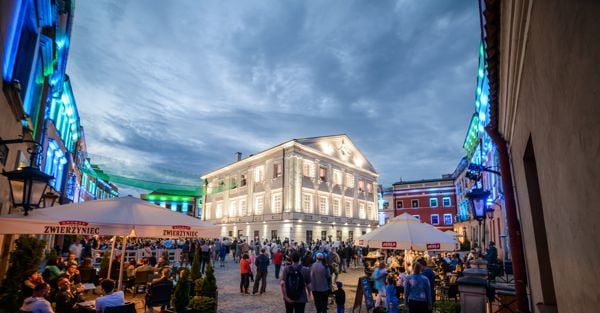
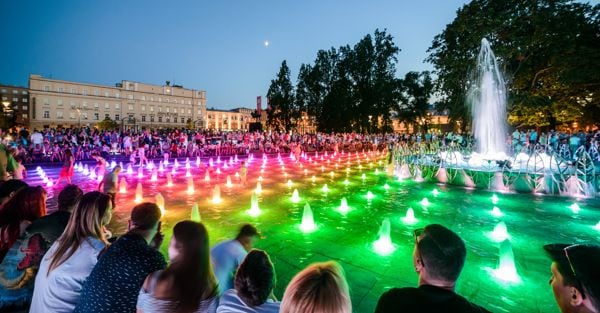
But the beating heart of nocturnal Lublin is the large, modern Litewski Square, built in the 19th century for the parades of the Tzarist troops and completely remodelled in 2017 amid fountains and light displays. Always full of life and young people.

Le grandi fontane illuminate di Litewski Square, piazza costruita nell’Ottocento per le parate delle truppe zariste e completamente rimodellata nel 2017: è il cuore della vita notturna di Lublino (foto Lublin Metropolitan Tourism Organisation).

A stone's throw away is the ultra-modern Centre for the Encounter of Cultures, the largest in eastern Poland, much loved as a set for Netflix productions: the transparent roof terraces (housing the municipal apiaries with dozens of beehives and the opportunity to buy zero-mile honey) show this glimpse of the city, with a view of the Saxon Garden where peacocks roam freely;

Restaurants and breweries

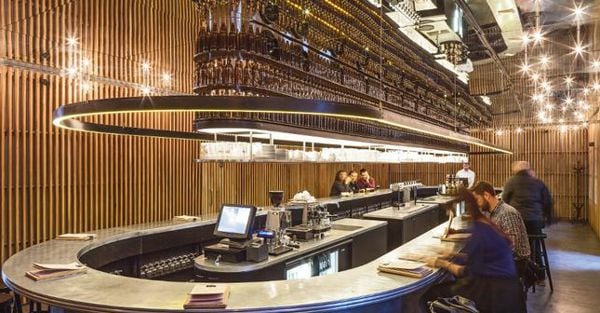
The choice of restaurants is truly vast. Besides Mandragora, the Ansaldo aeronautical restaurant, with flavours that hark back to the golden age between the two wars, the elegant The Olive and the Perlowa brewery with its record-breaking 30-metre-long bar (and the possibility to visit the ancient underground craft brewery, housed in a monastery) are worth mentioning.

L’impressionante bar lungo trenta metri della birreria Perlowa, in un complesso che comprende l’antico birrificio sotterraneo, appartamenti e spazi per la proiezione di film all’aperto a due passi dalla città vecchia (foto Lublin Metropolitan Tourism Organisation).

Majdanek, Journey to the End of the Night

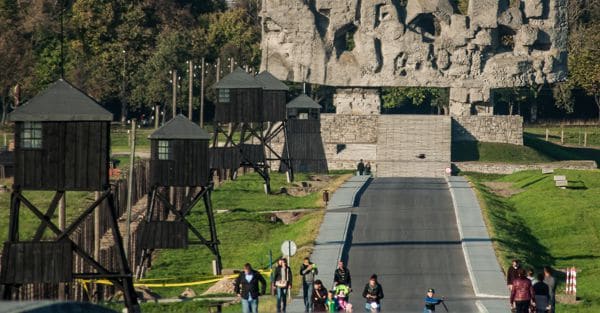
And then there is Majdanek. One of the largest Nazi concentration camps, captured almost intact by the Soviets in July 1944. Although designed for forced labour (the not so distant Belzec, Sobibor and Treblinka were dedicated to extermination) it has seven gas chambers - still with the blue encrustations of Zyklon B - and five crematoria. Compared to Auschwitz, it is much easier to visit: no reservations, queues or checks. Admission is free.

Subito fuori Lublino ecco il campo di concentramento di Majdanek, uno dei più grandi costruiti dai nazisti: catturato intatto dai sovietici nel luglio 1944 con le sue sette camere a gas e i cinque forni crematori (foto Lublin Metropolitan Tourism Organisation).

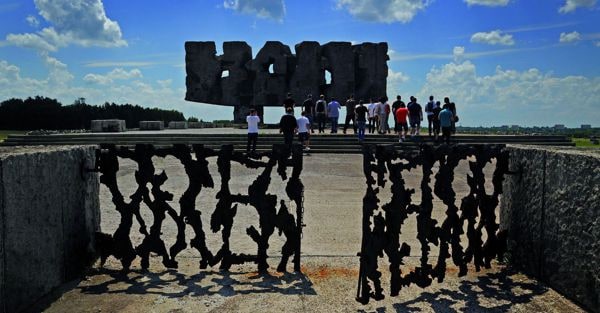
It was the first Nazi concentration camp to become a museum open to the public, from November 1944, while the war was still going on.

A touching journey into one of Poland's most painful moments.

Majdanek fu il primo campo nazista a venire aperto ai visitatori, dal novembre 1944, a guerra in corso e con la vicina Varsavia ancora occupata dai tedeschi (foto Lublin Metropolitan Tourism Organisation).

Italian Renaissance City on Polish soil

The region around Lublin offers other surprises. Starting with Zamość, a Unesco World Heritage Site, an ideal Italian Renaissance city from the late 16th century teleported to Polish soil at the behest of the wealthy tycoon Jan Zamoyski, who founded it in 1580.

It was designed by the talented architect Bernardo Morando, the future mayor of Zamość, a friend of the Polish nobleman and his fellow student at the University of Padua.

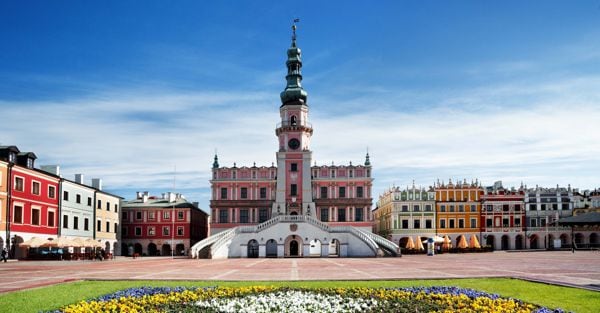
La piazza centrale di Zamosc, a pianta quadrata (100 metri per 100 metri): è dominata dal Municipio barocco-rinascimentale (foto Polish Tourism Organisation).

Particularly splendid is the geometrically square Market Square (100 metres by 100 metres), dominated by the Municipal Hall in Baroque-Renaissance style.

This pieces of Italia in the middle of the Polish plains melted the hearts of everyone, including the ruthless SS chief Heinrich Himmler, who had it renamed Himmlerstadt, protecting it from all Nazi destruction.

Kozłówka Palace, rococo ardour

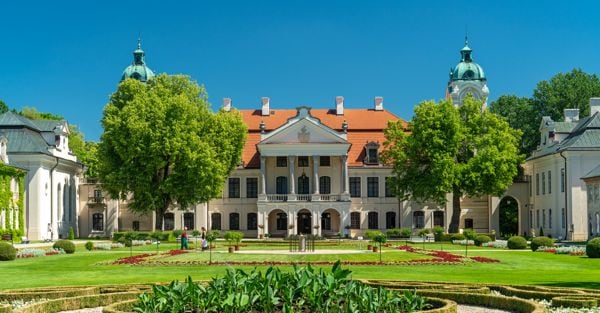
Equally grandiose is the 18th-century Kozłówka Palace, aPolish Versailles perfectly preserved in its Neoclassical and Rococo splendour, all to be discovered in the Baroque interiors that have hosted so many films and TV series.

Palazzo Kozlowska, “Versailles polacca” perfettamente preservata: venne costruito tra il 1735 e il 1742, poi rimaneggiato in stile neobarocco a inizio Novecento. Gli interni barocchi hanno ospitato diverse produzioni cinematografiche o televisive (foto Lublin Metropolitan Tourism Organisation).

Capital of Culture 2029

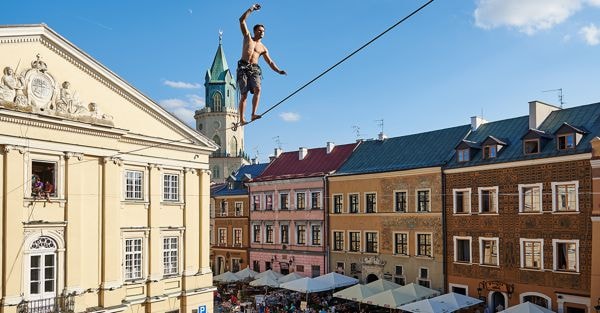
But the real boom of Lublin will come in two and a half years, in a 2029 European Capital of Culture: under the symbol of RE:UNION and the slogan 'from the Lublin Union to the European Union' there will be hundreds of events, legacies from the long tradition of avant-garde art, theatre, alternative music, even circus.

Lublino celebrerà un 2029 da Capitale europea della Cultura con centinaia di eventi, eredità dalla lunga tradizione d’avanguardia tra teatro, musica alternativa e arti circensi (nella foto, un funambolo in azione durante il Carnevale) (foto Lublin Metropolitan Tourism Organisation).

Be prepared for surprises. "Lublin is a trick, a distraction, an optical illusion: it is a mythical city," sums up New Yorker writer Manya Wilkinson, who dedicated her novel of the same name to Lublin.

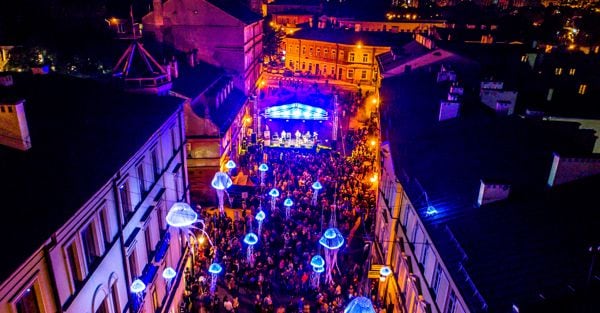
Il centro della città vecchia durante la Notte della Cultura, evento che si svolge in giugno: Lublino diventa palcoscenico per concerti, performance e spettacoli (foto Lublin Metropolitan Tourism Organisation).

Anarrative triumph of the absurd, full of magic and humour, a worthy literary counterpoint to the sequences of Eisenberg's A Real Pain.

Two excellent cultural hors d'oeuvres to savour at home, to prepare for a journey of discovery of the Poland that few people know.

Copyright reserved ©
Loading...

Brand connect

Loading...

Newsletter

Notizie e approfondimenti sugli avvenimenti politici, economici e finanziari.

Iscriviti