ArtVerona kicks off the Italian season with affordable prices
Lamonea’s management is enhancing quality by involving young curators: many young artists are featured in the exhibition

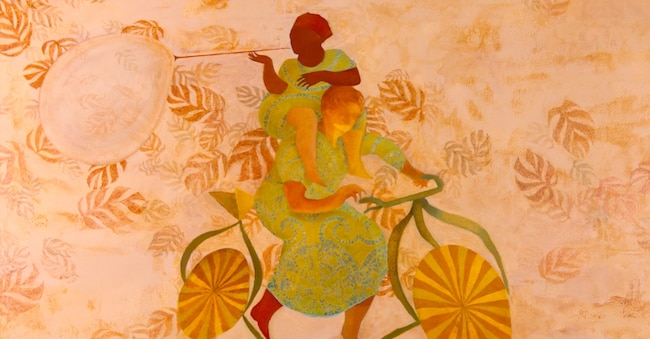
The 21st edition of Art Verona, organised by Veronafiere from 9 to 11 October, was the first art fair in Italia following the summer. This is a factor not to be underestimated, according to several exhibitors, who found collectors eager to see art, but also keen to compare the works on offer with what the packed autumn calendar of events still has to offer (particularly with regard to modern art). Indeed, Mercanteinfiera, taking place in Parma from 3 to 11 October, had, according to some, created a degree of competition. In any case, the Verona fair has been well received and, in the second year under the direction of Laura Lamonea, there is a noticeable improvement in quality and a desire for renewal, with the involvement of young curators.
Sales were recorded, above all, in a modest price range (when it comes to modern art, collectors certainly take their time). Most of the gallery owners interviewed said they were fairly satisfied, partly thanks to the acquisition grants. Between Friday and Saturday, some said they had sold ‘a few pieces’, others were pleased, whilst a few were still waiting to finalise sales.
The new photography section
With the fair’s new layout, there is no longer a distinction between modern and contemporary art in Halls 11 and 12 – a choice designed to emphasise continuity between the 20th century and the present day, enabling dialogue and cross-fertilisation. Compared with last year, there is a new section dedicated to photography, replacing the video section, whilst a cinema has been in place since last year (a new feature that Miart will also adopt in its 2027 edition). ‘Still’, the photography section, featured five galleries and was curated by Giovanna Manzotti. “The section’s name refers to that moment of anticipation before the shutter is released,” explained the curator, “among the themes that emerged are: the relationship with nature, personal memory, the archive, identity, and the studied composition achieved through the construction of photographic sets”. A wide range of approaches was presented by Giampaolo Abbondio: his stand featured young Italian artists such as Mara Palena, with intimate shots from her archive, and Simone Bergantini, who won the Nadia Zenato Prize for his works that resemble abstract paintings but are in fact fingerprints on a mobile phone screen, right through to Nan Goldin (prices at the stand ranging from 1,500 to 22,000 euros). There was also a wide selection at Ncontemporary, featuring works by Jonny Briggs, Walter Niedermayr, Erin O’Keefe and Ruben Brulat, the latter winner of the MZ Costruzioni Prize for his performative works exploring the relationship with the earth (prices at the stand range from 5,000 to 30,000 euros). But there were also interesting photographic works outside the section, such as those by Nicoletta Grillo at MLB – intimate yet political, based on an archive of messages her late mother left for her and her sister before going to work (from 2,200 euros) and those by Almudena Romero from Ipercubo, who won the BMW Residency Award in 2020 and has already exhibited in Arles; she presents entirely sustainable photography, from the medium to the printing process, on plant leaves (unique editions of ‘The Pigment Change’ from 1,800 to 9,000 euros) and on marble (‘Fossils of Our Time’ from 2,400 to 7,000 euros).
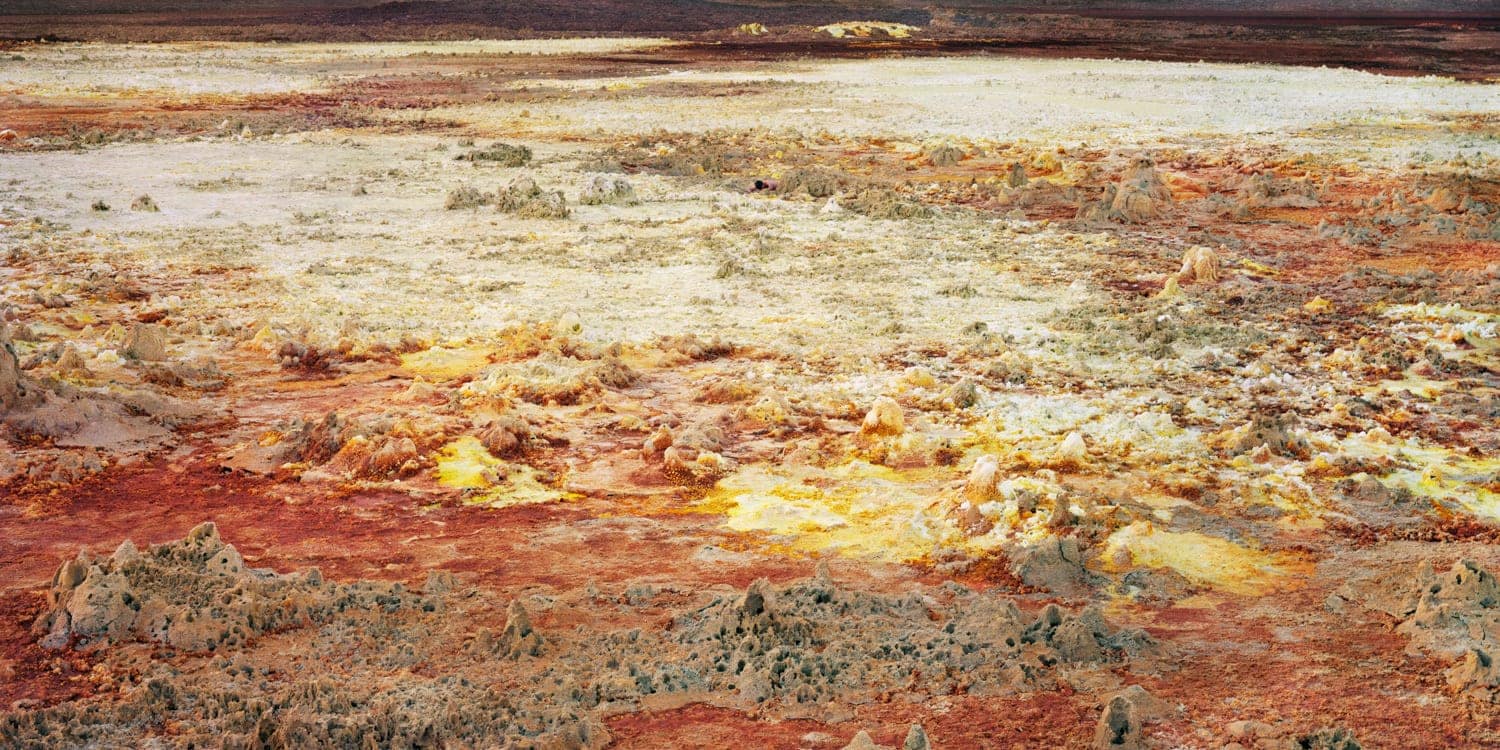
Also in the Main section, Zamagni Arte from Rimini presents an exhibition themed around travel, inspired by the Odyssey: five artists draw inspiration from Ulysses’ journey, the marble and salt works by Lorenzo Ceciloni are priced between 2,400 and 6,500 euros, whilst the works on gold leaf by Stefano Ronc are priced between 4,000 and 5,500 euros.
The Venetian School
The highlight of the fair was the “Pittura ora” section, curated by Leonardo Regano, featuring 13 galleries. “The title is a tribute to the 1982 exhibition by Francesca Alinovi,” explained the curator. “The section showcases a strong focus on Venetian painting, which is unique in Italia. In some ways, there is still that predominance of colour over line that has characterised Venetian painting from the Renaissance onwards. And then there is an incredible sense of community amongst the artists in Venice, who share studios and engage in dialogue with one another.” For example, Francesca Antonini presented Francesco Casati (1990), who has a studio within the Kadabra shared space in Venice Mestre, and creates works centred on human relationships and balance, with a touch of irony (priced from 1,500 euros for works on paper to 7,500 euros for canvases). At Andrea Festa’s stand, which won the Villa Filanda Antonini Prize for Kazuhito Kawai’s ceramics, Carlotta Mazzariol was present, with her paintings straddling the figurative and the abstract and her swift brushstrokes (€1,000–1,500 for small paintings and €4,200 for large ones), alongside Silvia Giordani, with her sterile landscapes blending geology and science fiction films, devoid of human life (from 1,500 to 5,300 euros).