
Edison and the Sicilian Regional Government reach an agreement on the Villarosa dam: a 700 million project
An agreement for the 30-year management of the reservoir has been signed in Enna. Plans include the restoration of the reservoir, a hydroelectric pumping station and financial commitments to the local area estimated at 120 million euros

Key points
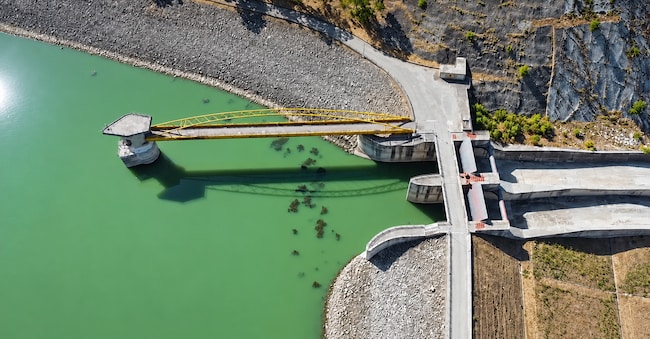
The restoration of a currently disused dam and an energy investment aimed at reviving the construction of hydroelectric pumping stations in Italia. Edison’s €700 million project, which forms the centrepiece of the agreement signed between the company and the Sicilian Regional Government’s Water and Waste Department, is based in Villarosa, in the Enna area.
The agreement sets out the terms under which Edison will be entrusted with the management of the reservoir for thirty years, with the arrangement running at least until 2056. It is a preliminary step towards the actual concession decree: it sets out the framework within which the company will be required to fund the investments needed to restore the dam – which is owned by the region – to operational condition, whilst also putting it to use for energy generation.
The agreement was signed at the headquarters of the Free Municipal Consortium of Enna, in the presence of the Regional Councillor for Energy, Francesco Colianni; the Director of Edison’s Hydroelectric Business Unit, Daniele Bellini; the Director-General of the Water and Waste Department, Arturo Vallone; and representatives of the three municipalities concerned: Enna, Villarosa and Calascibetta.
A new reservoir and an underground power station
The project involves the construction of an upstream reservoir with a capacity of approximately 3.1 million cubic metres, connected via underground water pipes to the existing Villarosa reservoir, also known as the Morello dam. The scheme will be completed by an underground power station, where the generating units will be housed.
The works include the restoration of the infrastructure required to restore the reservoir’s functionality. According to Colianni, the dam’s capacity will increase from 3 million to over 11 million cubic metres, five of which will be allocated for public use.


