Digital Economy

How is Qwen 3.6? Chinese challenge to American AI kicks off

Alibaba's model unveiled in April 2026, embraces the agent era

by Alessandro Longo

3' min read

Translated by AI
Versione italiana

3' min read

Translated by AI
Versione italiana

With Qwen 3.6, Alibaba raises the global competition on artificial intelligence. The model, unveiled in April 2026 through the group's cloud division, embraces the agent era. Mno oriented to simple text generation, more built to perform complex tasks autonomously. It is an evolution that is part of the growth of Chinese models, which are now able to compete with those in the US not only and not so much on a technological level as on cost and distribution methods.

From conversation to action

Loading...

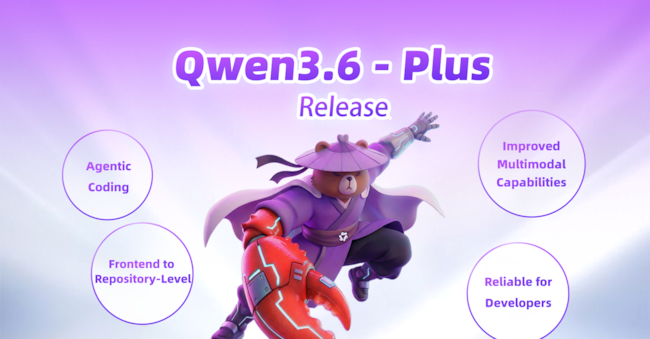
Qwen 3.6 was born with a goal: to transform the language model into an operational tool. The technical documentation published by Alibaba indicates a context window of up to one million tokens, a threshold that allows extensive code bases or complete document archives to be analysed in a single session. Besides the ability to understand text and images, the system integrates 'agentic coding' functions, i.e. the autonomous management of articulated tasks: the model can write code, check it, correct it and coordinate different steps without continuous human intervention.

This type of architecture reflects a trend already visible in US laboratories, see Claude Opus 4.7 just launched by Anthropic.

But in addition to performance, Alibaba is banking on a decisive factor: cost. At the time of the launch, the group quoted significantly lower prices than many Western proprietary models, with rates calculated per million tokens starting at a few yuan on the domestic market, according to data released by the Chinese business press in April 2026.

This choice is part of a broader strategy already experimented with in previous versions of Qwen: to place accessible, in some cases open-weight models alongside more advanced solutions available via APIs. The leading model remains closed, but the ecosystem built around it allows developers and businesses to progressively enter the platform.

The evolution of the Chinese ecosystem

In the past two years, China has accelerated the development of language models thanks to the role of large technology companies and government institutional support. The Qwen family, launched in 2023, has grown rapidly in size and specialisation, flanking generalist versions with models dedicated to code and mathematics.

A recurring element is the focus on efficiency: hybrid architectures, targeted use of computational resources and integration with proprietary cloud infrastructures. This approach has allowed Chinese models to narrow the gap with US models in several benchmarks, especially in technical tasks.

Two models compared

Leading American groups, from OpenAI to Anthropic, have built closed but highly integrated ecosystems, where the model is part of a broader offering that includes software, cloud services and productivity tools.

Chinese companies follow a different path. They maintain tight control over the most advanced models, but at the same time favour more openness in intermediate versions and aggressive price competition. The result is increasing pressure on the global market to reduce costs and increase accessibility. This should also be kept in mind here in Europe, for our companies and institutions.

Impacts on the market

For enterprises, the arrival of models such as Qwen 3.6 broadens the range of choices. The availability of less expensive solutions allows for experimenting with applications on a larger scale, while compatibility with widespread API standards reduces technical barriers to adoption.

The picture is also changing for developers. The possibility of working with models capable of managing entire development flows introduces new ways of programming, in which the human role shifts towards supervision and goal setting.

The entry of models such as Qwen 3.6 in short indicates that the future of AI also lies with players, such as Alibaba, capable of bringing these technologies to as wide a scale as possible.

Copyright reserved ©
Loading...

Brand connect

Loading...

Newsletter

Notizie e approfondimenti sugli avvenimenti politici, economici e finanziari.

Iscriviti