The interview

'Asia belongs to the Asians, it is becoming increasingly difficult for SMEs to invest'

Alberto Forchielli, the entrepreneur and founding partner of Mindful Capital Partners, speaks: 'The scenario has changed and today we need more and more expertise', in Italy 'I focus on SMEs with an international vocation'.

by Luca Benecchi

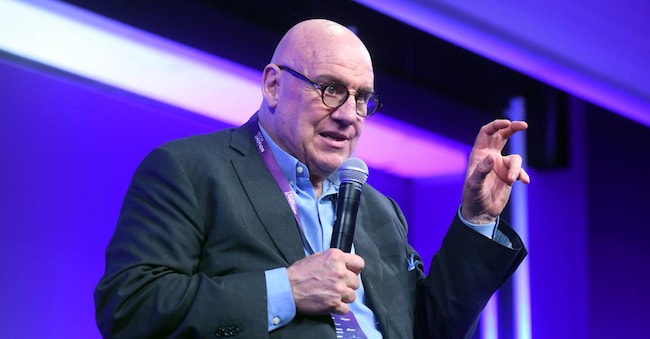
Alberto Forchielli. (Imagoeconomica)

4' min read

4' min read

"We have to tell the truth, for a European to go and work in Asia no longer makes sense. Because China now belongs to the Chinese, who are very good. India of the Indians, who are very good. The Koreans are also very good, as are the Japanese. In short, Asia now belongs to the Asians. Today, the opportunities for Westerners to emigrate or work in those countries are very limited. I say this to everyone who comes to me to tell me they want to go and do a master's degree in Singapore or Hong Kong'. For Alberto Forchielli, a 68-year-old from Bologna, after thirty-one years abroad, many of them in the East, the time has come for a change. A degree at his Alma Mater, then Harvard, before travelling the world and dedicating himself to private equity.

Why this somewhat surprising decision to return to Italy? And where will he live?

Loading...

I'm going to live in the country, in my house. In the hills above Imola. But I also bought a flat in Milan because I got a teaching job at the Catholic University, where I have my own course. A business economics course on Asia in the Master of International Business. And this is something that makes me very happy. Otherwise I continue to follow my fund, Mindful Capital Partners.

No Singapore, no Shanghai. So where should young Italians look? .

The only way for a westerner to carve out a niche in those countries is to have a very, very specific and narrow expertise on a specific topic, which is superior to that of others. But it is very rare to have that. Especially in economic subjects, I think there is no difference now. Even investing in those countries is very difficult, because now you find Korean, Indian, Japanese, Chinese investors of all kinds. Even the Taiwanese are very active.

After the Pandemic there was also a reversal of the trend with respect to foreigners.

In China they have decreased by 65 per cent. Many, who fled during Covid, never came back. Entering the professions is very difficult because you have to know Hindi, Chinese; you have to have relationships. They are very relational countries, so it's not easy to enter professionally, even if one studies. No matter how much one studies, he will always find 1,000 Chinese and 500 Indians ahead of him.

There has been a change for the better with respect to the quality of their manufacture.

They have the capital to invest, so they invested a lot and grew qualitatively. By now the Chinese, the Koreans, the Taiwanese make very competitive products. Then, whereas once there was a kind of inferiority complex towards the western product, the new generations are less and less sensitive to this, because they are used to seeing a great Japan, a great Korea, etc., which is why they are less and less willing to buy imported products from the west.

While many of these countries have evolved towards democratic systems, the same is not true for China.

China has followed the same economic dynamic as Korea, Japan and Taiwan. That is, a model centred on foreign investment and exports, but instead of opening up it has closed down. And now it suffers from this closure because there are no incentives for consumption. With high investments, they decided to focus exclusively on exports. Hence the problems that are arising in recent years.

The impression is that social control in China is very high.

The political system stands on the basis of enormous repression. That is why it spends as much as it does on defence, which is huge. Repression is made of technology, with extensive use of artificial intelligence.

What do you think will be the promised land in the next 30 years?

That definitely leaves Asia. Firstly, because there are so many of them, because they are not yet in demographic decline, because they want to work, they have no religious or trade union constraints. In short, they are going too fast.

How did Italy find it again? .

Everything here is still pretty much the same, with the same problems for the past forty years: companies that are too small, bureaucracy that doesn't work, too much debt, too little education. Unfortunately, Italy is what it is, but it remains my country and this is where I plan to spend the next few years.

Even his private equity fund has changed its horizon.

When we started out, we acted as a bridge between Europe and China. Then afterwards, it slowly became more and more difficult to operate in China, so we changed our name from Mandarin Capital Partner to Mindful Capital Partner.

So what do you focus on in Italy? .

On the most valuable thing this country has, namely the small and medium-sized enterprises that have international aspirations.

Copyright reserved ©
Loading...

Brand connect

Loading...

Newsletter

Notizie e approfondimenti sugli avvenimenti politici, economici e finanziari.

Iscriviti