Letter to the saver

Asml suffers in the stock market: the challenge on microchips is in the long run

Semiconductor machinery manufacturer relies on artificial intelligence to overcome weakness in 2025 and grow in the following years

class="dinomecognome_R21"> Vittorio Carlini

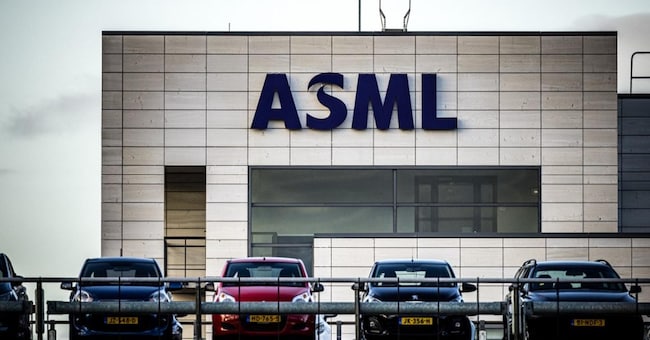
 (Photo by ROB ENGELAAR / ANP MAG / ANP via AFP)

6' min read

Translated by AI
Versione italiana

6' min read

Translated by AI
Versione italiana

First on 15 October 2024, the day on which - during the publication of the third quarter data - the outlook to 2025 was downgraded. Then on the following 14 November, when the long-term forecast to 2023 was - instead - confirmed. These are two of the most significant dates - particularly for the opposite effects on the market - in the recent history of Asml.

Market and quarterly

The Dutch chipmaking machinery giant (listed on Amsterdam and Nasdaq) has gone against the hi-tech rally over the past year. The stock lost 3.4% on the stock exchange (closing on 19/12/2024). Over the past six months, then, the decline comes to 32.3%. It is a descent to which the forecasts for the coming year, offered to investors at the same time as the last quarter's numbers, have - precisely - contributed. Asml - in the third quarter - was characterised by a growing income statement. Revenues reached EUR 7.47 billion, compared to EUR 6.67 billion a year earlier. Operating profit, for its part, rose to EUR 2.4 billion. Finally: net profitability. Profits amounted to EUR 2.1 billion (+9.3% compared to the same period last year), while diluted earnings per share (EPS diluted) were EUR 5.28 (EUR 4.81 a year earlier).

Loading...

TRIMESTRI A CONFRONTO

Loading...

estimates on 2025

However, investors snubbed such data, punishing (-15.64% shares in the quarterly trading session) the short to medium-term outlook. The Dutch multinational stressed that 'the recovery', in the wake of the weakness in smartphones and PCs, 'is more gradual than expected'. A context that 'continues into 2025'. In such a scenario, the turnover estimates for next year are between 30 and 35 billion. This value is below the consensus estimate (35.8 billion) and at the lower end of the forecasts indicated during the 2022 Investor Day. The gross margin, on the other hand, is expected to be between 51 and 53%. That is to say: a lower level than indicated two years ago. At that time, the estimates spoke of the gross margin between about 54 and 56%. In short: for Asml, the 2025 business should be weaker than the company itself thought. No wonder, then, that the share price has rolled over.

The long run

That said, about a month later, during the 2024 Investor Day, the company reiterated the outlook to 2030. Annual revenues are expected to be in the range of EUR 44 - 60 billion, with the gross margin roughly between 56 and 60 per cent. This is a forecast which, on the one hand, has brought relief to investors (the share price in the session rose by 6.99%); and which, on the other hand, is a consequence of a mix of factors. In general, there is the idea that the microprocessor sector is destined to expand, especially thanks to the continued push of Artificial intelligence (Ai). 'Global chip sales,' the multinational indicates, 'will reach more than a trillion dollars by 2030'. A fact that translates - between 2025 and 2023 - into an annual growth rate of around 9 per cent. In addition to this, with regard to the more specific company business, Asml indicates several focuses. Among others: the expansion in the adoption, production and capacity of Euv technology.

Yes, the Euv. What is it all about? To answer that, it is - first of all - necessary to recall the group's core business. The Dutch multinational is the market leader in so-called photolithography. The manufacture of a chip - it should be remembered - is divided into several stages. The first is 'design'. That is: the design of the semiconductor architecture. To the second is the construction of the microchip on the silicon wafer. Finally (third step) there are the function tests and the assembly of the microprocessor. Well: photolithography intervenes in the intermediate step. As soon as the silicon wafer is ready, sophisticated machinery - thanks to special beams of light - transfers the circuit design through the photomask (a mask containing the circuit design itself) to the wafer itself. This, covered with a light-sensitive material (the photoresist), is exposed to ultraviolet light, which 'transports' the circuit design onto the photoresist and thus onto the wafer. Then - once the photolithography is finished - processing begins to make, for example, transistors.

Technologies

Asml - in fact - manufactures lithography machinery. In particular, ultraviolet. This, in principle, can be divided - with reference to the different techniques - into two areas: Deep Ultraviolet Lithography (Dev) and Extreme Ultraviolet Lithography (Euv). In the first case, we are faced with the more traditional, not extreme frontier, approach - based for example on an ultraviolet wavelength of 193 nanometres (nm). The Euv, on the other hand - exploiting a much shorter wavelength (13.5 nm) - is suitable for supporting more 'pushed' technological productions (manufacture of chips even with gates at 2 nm). On closer inspection, the end markets of the two areas largely overlap. Both serve sectors such as: Memories (Dram and Nand), Advanced Logic (Cpu, Gpu, AI), IoT, Sensors, Automotive and Consumer Electronics. And yet, their role is different. Euv - in fact - is suited to more advanced contexts, allowing higher transistor density and lower costs. In other words: it is the driver - together with the 'solid' and proven Dev - on which the group is betting and which should enable business acceleration in the medium to long term.

RICAVI E TECNOLOGIE

Loading...

True! The same company acknowledges that the demand for Euv is not so strong today. There is a slowdown in the transition to more sophisticated technological processes and this is causing the current slowdown. So much so that, by 2025, there will be fewer sales of Euv solutions. This being said, however, the indication is also that, on the one hand, customer enquiries and tests of the Hig Na Euv (the most advanced Euv) continue to be successful; and that, on the other hand, Ai, energy transition and electrification will continue. Which will inevitably push the advanced lithography systems segment. That is to say, those Euvs on which the multinational company has decided to focus strongly.

So far, some considerations on technology and short- and long-term prospects. However, the saver looks at further aspects. Among others: the geopolitical variable. In the third quarter of 2024, the geographical breakdown of turnover - by equipment location - was as follows: China generated 47% of sales; Japan and South Korea accounted for 2 and 15% of turnover respectively. The USA accounted for 21% of revenue. The remaining 15% is made in Taiwan. In other words: the island of Formosa, with the giant Tsmc, and the former Middle Kingdom are worth more than 60% of the business. The condition makes the nose twitch. Of course! When compared to the past - apart from the volatility of percentages very much linked to the sale of individual machines - the incidence of the areas in question is decreasing. Formosa Island, for example, was worth 24% of sales in Q3 2023. And yet - especially if one listens to the words of the newly elected US President Donald Trump - the risk of a military escalation by China to conquer Taiwan cannot be ascribed to the fantasy-political voice. The market - which does not believe in the hypothesis - does not price the scenario into quotations. The do-it-yourselfer, however, must take this into account. Just as he must consider the topic of the techno-trade battle between Washington and Beijing. On 2 December, the US Department of Commerce tightened the - already existing - restrictions on the export of machinery to China, in particular for the production of military-grade chips. The group - commenting on the further tightening - emphasised, on the one hand, that this implies no material impact on 2024; and, on the other hand, remarked that - with respect to 2025 - the new indications are in line with what was communicated with the third quarter. That is: sales between 30 and 35 billion are confirmed, while the business in China will be worth around 20 per cent of total net sales for the whole year. Beyond that, however, the do-it-yourselfer must - again - pay close attention to the topic at hand.

RICAVI E GEOGRAFIE

Loading...

Against this background, what, then, is the stock's stock market outlook? According to Seeking Alpha, the non-GAAP P/e on 2024 - as of 19/12/2024- is 36.6 times (24.9 the median of the benchmark sector). The non-GAAP Peg is also higher than that of the sector. Price to sales for 2024, for its part, is just over 10 times (3.2 the comparison multiple). In other words: the stock - according to Seeking Alpha, which has a 'hold' rating - is expensive. By contrast, for the Bloomberg terminal 85.7 per cent of the consensus is 'buy' and the remaining 14.3 per cent 'hold'. Why? One can hazard a guess. Many investment banks - reasoning that the current weakness is also linked to contingent situations such as the difficulties of a customer like Intel - may assume that the future is not so bad. That said, it is essential to always use caution and carefully consider one's risk appetite.

PORTAFOGLIO ORDINI NETTI E MERCATI FINALI

Loading...

Stock performance
 

Copyright reserved ©
Loading...

Brand connect

Loading...

Newsletter

Notizie e approfondimenti sugli avvenimenti politici, economici e finanziari.

Iscriviti