Air transport

Assaeroporti: in Italian airports stocks throughout May, summer not compromised

In an interview with Radiocor, the association's president, Carlo Borgomeo, takes stock of the situation in light of the persistent tensions in the Middle East. "It is necessary for the government to set up a permanent monitoring table"
by Laura Bonadies

 IMAGOECONOMICA

4' min read

Translated by AI
Versione italiana

4' min read

Translated by AI
Versione italiana

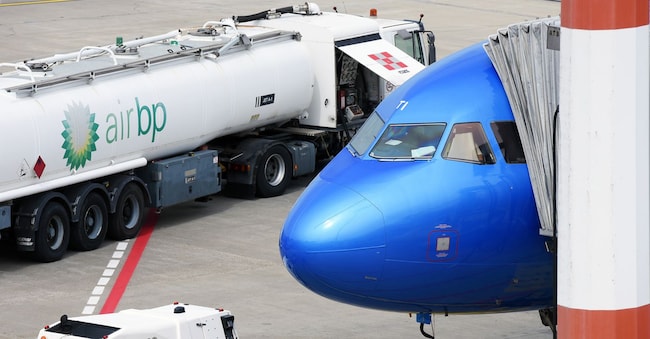
(Il Sole 24 Ore Radiocor)- Italian airports have sufficient fuel stocks for the entire month of May and in some airports in our country the situation is even better. Even in an uncertain environment with totally unpredictable variables, the summer does not seem to be compromised. What is needed, however, is active monitoring by both the government and the European Union so as to have the situation updated and to intervene in the event of further critical situations. This is what Carlo Borgomeo, president of Assaeroporti, the Italian association of airport managers, explains in an interview with Radiocor, in which he points out how the air sector pays the price of a sector that, compared to others, sees the end user make choices based on medium-term forecasts.

What is the current situation in Italian airports?

Loading...

At Italian airports there are sufficient stocks for the whole of May and at some airports even later. This means that in the short term we can have some peace of mind. Subsequent scenarios are conditioned by a series of absolutely unpredictable variables, both in their nature and in the intensity with which they will manifest themselves. As for fuel, the question is whether there is sufficient availability or not, although the latter scenario can be averted at the moment. It is clear that the reduction in supply leads to a price increase and this could lead to the cancellation of some flights.

Air transport pays the price of a sector that, compared to others, sees the end user make choices based on medium-term forecasts. We have to ask ourselves whether there will be paraffin in July and this explains the alarmist tones of recent weeks, which we do not share. Obviously we are concerned and we are careful, which is why we consider it useful to take mapping and coordination initiatives We do, however, foresee a risk that could occur: if passengers' worries and fears about booking continue, we could create the paradoxical situation of having airports with full tanks but empty planes.

What summer is in store?

A few days ago there was some good news, namely the EC's decision to proceed with a Europe-wide coordination of mapping and careful assessment of fuel flows across the continent. This is a very important action to then take useful decisions. Having said that, and bearing in mind that forecasts to date are not based on certain elements, I do not think that the summer is compromised as far as flights are concerned. I think there are a number of positive factors. Hormuz is important but it is not everything and we are looking at alternative sources of supply. At higher prices, for example, there is a significant inflow from the US and there may be more from America in general as well. It is likely that there will be an increase in ticket prices and that is why, as Assaeroporti, we believe it is useful for the government to set up a permanent monitoring table because, when there are crises like the current one, it often happens that attempts at speculation are discovered after the fact. If you work on them beforehand, they can be avoided.

What is the situation with regard to flight cancellations?

The most significant cancellations come from abroad. The most significant one was announced by Lufthansa, which cancelled a number of short-haul flights, which however represent 1% of the network. Ita Airways, on the other hand, reassured us by saying that they have stocks even until autumn. Ryanair's statements also do not point in the direction of major cuts.

After Covid, the airline industry finds itself in a new crisis. What action should be taken?

The thing to do is to put together all the available information. And this work has two objectives. The first is that with up-to-date and structured information, coordinated measures can be taken, including the possible release of reserves if the situation worsens. The second is to keep the situation under control, finding the right balance between concern and alarmism. This is about carefully monitoring events, not being optimistic or pessimistic.

How did the first quarter go for the airline industry in Italia?

If it had not been for the conflict in the Middle East, the industry would have continued its growth trend, which, apart from the Covid interlude, has been going on for years at a fast pace. There are airports that are recording incredible levels of growth. I would also point out the significant increase in cargo, which means development, growth in GDP and employment. It is a sector that is doing very well and we think that, just as we have overcome the Covid pandemic, showing great resilience, in a little while we will be able to say that we have put this crisis behind us too.

Copyright reserved ©
Loading...

Brand connect

Loading...

Newsletter

Notizie e approfondimenti sugli avvenimenti politici, economici e finanziari.

Iscriviti