
Assocostieri, Italian demand for LNG is growing
A study presented at the association's assembly predicts up to 600,000 tonnes per year by 2030, with an average rate of +25% per year
2' min read
2' min read
Demand for LNG for end use in Italy has the potential to grow by up to 600,000 tonnes per year by 2030, with an average annual growth rate of 25% five years from now. This is in the reference scenario. While in a more optimistic scenario, in which adequate infrastructure and competitiveness of liquefied natural gas are fully realised, volumes could rise to 840 thousand tonnes, with an average annual growth rate of 33%. This is what emerges from the study Sslng Watch: the LNG end-use chain in Italy - 2025, carried out by Assocostieri in collaboration with Mbs Consulting; a report that provided an updated analysis of the sector's historical and forecast data, highlighting the numbers illustrated above.
The study was presented during the association's annual assembly, held at the Ministry of Enterprise and Made in Italy. "The government," said Minister Adolfo Urso in his speech, "is working to make Italy a major hub of logistical connectivity between Europe, Asia, the Middle East and North Africa, as also highlighted in the Mattei Plan strategic project. We are a country that can count on an advantageous geographic position, thanks to its 645 coastal municipalities distributed in 15 regions facing the sea. We need to invest and make the most of the plurality of energy vectors available, following the principle of technological neutrality that must be the goal of our European Union. We want to be protagonists in a phase of profound infrastructural and technological revolution that must lead Italy to be a model of environmental sustainability, innovation and energy security'.
Loading...
Fuel for ships overtaking heavy traffic
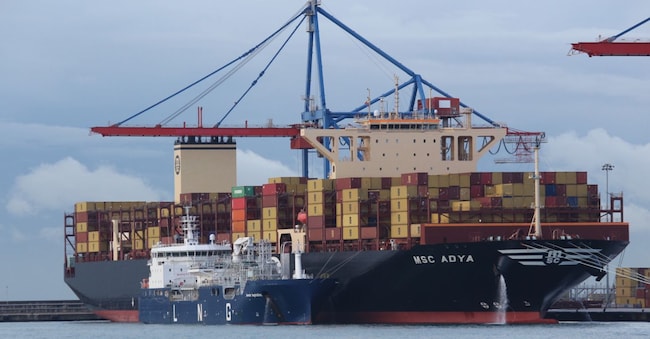
.The LNG market, it emerged during the meeting, "is mainly driven by the heavy transport sector, which in 2024 has already recorded an 8% growth compared to 2023, reaching 135,000 tonnes of consumption. For the maritime sector, although bunkering is still limited in the medium term, the outlook is positive: the new small scale infrastructure could bring LNG demand for bunkering to around 320 thousand tonnes by 2030, thus exceeding the expected consumption in heavy transport (around 285 thousand tonnes)'.
In Europe, the study clarifies, 'five LNG tankers for bunkering are already operational; soon the Avenir Aspiration will be operated by Eni; by October 2025 the Green Pearl, by Axpo (destined for Italy) will arrive; and in the first quarter of 2026 the Eliseus, again by Axpo, is expected; Msc, moreover, has ordered four bunker tankers destined to operate in the Mediterranean. Worldwide, there are currently more than 600 LNG-fuelled ships and as many have been ordered, of which 40 are destined' for the mare nostrum.
Increasing biomethane production
.The report also underlines the growth trend in biomethane production, 'estimated at around 4.5 billion cubic metres by 2040, thanks to incentivised plants and the possible reconversion of biogas plants, conditioned by the introduction of new incentives'.


Brand connect
Loading...
