
Green gases: Assotermica and Proxigas champion sustainable decarbonisation
An agreement to provide clear, shared solutions, helping to create more effective energy policies. The aim? To promote biogas as a driving force for reducing emissions

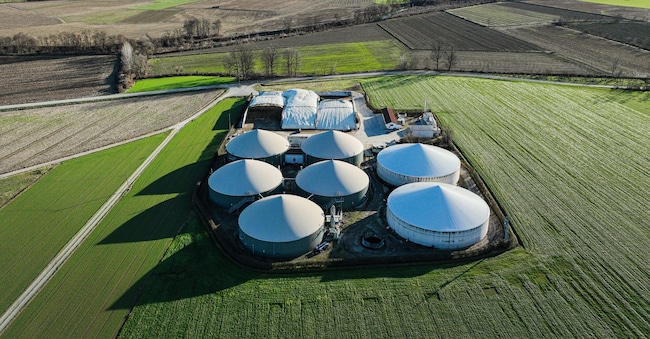
The issue of an energy transition that is truly sustainable, particularly in the current context of a multi-faceted crisis, is at the heart of the debate. The 2050 Net-Zero targets are the framework set by the European Union, but the path ahead appears bumpy, despite efforts to accelerate the decarbonisation of consumption. There is a growing conviction that a new energy mix based on low- or zero-carbon sources is needed, and that renewable gases can help reduce emissions, promote the decarbonisation process and mitigate the effects of climate change. It is therefore essential to set a common goal to promote the widespread use of green gases and thus contribute to reducing the carbon footprint of energy consumption.
The Proxigas-Assotermica Memorandum of Understanding
This is the aim of the Memorandum of Understanding signed by Proxigas, the leading association in the gas sector and a member of Confindustria, and Assotermica, which represents manufacturers of appliances and components for heating systems. The collaboration is designed to provide clear, shared responses, contributing to more effective energy policies. At the heart of the agreement, which aims to promote biogas as a driving force for reducing emissions, even against a backdrop of growing energy uncertainties linked to tensions in the Middle East and the ongoing conflict in Ukraine, is the strategic role of renewable gases, considered a key lever for combining environmental sustainability, technical feasibility and economic balance. The use of these energy carriers allows for the utilisation of existing distribution networks and integrates with the national building stock, whilst ensuring a significant reduction in CO2 emissions.
The starting point is that renewable gases, either on their own or blended with methane, can already help to reduce the carbon footprint, and thus CO₂ emissions, across all end-use sectors, such as gas-intensive industry and the residential property sector. Existing distribution infrastructure and end-use appliances are already suitable for burning these mixtures, which would allow the same result to be achieved, but with significantly lower carbon emissions. There is therefore a need to offer an alternative solution to households which, as part of an energy transition, would like to reduce emissions from their homes but are unable to install electric heat pumps.
Green gases as an alternative to electrification
One of the key principles of this collaboration, which has emerged against a backdrop of a ‘multi-crisis’ – a convergence of energy, economic and geopolitical challenges – is the belief that renewable gases can serve as a sustainable alternative to electrification, within a framework of technological neutrality. According to Proxigas and Assotermica, in fact, the energy transition cannot be based on a single solution, but must integrate various complementary technologies. “We need an approach based on technological neutrality, combining electrification with alternative solutions that allow all citizens to participate in the transition at sustainable costs,” said Pier Lorenzo Dell’Orco, president of Proxigas. The president of Assotermica, Giuseppe Lorubio, takes a similar view, arguing that the public debate is often polarised: “All too often, the discussion on decarbonisation focuses on the supposed merits or limitations of individual technologies, forgetting that the real solution lies in the combination of energy efficiency and the growing use of renewable sources.”
“Looking at the figures, it is clear that ‘natural gas will continue to play an essential role for Italian households, whilst renewable gases make use of existing infrastructure without requiring further investment’,” added Dell’Orco. After all, the issue is structural: “With around 70% of Italian households using gas for heating, the complete electrification of domestic consumption is not a realistic goal,” he added. Indeed, whilst it is clear that gas continues to be a mainstay of the domestic energy system, it is equally clear that, given the characteristics of the existing housing stock, full electrification of consumption appears difficult to achieve in many contexts: of over 16 million homes classified in energy categories F and G, fewer than 2 million could install a heat pump, due to technical and socio-economic constraints.


