
Asturias, a land of culture, spirituality and conviviality
A region of the Iberian Peninsula just waiting to be explored, nestled between the lush green Picos de Europa and the famous coastline lapped by the Cantabrian Sea

Key points
The ritual of pouring cider, the preparation of traditional dishes by the ‘guisanderas’, the strong flavour of Cabrales cheese, the silhouette of the imposing Picos de Europa mountain ranges, that of the lush green valleys, and that of the coastline lapped by the Cantabrian Sea. Gestures, flavours and landscapes that reveal the unmistakable identity of Asturias. Of great significance to the history and development of modern Spain – it was following the Battle of Covadonga in 722 and the subsequent defeat of the Muslims that the Reconquista began – this region in north-western Spain is a land where tradition, spirituality and culture intertwine. One of the best ways to experience all this heritage is to sit down at the table, savour the local cuisine and experience the warmth and hospitality that characterise the Asturian people.
Oviedo, the heart of the region
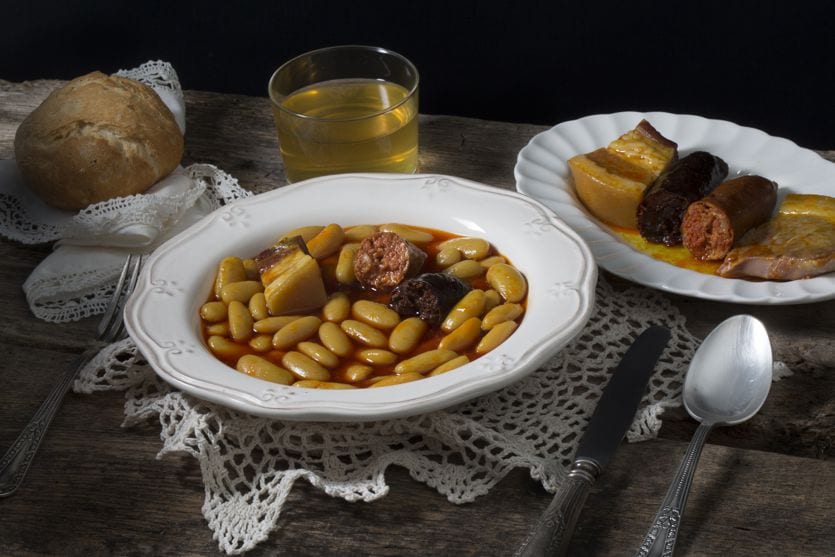
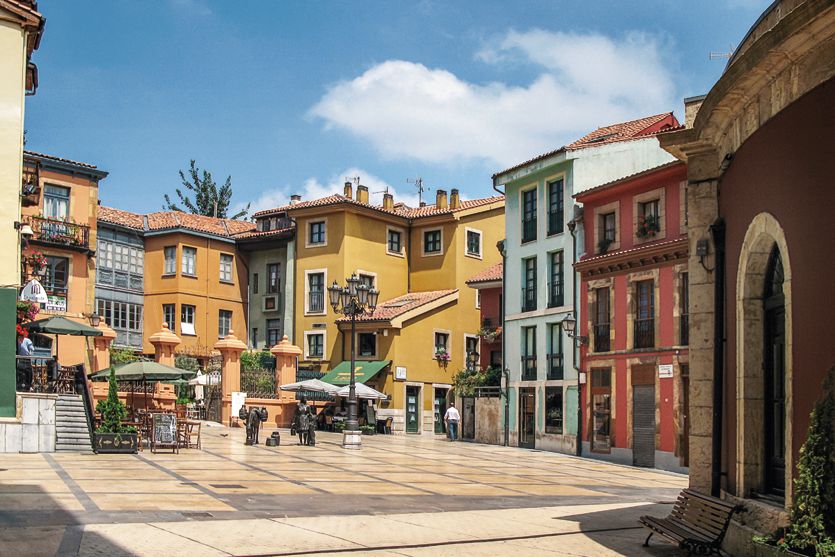
Oviedo, the capital of the Principality of Asturias – which can also be reached from Italia via a direct flight from Milan Bergamo Airport – is a lively city that bears witness to the centuries of history that have shaped its character. The most significant traces of this history can be found in the Casco Antiguo, the historic centre – perfect for exploring on foot – dominated by the Gothic Cathedral of El Salvador. A pilgrimage destination since the Middle Ages, this religious complex houses some of Christianity’s most venerated relics, protected within the Cámara Santa. Among its treasures are the Cross of Victory and the Holy Ark, a reliquary which also contains the sudarium, a cloth said to have covered Jesus’ face after his burial and which bears similarities to the Shroud of Turin. The cathedral is a key landmark, particularly for pilgrims and travellers undertaking the Way of St James on foot: some arrive here as it is the final destination of the Way of El Salvador, which starts in the city of León; others set off from here as this is where the Primitive Way begins, the oldest route to Santiago de Compostela, the one taken by King Alfonso II in the year 829, covering some three hundred kilometres through the inland regions of Asturias and Galicia. In the area around Oviedo, nature lovers can organise a number of walks; for example, they can follow the Senda Verde, a route that starts at Oviedo’s Winter Park and winds its way for around nine kilometres to Fuso de la Reina, along an old railway line converted into a footpath and cycle route suitable for everyone. Meanwhile, in the area around Trubia, you can reach the Guanga waterfalls: an easy, short route, ideal for families, which passes through woods, chestnut groves and meadows, leading walkers to the spectacular waterfalls hidden amongst the vegetation. Returning to the streets of Oviedo’s historic centre, just a short walk from the cathedral, you reach the popular Fontán neighbourhood, which takes its name from the ancient lagoon fed by the fountain that supplied it with water, with its arcaded houses featuring colourful façades and the popular Fontán market, which showcases another characteristic aspect of the city: everyday local life and regional cuisine. Among the stalls of this traditional covered market, you’ll discover typical Asturian produce, such as Cabrales PDO cheeses, fish and shellfish from the Cantabrian Sea, sweets like carbayones, and local dishes such as fabada (white beans served with various cuts of meat). Traditional cuisine is deeply rooted in Oviedo, so much so that every 19 October the city celebrates one of Spain’s oldest gastronomic festivals, the Desarme. This festival commemorates an event that took place during the First Carlist War in 1836, when troops loyal to the Constitution succeeded in repelling two attempts to capture the city. As a token of gratitude, the authorities offered the soldiers a special meal, thus giving rise to a tradition that would be repeated every year and which became even more significant in 1876, with the definitive end of the war (hence the term ‘desarme’, meaning ‘disarmament’). On 19 October 1897, Oviedo’s hoteliers helped to consolidate this custom by beginning to serve what has become the traditional ‘Menú del Desarme’, consisting of three courses (chickpea stew with salt cod and spinach, Asturian-style tripe and, for dessert, rice pudding) and turning this celebration into a gastronomic event of great importance for the city. The Desarme Festival always takes place in October and features a programme of cultural events, historical re-enactments and initiatives such as the days dedicated to the traditional menu, served in Oviedo’s restaurants, which this year will be held from 15 to 25 October.
Asturian cuisine: from cider to traditional dishes
Whether you’re on the Bulevar de la Sidra – the so-called ‘Cider Street’ – on Calle Gascona in Oviedo, or in one of the cider houses found throughout Asturias, you simply must try some natural Asturian cider. A drink that symbolises the region, it is characterised by a low alcohol content of around 6 per cent; it is produced exclusively by fermenting the juice of selected varieties of local apples and is not artificially carbonated. The production process begins in the ‘pomarada’, the traditional apple orchard dedicated to growing the varieties used for cider-making, followed by the stages of apple harvesting, fermentation and bottling. Designated as UNESCO Intangible Cultural Heritage in December 2024, Asturian natural cider is the most representative drink of Asturias, a symbol that embodies the history and culture of an entire region. Its value becomes apparent, for example, when visiting the exhibition rooms of the Cider Museum in Nava, thirty kilometres from Oviedo; by stopping off at the llagares, the apple-pressing sites, or by travelling along the Comarca de la Sidra, a route that passes through Villaviciosa, Colunga, Nava, Bimenes, Cabranes and Sariego, amidst apple orchards, rural landscapes and cider-producing sites. A great way to experience Asturian hospitality is to share a bottle of cider in a sidreria whilst watching the ‘escanciado’, the characteristic gesture of pouring the drink from a height – a distinctive way of pouring into the glass that brings out its aromatic qualities. Cider is a constant feature of the regional cuisine, as the ‘guisanderas’ (from the Spanish verb ‘guisar’, meaning ‘to cook’) are well aware; these are the cooks who preserve and pass on the heritage, recipes and secrets of traditional Asturian cuisine. Historically, many guisanderas were single women, widows or mothers who looked after their families on their own and who found in cooking a way to forge their own professional path and gain their independence. The Guisanderas embody a story of autonomy, resilience and the promotion of the local area through cuisine; today, the Guisanderas Club brings together as many as forty cooks who work in their own restaurants scattered across villages and rural areas; the venues in Oviedo are Taberna Salcedo, El Chato and Nalón.
The coast and the city of Gijón
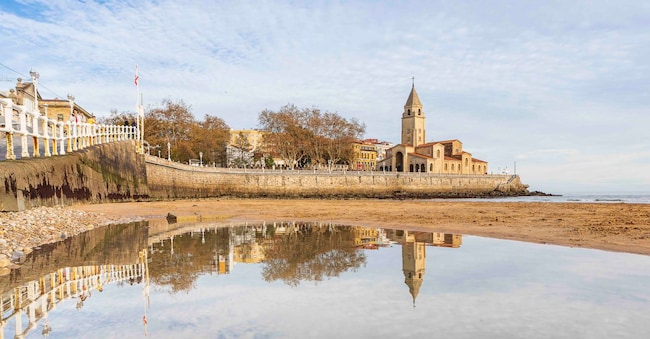
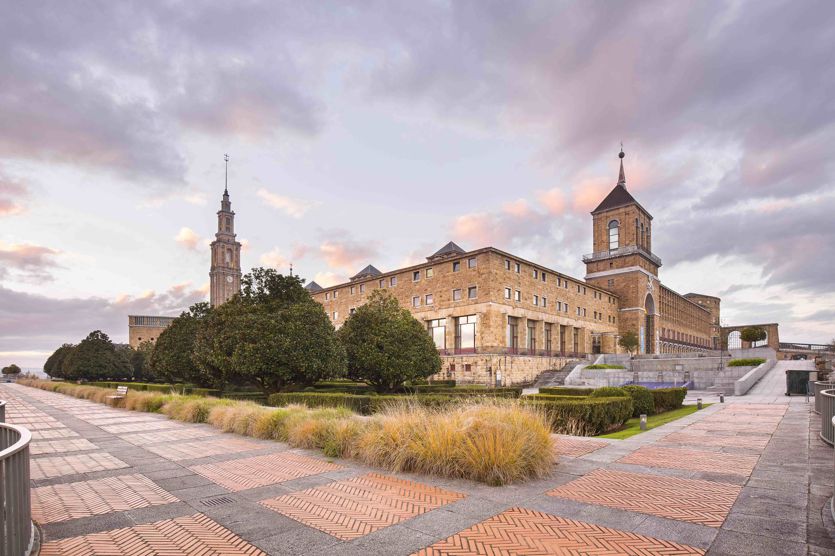
From Oviedo, you can continue north to Gijón. Nestled on the coast lapped by the Cantabrian Sea, this port city captivates visitors with its blend of historic monuments and more recent urban developments. The city’s maritime heritage is evident from the old fishermen’s quarter of Cimadevilla, which stretches up the hill of Santa Catalina. This area is bordered by the arcades of Plaza Mayor, which lead into the labyrinth of narrow streets and small squares in the historic centre, developed between the 19th and 20th centuries. Gijón also boasts numerous cider houses and restaurants run by ‘guisanderas’ (female chefs); notable venues include Los Pisones and the Los Pomares cider house. Around six kilometres from the centre lies one of Asturias’ most iconic architectural and cultural complexes: LABoral, the City of Culture, which, since 2007, has been a cutting-edge venue dedicated to the exhibition and production of art, science and technology. LABoral is open to the public from Tuesday to Saturday, with free guided tours; it hosts exhibitions, residency programmes and creative workshops for artists, collectives and the creative industries. Gijón is situated roughly halfway between western and eastern Asturias, a location that makes it an ideal starting point for exploring the coastline dotted with fishing villages, beaches and cliffs. To the east lie historic towns such as Ribadesella and Llanes with their sandy beaches, as well as fishing villages such as Lastres and Tazones; amongst the most picturesque villages to the west is Cudillero, famous for its colourful houses overlooking the harbour.

