Betting on emerging art at Art-O-Rama
The 19th edition of the Marseille fair presents quality proposals at prices under EUR 5,000

3' min read
Key points
3' min read
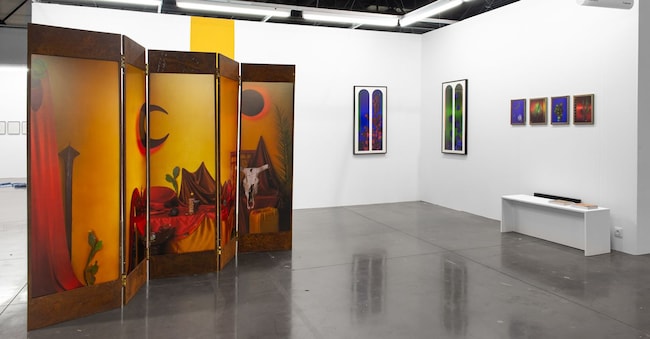
For some contemporary art galleries, the fair season opened these days in a soft way. In the sunny setting of Marseille, from 29 to 31 August, the 19th edition of Art-O-Rama took place, a research fair, where new talents could be discovered in an intimate and relaxed context, with few stands, but a lot of quality.
The absence of the Italians
.65 galleries from 14 countries participated this year. Unlike in previous years, there were no Italians. "Honestly, I don't know why this absence," commented Jérôme Pantalacci, director of the event. "We have always had a good connection with Italy, as well as with Spain, two countries equidistant from Marseille, which represent our Mediterranean roots. In addition, we welcome numerous Italian collectors and also a purchase prize from a collection in Naples, that of Francesco Taurisano".
Anti-crisis strategies
.At a difficult time for galleries, Art-O-Rama represents an affordable fair: stands for galleries with less than seven years of activity behind them cost 3,500 euros. The others pay €4,000, while stands in the Edition section cost €1,600. "The crisis, which is global and exists in all sectors, not just art, is being felt," comments Pantalacci. "In the last three years, there has been a slowdown: galleries have to be cautious and limit their participation in fairs. Perhaps we are less affected thanks to our low price policy, which weighs less on gallery investment. I believe that the younger galleries, which have fewer fixed costs, can better overcome the difficult moment. Also, working with emerging artists, they have more affordable prices and sell more easily'.
Prices and trends at the fair
.Prices at the fair range on average from two thousand to five thousand euro for works of art and from one hundred to one thousand euro for publishing. "We have had a lot of sales since the opening," said Pantalacci. "We can see that purchases are mainly in rather low price ranges, but still sustainable for exhibitors considering their low expenditure." It is difficult to identify a single trend in terms of themes and styles: "we have a balance between maximalist and minimalist practices," said Pantalacci. "There is always a significant presence of painting and also drawing, but also sculpture and installation with an increasingly marked use of textiles and suspension".
Artists to follow
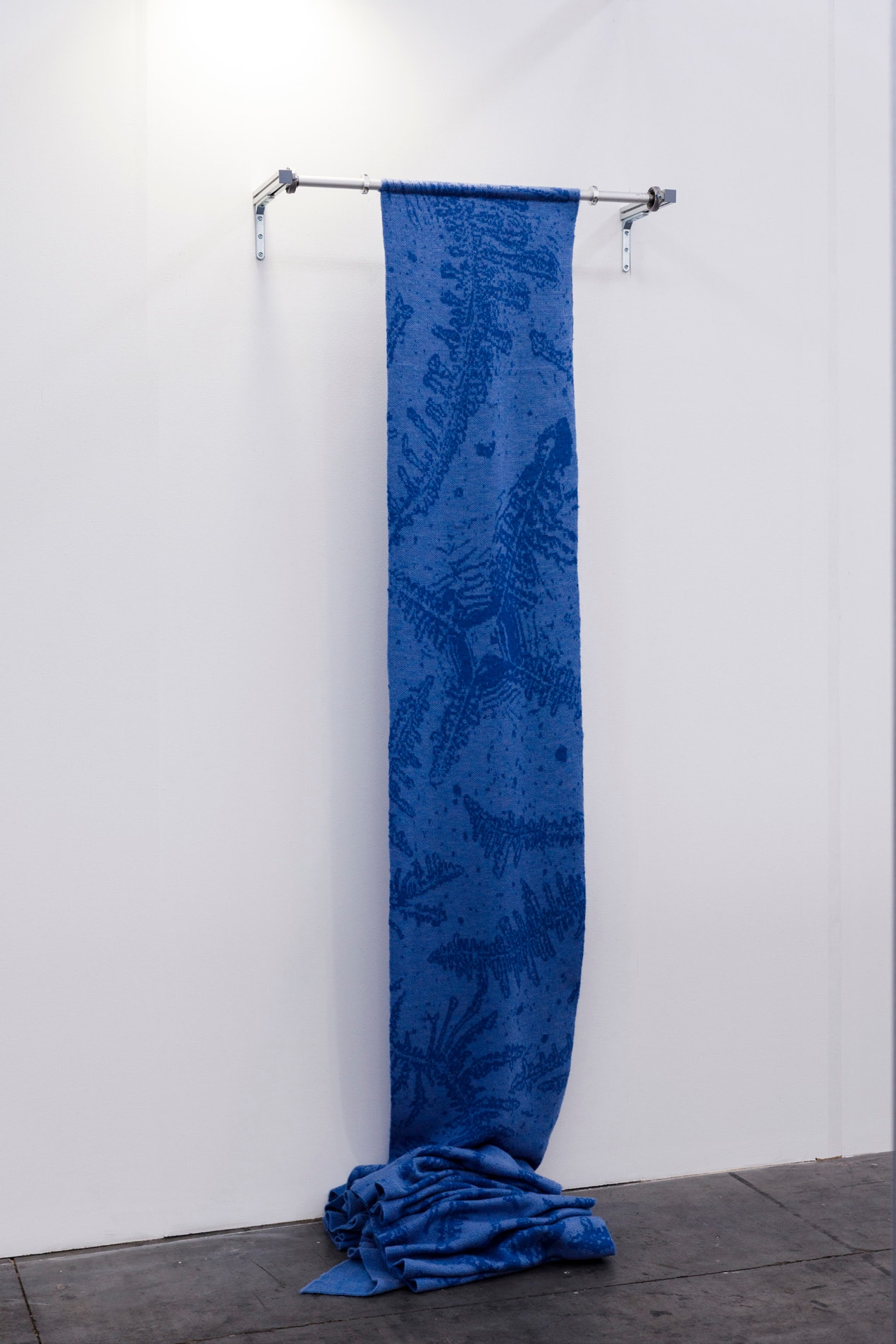
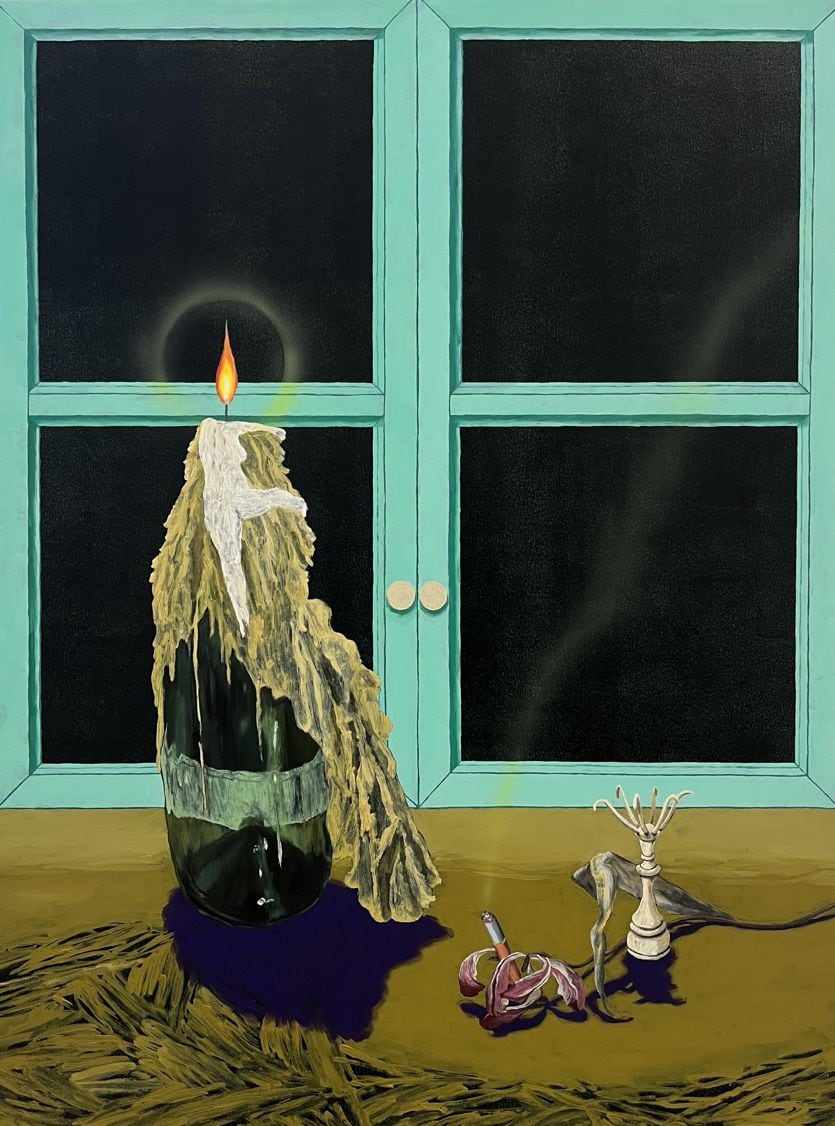
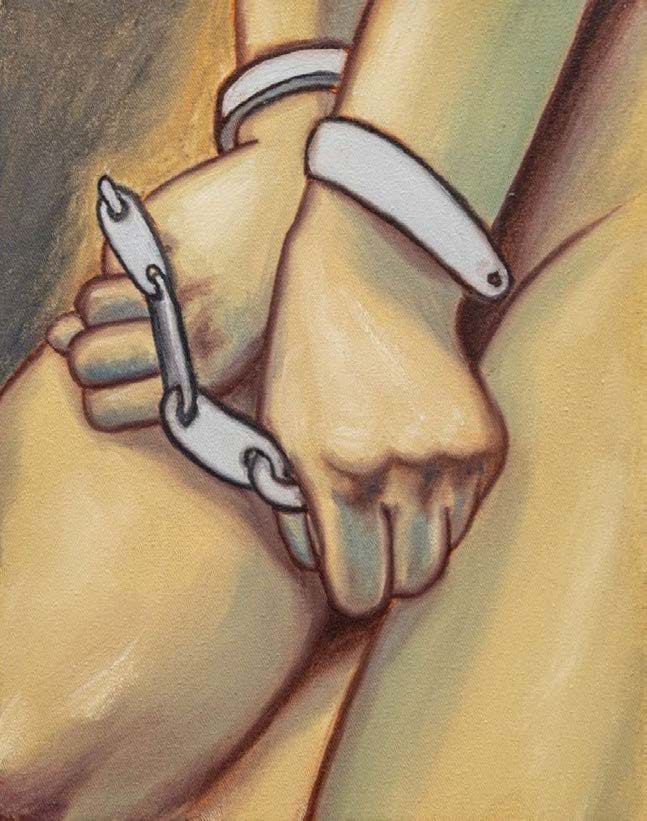
.An example in the field of textiles is the work ofHuaqian Zhang, a Chinese artist, born in 1997, who through a transdisciplinary practice combines design, writing, electronics and textiles. In her recent works, the artist started from microscopic images of bodily fluids to generate patterns knitted with modified Jacquard looms. For painting, on the other hand, the Swiss-Kosovan artist Azize Ferizi, at the stand of the Swiss gallery Windhager von Kaenel, who lives and works between Geneva and Paris, made a name for herself. Her new series of paintings explores the fragmented body as a place of introspection, suspended in the balance between figuration and abstraction, perception and representation. He has already won several prizes in recent years, such as the Kiefer Hablitzel Göhner Art Prize (2022), the Theodore Stravinsky Prize (2021) and the Ducastel Prize (2020). Also for Kristian Touborg, Danish, born in 1987, presented by the Chinese Vacancy in his first participation, painting is a dialogue between abstraction and figuration, a virtual and tactile experience given by layers of digitally printed textiles and canvases dismantled into collages with historical and contemporary references. On the other hand, the paintings by the Hungarian Attila Bagi, born in 1991, presented by Longtermhandstand in Budapest, start from ordinary and neglected objects of everyday life, inviting us to reflect on the poetic and transformative power of the everyday.