
A showcase for the bleak habitat at Gardaland
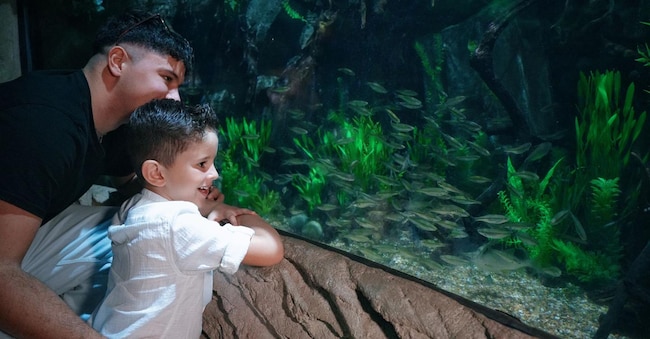
A special tank containing a school of these endangered fish was installed at the park's Sea Life Aquarium to illustrate a project of the Veneto Region aimed at recreating favourable conditions for the reintroduction of this typical species in the area.

2' min read
2' min read
The 'nature positive' trend is involving more and more companies and public administrations with the aim of halting the loss of biodiversity. It is also happening in the Lake Garda area, where an experimental ichthyogenic park dedicated to bleak, a key fish in the food chain but in danger of extinction, has been launched.
Thanks to 340,000 euro donated by the Veneto Region and the Cariverona Foundation, the fresh waters of Lake Garda, near the historical walls of the Peschiera fortress, have been strewn with new reeds to facilitate the reproduction of the alburnus arborella. And it is precisely in these first weeks of July that the eggs should hatch: "We are waiting for nature to take its course," explains Sabrina Repetto, curator of Gardaland Sea Life Aquarium. "If the project succeeds, it will be exportable to all Italian lakes. In the meantime, a special tank, containing a school of these fish, has popped up inside the Gardaland Resort Aquarium. Here visitors will be able to keep up to date on the problems related to the risk of extinction in marine and lake environments. This is an important information/educational element carried out by Gardaland thanks to Sea Life Aquarium (50 similar structures are present in 17 countries worldwide). A sort of gamification of biodiversity: educate, explain, tell while having fun.
Obviously, there is no sea here (as the project would seem to evoke), but fresh water that needs to be protected in terms of native flora and fauna from the waters of the Sarca river, which rises from the Adamello-Presanella glaciers in Trentino and flows into Lake Garda (then into the Mincio, then into the Po and finally into the sea).
An educational project that can also be very cost-effective. According to the Word Economic Forum, the implementation on a global scale of policies and initiatives for the protection and restoration of natural systems could lead to the creation of 395 million jobs by 2030 and generate around 10 trillion dollars of new annual business value, as recently highlighted by the Nature Positive Network, created on the initiative of the Foundation for Sustainable Development and the Po River Basin Authority.

