At the home of great photographers: laying bare beauty (and its traps)
She was the muse of Newton and Sieff. Now, instead of being looked at, she wants to see. So Sylvie Blum has stepped behind the lens and tells why a woman's gaze can be different.

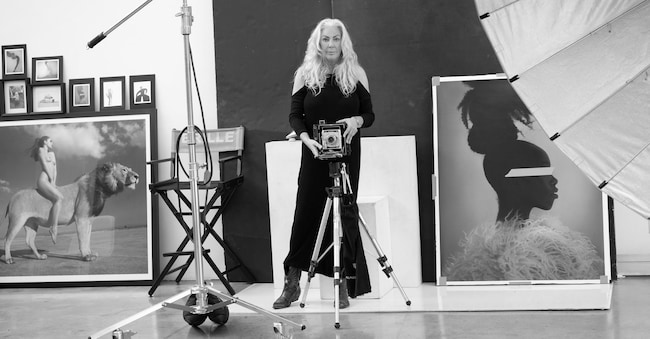
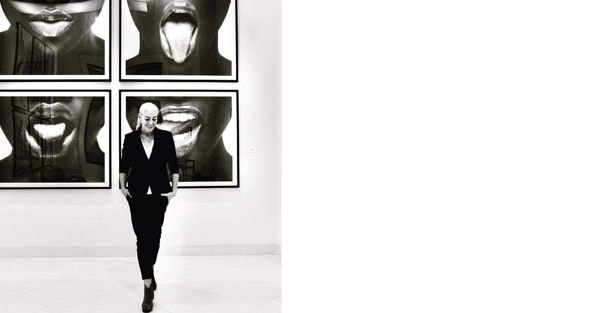
There was a time when I would never have imagined going behind the camera. But then came that moment in life when I stopped being watched and started, finally, to see'. We are in Sylvie Blum's Hollywood studio. "What luck! Today there is beautiful sunshine, so I can show you my prints for good,' she tells me laughing. She has her hair pulled back into a soft ponytail, her glasses with thick black frames. From the very first words we exchange, there is already a lot about her: a bright, candid and familiar joy that emerges so spontaneously that it surprises me. For over sixteen years, her face and body have been the canvas on which some of the greatest photographers, from Helmut Newton to Jeanloup Sieff, have projected their visions. But for Sylvie Blum, the role of muse has never been a passive one. After years spent internalising the complex grammar of the set, the transition to the other side of the lens came as a natural, almost necessary evolution. Today, the one who was the favourite model of Günter Blum, her mentor and husband, has become the creator of a personal, powerful and sculptural aesthetic, capable of narrating the feminine with an awareness that only those who have lived in the spotlight can possess. It was in that context that a profound understanding of the male gaze took shape in her, the so-called male gaze, with its accompanying codes, where desire and power intertwine. "Being a female photographer has given me an advantage with models that is not a matter of gender, but of skin: I know exactly what it feels like on the other side of the lens. I know that mixture of excitement and vulnerability that runs through your body when you are in the spotlight. Yes, I always push a bit further, because I know that the best comes when you step out of your comfort zone, but I have also learnt to read a look, to recognise when a model needs a break. The studio becomes a living room, a meeting point between friends, we sit there still made-up and combed, we laugh at a joke out of place, we play with stage clothes, like when we were children".

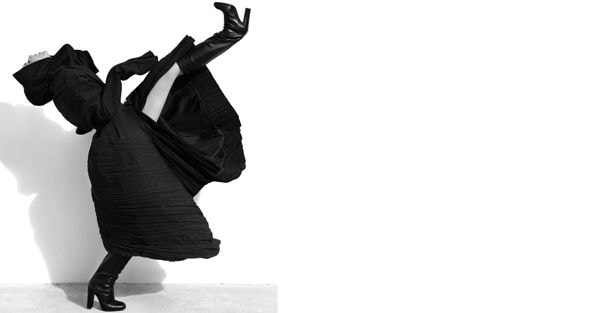
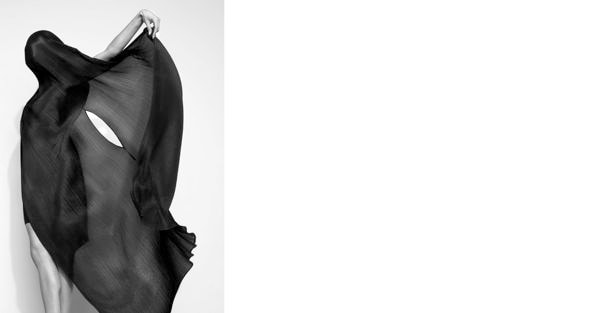
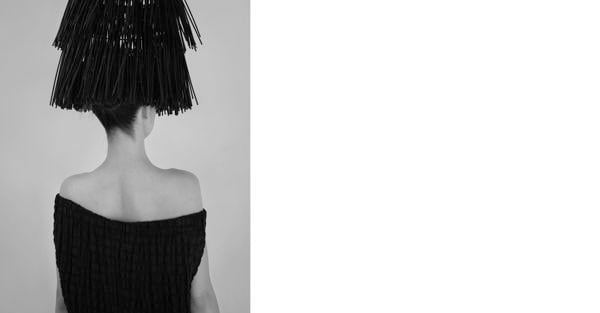
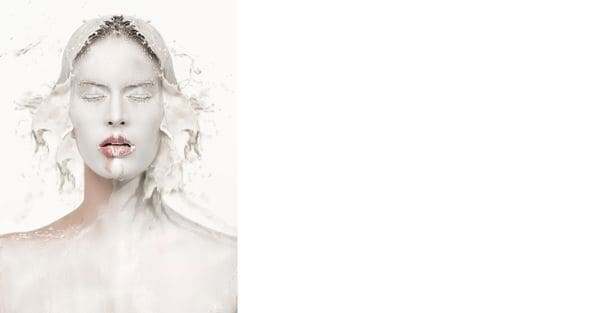
There is a fascinating contradiction in Sylvie Blum's work: her images appear impeccable at first glance, almost algid in their precision, every muscle transformed into a line, every curve reduced to pure geometry, every glance calibrated with extreme precision. Yet, behind that veneer of formal coldness, Sylvie is a force of nature. Amidst intertwining arms, surfacing glances and muscular tensions that hold back a laugh, pop figures emerge, tired and sly bathers, as if they have just emerged from a David Hockney pool. And then those enigmatic connections between femininity and the animal kingdom, as if Fernand Khnopff and Leonora Carrington had made a secret pact. His is not a control that subtracts the human, but sublimates it: he removes the superfluous to let the substance emerge. A vibrant, feminine, rebellious substance. Coldness remains on the surface. Underneath, fire.
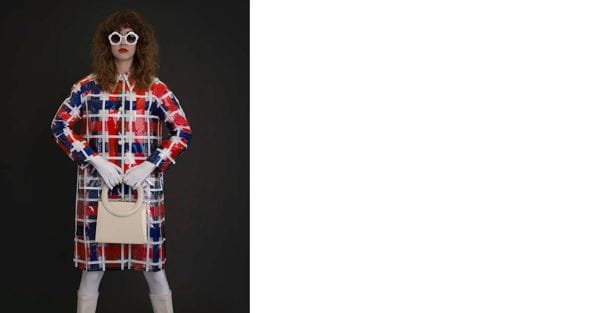
After more than twenty years in the United States, between New York and Los Angeles, she now divides her time between Europe and America, working from two highly symbolic locations: her Hollywood studio, once owned by the famous photographer Herb Ritts, and a historic 16th century cellar in Germany, which she is transforming into a creative space. She moves swiftly and at ease among the prints hanging on the walls, white and tall, and the smell of freshly brewed American coffee lingers in the air. Prints and specimens scattered on the table and floor tell of her world, while touches of pink and glitter gracefully break up the severity of the studio. Pink teddy bears, open lipsticks, tights and mini handbags refer to some of her most recent shots, small details of her patient and sensitive practice.
The more time passes, the more this double geography becomes imprinted in his gaze.
"In America everything is fast, efficient and crackling. But I need time. The longer I stay in Europe, the more I feel the need to cherish my roots. Born in Austria, I perceive a different, slower, deeper image culture in Europe'. Time is a key word in his practice and black and white dominates much of his work. Not as a homage to the past, but as a radical stylistic choice.