Books and maps

At the auction, King Arthur and Einstein’s maps proved a surprise hit

The Arthurian text was the top lot, but the biggest surge in value was for the maps. Four of the physicist’s writings went unsold. Harry Potter and Tolkien stood out

Testo miniato su pergamena, noto come «Graal Clermont-Tonnerre»

4' min read

Translated by AI
Versione italiana

4' min read

Translated by AI
Versione italiana

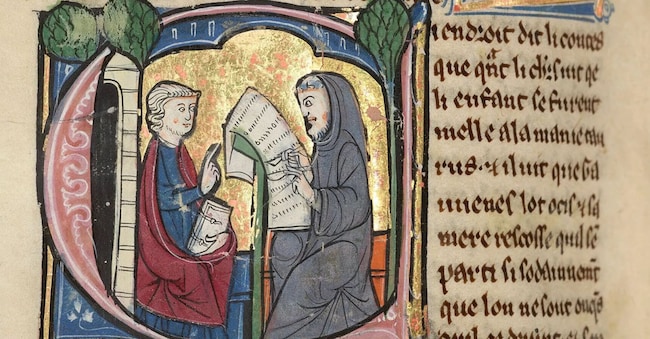
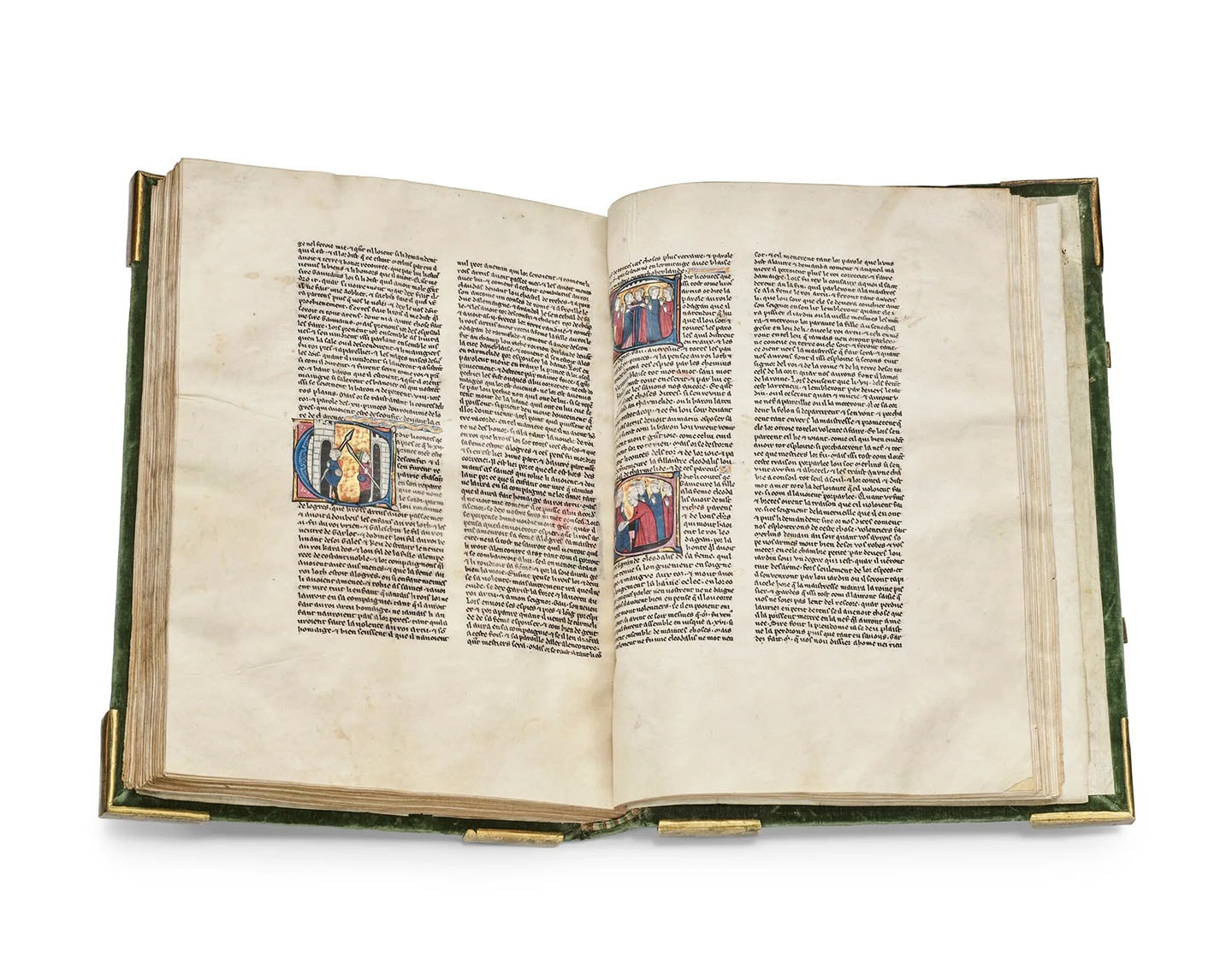
In the end, the so-called ‘Manuscript of King Arthur and Merlin the Magician’ achieved the price predicted by experts at auction. On 8 July 2026, in London, during Christie’s ‘Valuable Books and Manuscripts, Including Cartography’ sale, it was sold for 2,246,000 pounds (just over three million dollars) before commission, thus becoming the top lot of the evening. The initial net estimate was 1,500,000–2,000,000 pounds. This illuminated manuscript on parchment, known as the ‘Clermont-Tonnerre Grail’ after one of its many owners, the Count of Clermont-Tonnerre , is most likely the work of an anonymous illuminator known as the ‘Master of the Liège Apocalypse ’ (active between 1290 and 1310).

It is not the most expensive one to have been sold to date: in 2010, Sotheby’s sold another example – the ‘Graal Rochefoucauld’ – for a higher price of 2.3 million pounds (3.7 million dollars at the time). Taking inflation into account, that would amount to around £3.83 million, or roughly $5.16 million.
Loading...

«Graal Clermont-Tonnerre», la storia della ricerca del Santo Graal

The first tales of the King Arthur saga

Part of the ‘Lancelot-Grail’ cycle, also known as the ‘Vulgate Cycle’ – the heart of the Arthurian cycle – this is an extremely rare text: of the 200 copies that have survived to the present day, only seven are complete, and just three are in private hands. The Clermont-Tonnerre manuscript bridges the past and the present thanks to an unbroken lineage spanning seven centuries. Its owners would have delighted in reading the story of the quest for the Holy Grail, the – apparently semi-diabolical – origins of Merlin the Magician, and his adventures with a young King Arthur (one’s mind cannot help but turn to Disney’s *The Sword in the Stone*). In all likelihood, the book was illuminated in Metz. A free imperial city of the Holy Roman Empire, flourishing in trade and banking, and an important centre for book production.
Lettere di Einstein, il collezionista denuncia Christies

Einstein at auction: today and a few years ago

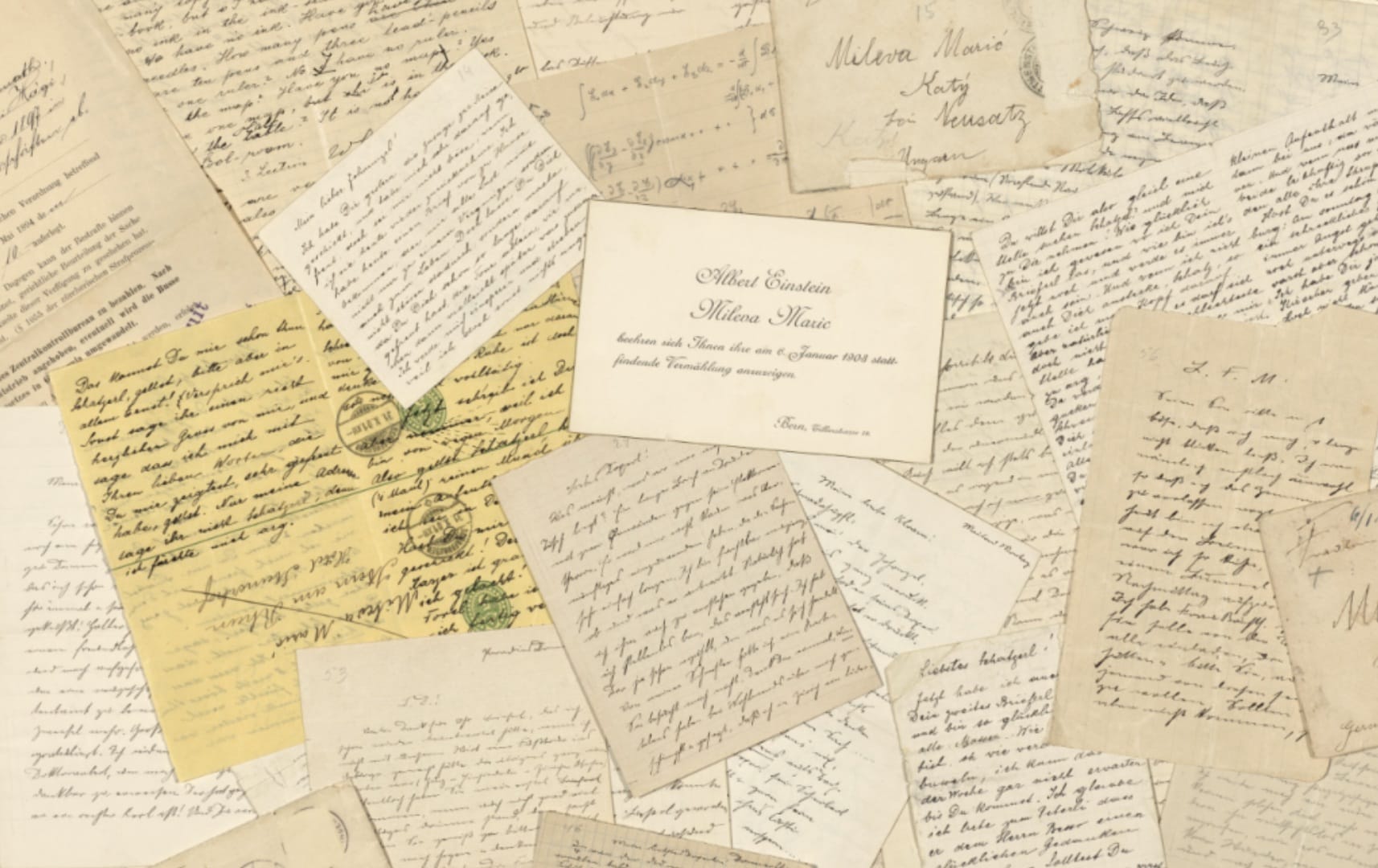
Among the most highly publicised lots – as is always the case when they appear at auction – were a number of writings by the father of relativity. Of the 10 lots of autographs by Albert Einstein (1879–1955), four failed to find a buyer and one sold below estimate; however, four others quadrupled and quintupled their minimum estimates. The top lot in this small group, lot 54, fetched £609,600 against an estimate of £150,000–200,000, ranking fourth overall in the sale. It is a letter addressed to his colleague and dear friend Michele Besso, signed ‘Albert’ and dated ‘Prague, 26 March’ [1912]. It contains ten mathematical equations which illustrate, in technical detail, the first, decisive steps towards the development of his theory of gravity.

Lot 53 fetched £508,000 (fifth place) against an estimate of 100,000 – 120,000: two letters to his colleague Ludwig Hopf, also from Prague, in 1912. They contain the earliest evidence (February 1912) that has come down to us of the birth of the theory of general relativity. The other two lots that saw a significant increase in value were lot 64 (£234,950 from 60,000–80,000) and lot 58 (£57,150 from 15,000–20,000): the first, dated 1946, constitutes the first half of the manuscript setting out the theory of the unified field; the second, from 1922, is the revised draft of ‘The Meaning of Relativity’ (the four famous lectures Albert Einstein delivered in May 1921 at Princeton University).
But the highest prices ever paid for Einstein’s pens in the history of collecting have been far higher. The absolute peak was reached in Paris in 2021, at Christie’s on behalf of the auction house Aguttes, with the Einstein-Besso manuscript: 11,656,560 euros (13 million dollars; in 2026 this would be 13,560,000 euros). Those pages from 1913–1914, containing the preparatory work for the theory of relativity, had an initial estimate of 2–3 million euros. Until then, the top historical Einstein lot had been the so-called ‘Letter of God’ (Christie’s, 4 December 2018, $2.89 million, which today would be around 3.85 million), a letter to the philosopher Eric Gutkind (1877–1965) in which Einstein, in 1954 – a year before his death – cast doubt on the existence of God: “For me, the word ‘God’ is nothing more than the expression and product of human weakness.”

Harry Potter

Never without Harry Potter and The Lord of the Rings

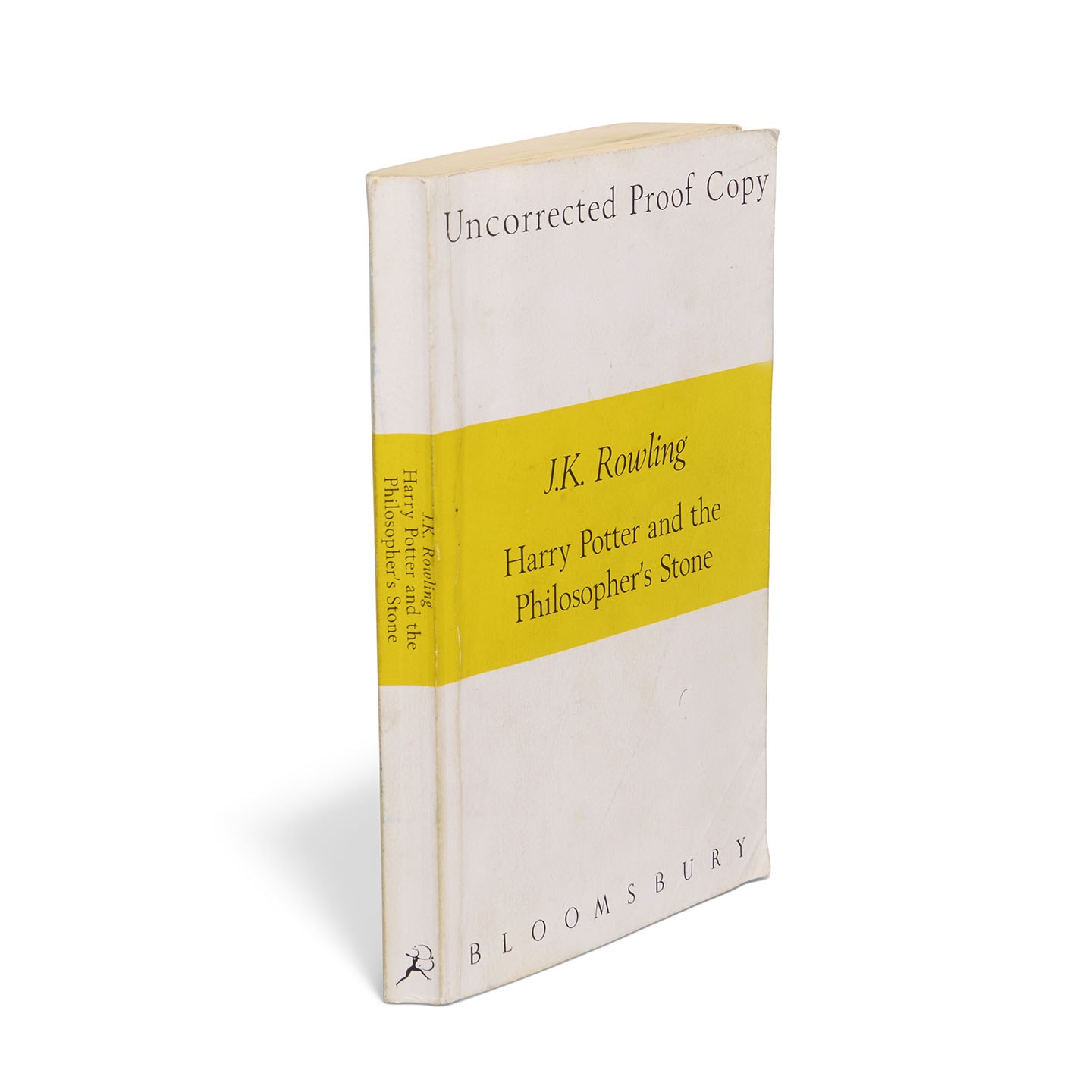
Among the highlights of Christie’s latest auction of books and manuscripts was an extremely rare copy – only around 200 were printed – of the unedited draft of *Harry Potter and the Philosopher’s Stone* by J.K. Rowling (Bloomsbury, 1997), signed by the author. These volumes, with their white covers featuring a yellow stripe, contain textual differences compared to the final edition, as well as bibliographical variations such as the author being credited as ‘J.A. Rowling’ or ‘Joanne Rowling’ rather than ‘J.K. Rowling’. This copy also retains a printing anomaly known to collectors: on page 53, the phrase “1 wand” appears twice. With an estimate of £10,000–15,000, it sold for £35,560.

Una lettera del 1966 di J.J.R. Tolkien

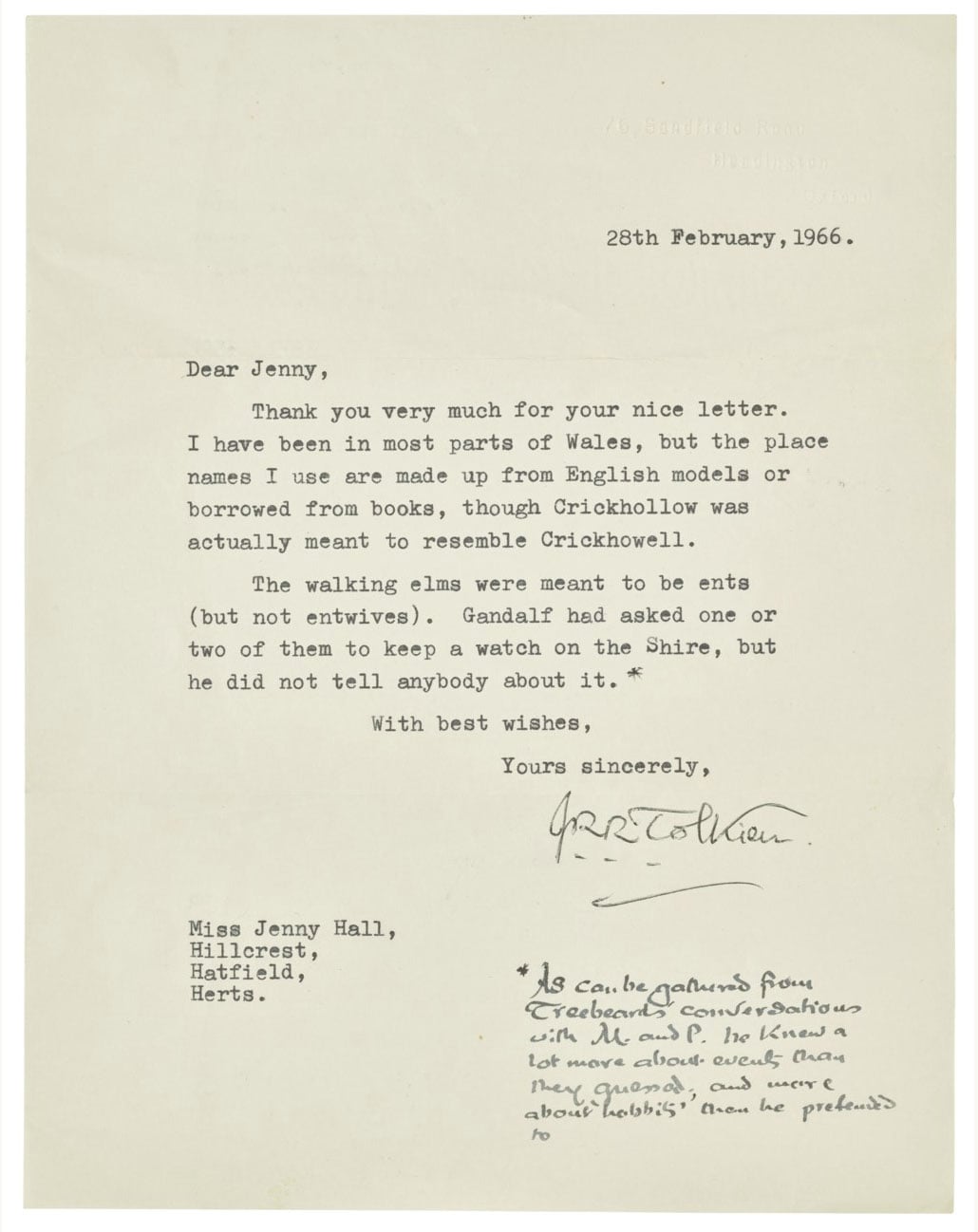
A letter from 1966 also achieved an excellent result, in which J.R.R. Tolkien explained to an attentive reader the relationship between real and imaginary places in *The Lord of the Rings*. The sale fetched £19,050 before commission; the starting estimate was £5,000–7,000.

Il volume di Gerard Mercator, «Tabulae Geographicae», Duisburg

Cartography, the real surprise

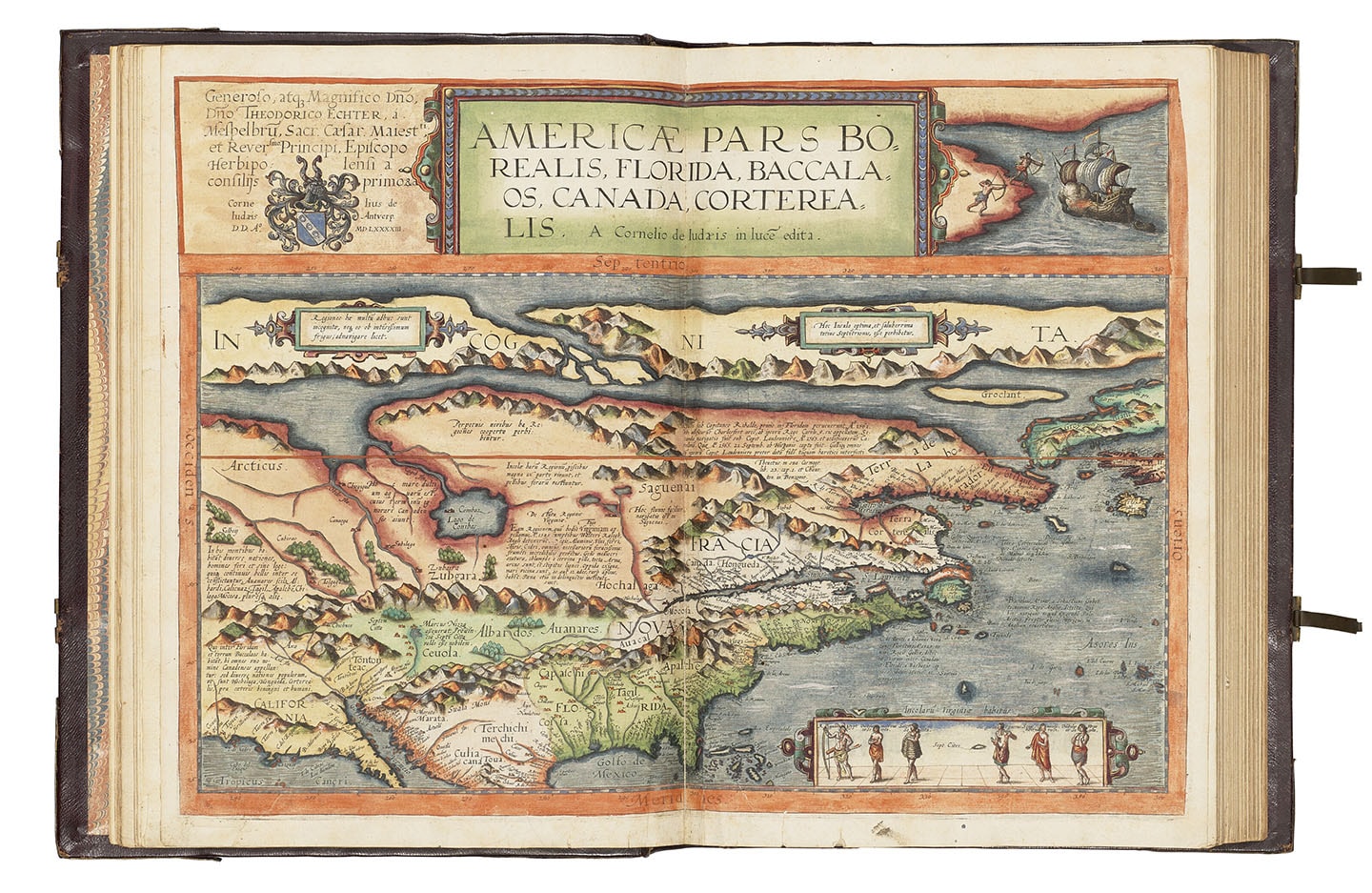
But the real surprise came from lot 122, an atlas by the Flemish mathematician, astronomer and cartographer Gerard Mercator (1512–1594), the father of modern cartography. Exquisitely hand-coloured, this volume of his ‘Tabulae Geographicae’ is also woven with threads of gold and silver; and, starting from a base estimate of 100,000 pounds, it fetched ten times that amount (1,016,000 pounds), coming in second place. Also by Gerard Mercator (with Henricus Hondius), another atlas saw its value rise almost threefold (44,450 pounds from 15,000 pounds). In the same segment, it is worth noting the significant increase in value of lot 66, by Claudius Ptolemy (who lived in the 2nd century AD): someone paid 482,600 pounds for his maps, up from an estimate of 150,000. Also by Ptolemy was a cosmography re-edited in the 15th century by Niccolò Germano. Valued at between 70,000 and 90,000 pounds, it was eventually sold for 165,100 pounds. Of the 38 ‘geographical’ lots, six failed to find a new owner, resulting in a sell-through rate of around 85 per cent. More than half of the lots sold were sold at prices above their estimated ranges.

Copyright reserved ©
Loading...

Brand connect

Loading...

Newsletter

Notizie e approfondimenti sugli avvenimenti politici, economici e finanziari.

Iscriviti