
New anthropology gallery at the Louvre
The Galerie des Cinq Continents is a collaboration between the institution and the Musée du Quai Branly

Key points
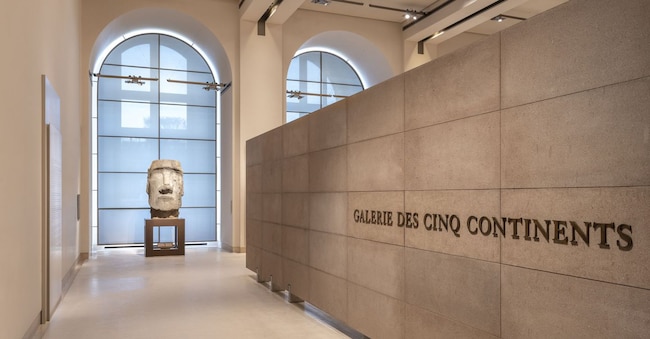
On 2 December, the Minister of Culture, Rachida Dati, and the Minister of Higher Education and Research, Philippe Baptiste, inaugurated the new anthropology section of the Louvre, which is now called Galerie des Cinq Continents and replaces the Pavillon des Sessions, which had been opened to the public on 13 April 2000.
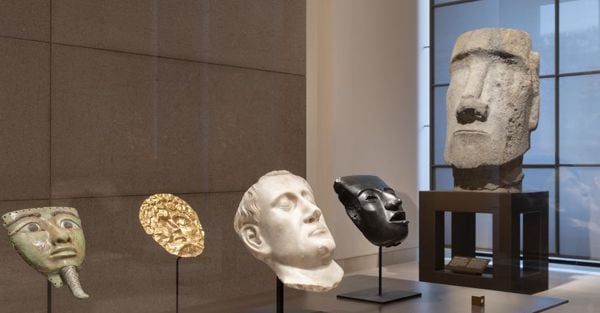
The name change is not a cosmetic operation, but an expression of a radical change in the presentation of 'other' art, because as the name of the new section of the museum reveals, non-European exhibits are now juxtaposed with works of classical art. Obviously, the new display is a collaboration between the Louvre and the MQBJC (Musée du Quai Branly Jacques Chirac), the most important museum of anthropology in France. A total of 42 works from the Louvre's collections, 77 works from the MQBJC and some 20 other pieces loaned by various French museums are presented. These exhibits are placed in ten different rooms and are juxtaposed with each other on the basis of their contents and forms with the aim of making the exhibits of the different cultures dialogue in an 'open' way.
The new gallery
The first room, in particular, presents works that show how different cultures dealt with the themes of birth and death. In addition to stelae and funerary masks from ancient Egypt and Mesoamerica, a Spanish sculpture from around 1300 depicting the Virgin and Child and a Bangua motherhood, a West African culture, created in the 19th century stand out.
In the next two rooms, works representing the deities of different religions and paraphernalia used in rituals are exhibited. A Greek sculpture (2nd century AD) representing Dionysus and an Indian sculpture (16th-17th century AD) representing Visnu and his two brides stand out among the exhibits.
The p
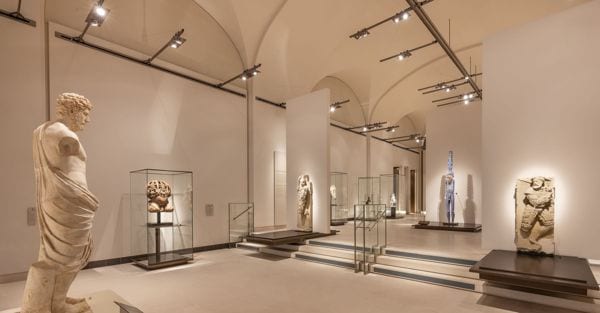
he exhibition from Room 4 to Room 7 presents both symbols of power and representations of real or mythical figures who were symbols of power itself. Among the works in this section of the Galerie des Cinq Continents are a Roman statue (136-138 A.D.) of Lucius Aelius Caesar and a sculpture (19th century) of the 'blue man' from the island of Malo (Vanuatu, Oceania).
In Room 8, objects are exhibited that in different cultures served to explain the origin of the world and human beings. A Maya vase (8th-10th century A.D.) on the myths of origins and an Iranian globe (12th century A.D.) depicting the celestial vault are worth mentioning here.
In Room 9, objects used in ceremonies that were meant to ensure the fertility of the earth and the abundance of resources are presented. These include a shoulder mask (late 19th century) baga (Guinea) and a statue (c. 1500) of Saint Margaret.
The exhibition ends in the next room, which shows works depicting mythical figures that are the result of the union of different animals. These exhibits include a Yupik mask (ca. 1900 - Alaska) representing a salmon and 12th century French sculptures depicting monstrous beings.

