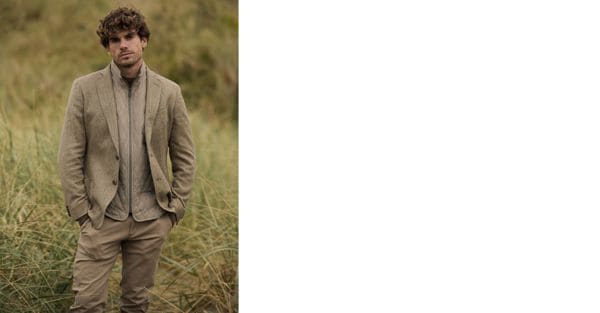
Comfort garments

At the origin of tricot: journey to Ireland to discover neo-luxury

Wool, tweed, linen. A new generation of designers is relaunching the country's centuries-old manufacturing tradition. With garments that look above all to the high-end segment.
by Kate Finnigan

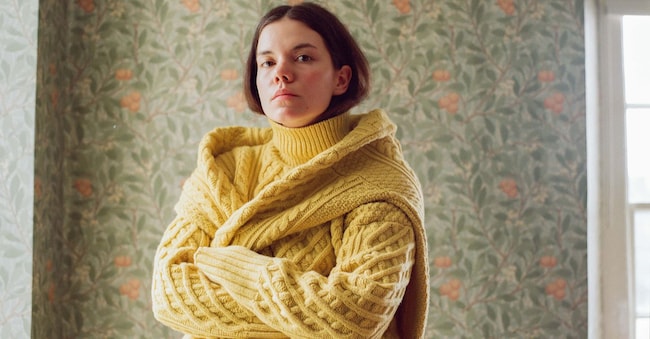
Aran a collo alto in lana d’agnello, MOSS+ CABLE (330 €). © Doreen Kilfeather

6' min read

6' min read

Colin Burke's knitted and crocheted Aran jumpers, made in Galway, have unexpected details, such as large baroque balloon sleeves. "It's my personal touch to a very traditional garment," explains the designer, who uses more than 60 per cent Irish wool from Donegal Yarns, a supplier based in the country's northwestern county known for fine wool and tweed, to make them. Burke's creative touch was liked and has become much in demand, with sales taking off: at Havana, a Dublin boutique, the brand is positioned alongside world-famous names. "By now it's all about best-selling pieces, to be worn paired with pieces by Comme des Garçons, Simone Rocha or Junya Watanabe," says Havana founder Nikki Creedon. "Irish designers are a regular presence in the shop, and we certainly don't keep them out of compatriot solidarity: we reward the quality of their designs, which are increasingly popular."
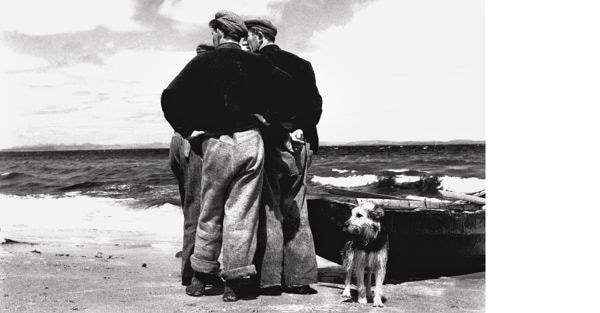
Gli abitanti dell’isola di Inishmaan, nella baia di Galway, in una foto deglianni Sessanta. © Bill Doyle

After all, Ireland is home to some very influential names in the fashion world, including Jonathan Anderson, Simone Rocha and Seán McGirr, who now works for Alexander McQueen. From the elegant all white creations of Róisín Pierce, who walked the runway at Paris Fashion Week, to the rise on the London scene of Michael Stewart's Standing Ground brand, to the rising star of men's fashion, designer Robyn Lynch: the Irish accent is becoming more and more widespread on the international scene. Meanwhile, a host of creatives who wish to remain living and working in the country, look to its centuries-old experience in the fine production of wool, linen and tweed, which they seek to adapt to contemporary times in order to propose an offer aimed at the luxury segment.

Loading...
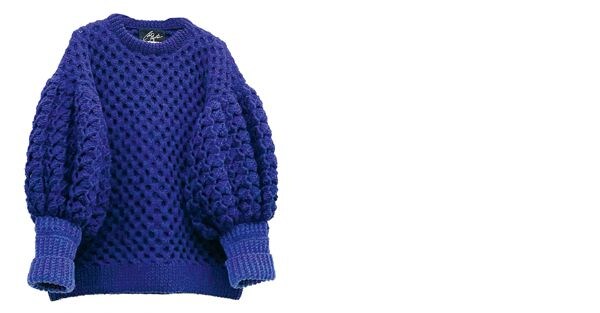
Maglione in lana, COLINBURKE (1.450 €).

"The designers who grew up here try to fuse the rich local cultural heritage with global trends," says Shelly Corkery, fashion buying director at Dublin's Brown Thomas Arnotts department store. Create, the summer sales programme launched by Corkery thirteen years ago, has played a key role in showcasing local talent such as outdoor clothing brand The Landskein, linen specialist Kindred of Ireland and Burke. "The creative energies are palpable," she continues. Burke makes jumpers to honour the memory and skill of her late grandmother, her master crocheter. The designer works with ten crochet professionals scattered across various locations on the island, mostly women over 60, part of a generation who were taught crochet in school - like Delia Barry, the 80-year-old who became web-famous for making the jumpers in the 2023 film The Banshees of Inisherin. "They are so talented, they know all the secrets," he explains. "I make sure every item includes the traditional blackberry stitch, the only one that cannot be done by machine. So it is clear to everyone that every garment is handmade."
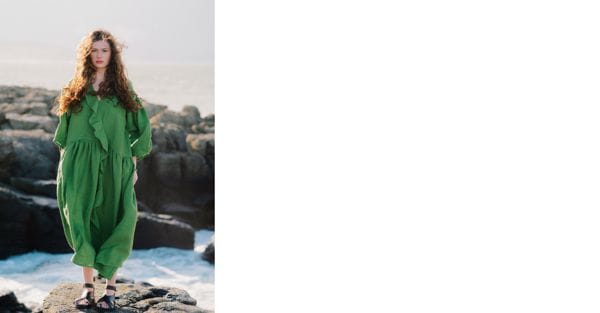
Abito in lino, la nonnadi Amy Anderson, Winnie,mentre ‡la in una fabbricadi Dungannon.KINDRED OF IRELAND(440 €).

Instead, The Landskein offers luxury coats and tailored blazers for women, woven in fine lambswool tweed by Molloy & Sons - another Donegal-based company - and available in a colour palette inspired by the Irish landscape (the word 'landskein' refers to the interweaving of horizon lines on misty days). The founder, Anna Guerin, had long wanted to create coats with a more contemporary cut than those she found from traditional tweed makers. It was a business trip to China in 2016 that prompted her to experiment: a tailor showed her a tweed called 'Donegal' priced at $12 per metre, an infinitesimal compared to what is charged in Ireland for an original fabric. Recalling the episode, Guerin reflected: 'I was shocked, but I asked myself: is there a discerning clientele willing to pay more for a fabric that is not clearly recognisable than a yarn made in China? The answer seems to be yes: The Landskein has just launched its fifth collection, Orphic, which includes 25 new styles and will be available in 20 shops this year.
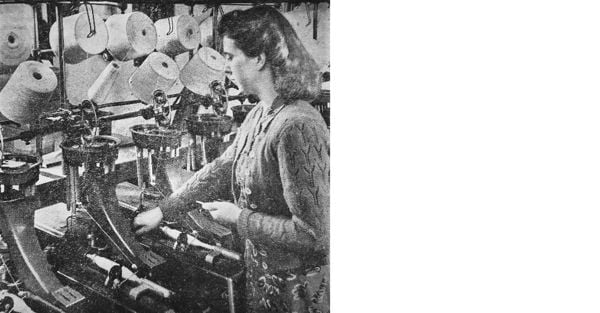
La nonna di Amy Anderson, Winnie, mentre fila in una fabbrica di Dungannon.

Amy Anderson of Belfast-based brand Kindred of Ireland has recently introduced a collection in Donegal tweed - again woven by Molloy & Sons - alongside the Irish-made linen on which her romantic-inspired womenswear line is based. Linen is of enormous importance in Belfast's history: by the end of the nineteenth century, the city had developed into 'Linopolis', the world centre of linen manufacturing, providing employment for a large segment of the population.
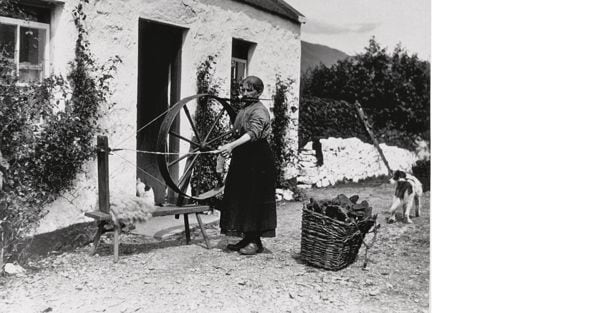
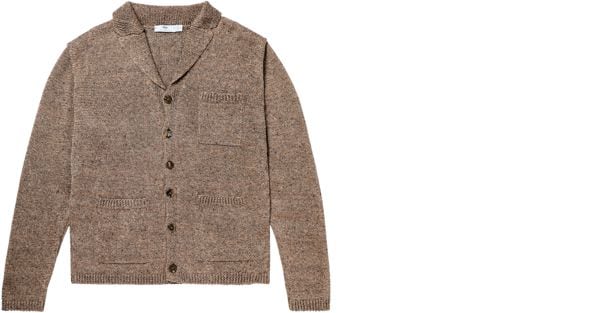
La filatura domestica della lana nel Connemara, intorno al 1925. © Getty Images

"In Northern Ireland, almost everyone can find a connection to this industry, given its importance in the area," explains Anderson, whose grandparents were textile workers. What prompted her to found Kindred in 2020 was a photograph of her grandmother, which captures her spinning in a mill. Amy's heritage history, natural fabric and wide, old-fashioned silhouettes have been very well received, particularly her beetled linen garments - an ancient process of dampening the fabric and beating it repeatedly with wooden blocks until it becomes crepe. "In the whole of Northern Ireland, or perhaps even the whole world, there is only one machine still capable of producing beetled linen," claims Anderson. He therefore wanted to develop a gold version that makes it similar to leather.

Giacca Pub in lino, INISMEÁIN (450 €).

Siobhan McKenna founded Moss + Cable in her hometown of Donegal in 2020: gender neutral knitwear with clean lines, featuring Donegal yarns in a muted colour palette, ranging from lemon to lilac to sultana. "This area is full of family-run manufactures and workshops that have been in business for generations, exporting all over the world," says McKenna. "I enjoy being able to help keep this tradition alive." Meanwhile, Madigan Cashmere, of Kildare, works with a team of five experienced knitters who work by hand to make Aran in cashmere yarn - "all old ladies, of course," points out co-founder Elaine Madigan. Products are made to order, with each garment taking six weeks to make: "At the start of the business, a business consultant warned me that people would not wait that long: the truth is that they are willing to wait when they understand the quality and craftsmanship of the product.

Blazer in tweed di lana d’alpaca, MAGEE 1866(480 €).

All of these new Irish brands follow in the footsteps of the likes of Magee 1866, makers of tweed for five generations in Donegal (of which Sarah Jessica Parker, who owns a house in the same county, is a fan), or Inis Meáin Knitwear Company, a pioneering enterprise founded in the 1970s on one of the Aran Islands to provide employment for young people, which became famous for its men's pub jackets made from alpaca puppy wool, silk, cashmere and merino wool. "Many young designers are discovering Irish linens and tweeds for the first time," says Eddie Shanahan, founder and chairman of the Council of Irish Fashion Designers. "We are seeing an increase in trans-seasonal collections and specialty garments to carry with you all the time." The reference is to talented creatives such as Helen Hayes, who uses haute couture techniques to make garments inspired by the knitwear patterns her grandmother used in the 1950s. Or artist Sara O'Neill, who recently hand-painted two leather jackets worn by U2 guitarist The Edge. O'Neill lives on Northern Ireland's north coast: in her annual Éadach ("clothes" in Gaelic) collection, scarves, kimonos and digitally printed fabrics depict stories from the legends and history of her homeland. His is among the most successful brands in terms of sales at Brown Thomas Create. One of the collections is inspired by the 'Millies', a derogatory term used in the 19th century to refer to female workers in linen textile mills. "Those women were the pillar of society," she explains. "Irish mythology and history are full of strong female characters, and I have always found this to be at odds with the way women have been treated for a long time."

Cappotto in tweed di lana tessuta da Molloy & Sons, THE LANDSKEIN (1.050 €). © Boo George

Shanahan says that he is very optimistic about the period that Irish fashion is going through, despite the changes taking place in the textile industry worldwide: 'At one point, Ireland was exporting more designers than fashion collections. We knew we could do it, but in order to present our brands abroad we had to consolidate in our own country first'.

HANDMADE COLIN BURKE. DONEGAL YARNS. HELEN HAYES. INIS MEÁIN KNITWEAR COMPANY. KINDRED OF IRELAND. MADIGAN CASHMERE. MAGEE 1866. MOLLOY & SONS. MOSS + CABLE. ROBYN LYNCH. RÓISÍN PIERCE. SARA O'NEILL. STANDING GROUND, @standing_ground_. THE LANDSKEIN.

Copyright reserved ©
Loading...

Newsletter

Notizie e approfondimenti sugli avvenimenti politici, economici e finanziari.

Iscriviti