Šostakovič's 'A Lady Macbeth from the Mcensk district' at La Scala
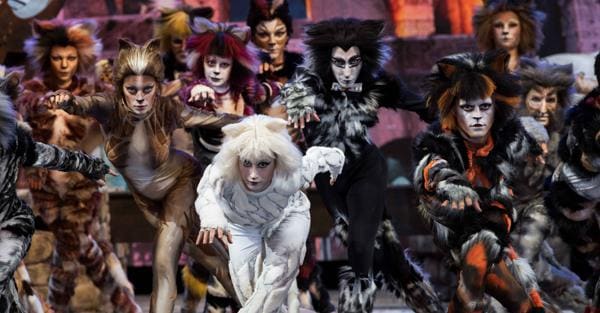
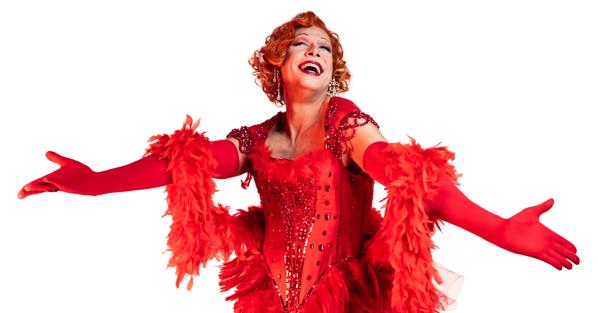
In Trieste the famous musical 'Cats'; in Paris the musical 'La Cage aux folles'

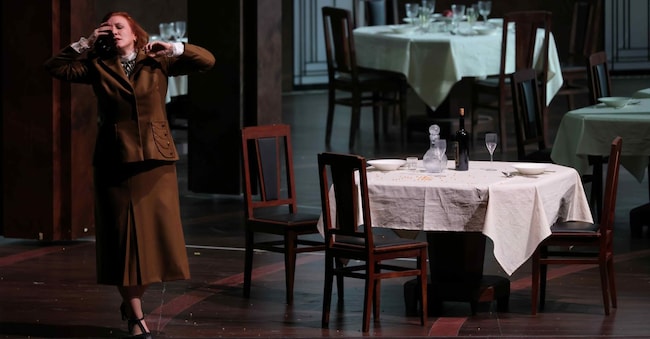
Šostakovič's "A Lady Macbeth from the District of Mcensk" returns to La Scala in 2007 and 1992 - and the first time this composer opens the Season. In Trieste an evergreen "Cats", which we will then see in Monte-Carlo for the holidays and in January in Milan. In Paris, the festivities are spent with another musical, "La Cage aux folles", a multi-award winner on Broadway, which celebrates love, self-affirmation and the right to difference.
Milano
On the 50th anniversary of Šostakovič's death, La Scala opens the season on the 7th with "A Lady Macbeth of the Mcensk District", in which a young bride with the complicity of her lover kills her husband and tyrannical father-in-law, but is discovered and ends up committing suicide in Siberia, betrayed by everyone. The play, which was supposed to be the first chapter of a trilogy on the condition of women in Russia, was a huge success at home and abroad. Repeats on 10-13-16-19-23-30 December. On the 7th live on Rai1 and Rai Radio3 from 5.45 pm.
The company is led by Sara Jakubiak (Katerina L'vovna Izmajlova), Najmiddin Mavlyanov (Sergej), Yevgeny Akimov (Zinovij Borisovič Izmailov) and Alexander Roslavets (Boris Timofeevič Izmailov).Directed by Vasilj Barkhatov, making his La Scala debut, the production focuses on the title character, Katerina Izmajlova, in a dramaturgy that unfolds through her memories and confessions. It is based precisely on the dramaturgy suggested by Šostakovič, which, in Barkhatov's words, "oscillates between humour and cinematic tragedy, between the absurd, the realistic and violent tragedy. We do the same, trying to safeguard the entire content of the score'.
once again this year, "Prima Diffusa" accompanies Milan in the week leading up to the La Scala premiere, with a series of listening guides, concerts, performances, screenings, exhibitions and reviews, conferences and free meetings, involving over 40 venues including theatres, institutions, cultural venues, city spaces and unconventional venues. The live show will be screened in over 30 venues in Milan. All info on yesmilano.it
Trieste
At the Politeama Rossetti from the 3rd to the 7th the musical Cats, by Andrew Lloyd Webber; in the original version, a stop on the international tour. In London it ran for 21 years and on Broadway 18; it has been performed in over 54 countries. It is a danced musical from beginning to end, with few spoken scenes. Decisive for its evergreen success was the contribution of choreographer Gillian Lynne, who presented a vocabulary of innovative movements. Keeping in mind the behaviour of cats - at the same time aloof, hypersensual, cold (but also warm), completely elastic and truly mysterious, Lynne had the not easy task of translating Eliot's texts into movement so that the result was theatrical, witty, exciting - but in a feline way.