
At the Social Fashion Talk: an insider’s view of the retail crisis
Milan hosts the second edition of the event focusing on the challenges facing the fashion industry: from the supply chain to the digital passport, an update on a retail network that is losing eighteen shops a day

3' min read
3' min read
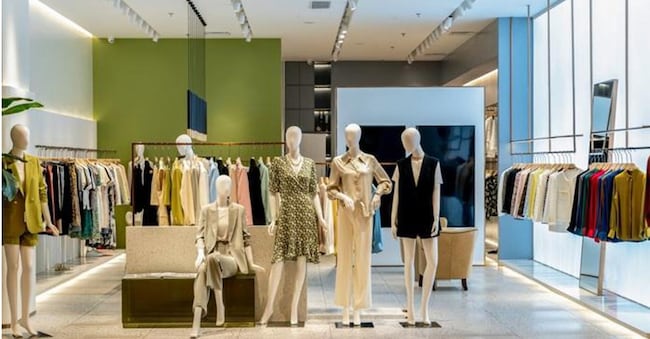
The sound of a roller shutter coming down is a familiar, everyday sound. It marks the end of the day, when shops close and shopkeepers head home, ready to reopen the following morning. Every day in Italia, eighteen of them do not raise that shutter again: this is the net total of fashion retail outlets that have disappeared in the last twelve months, according to Confcommercio, which reports that over the last five years more than 23,000 shops and 35,000 jobs have been lost.
The shift among consumers towards online shopping would seem to provide the most obvious explanation: online purchases of clothing, shoes and accessories are worth €6.6 billion in 2026 and are growing by 5 per cent, accounting for 20 per cent of the sector’s total spending, according to the Milan Polytechnic Observatory. The figures, however, do not add up: four out of every five euros spent on clothing are still spent at a shop till. And the channel that accounts for the bulk of spending is also the one that is shrinking.
This was discussed at the Scalo Porta Genova Social Lab, a cultural space at The Sanctuary Milano, during the second edition of the Social Fashion Talk – an event created to address the challenges facing the Italian fashion industry and to provide a platform, including a dedicated market, for young creatives and independent brands.
Among those taking part in the discussion were industry experts such as Adelaide Malinverno, a buyer for Ralph Lauren specialising in Eastern markets, who offered an insider’s perspective on how the crisis is perceived from within a huge brand, and Stefania Sgherza and Serena Iacobellis, founders of Revesto, a start-up that runs an e-commerce platform dedicated to ‘Made in Italy’ and independent designers, who emphasised the importance of direct contact between consumers and designers, including for the creation of bespoke or reworked garments. Revesto’s approach is part of a wider trend: of the 145 fashion companies surveyed globally by the Politecnico Observatory, 38 per cent have launched at least one online second-hand initiative since 2017.
The talk was also attended by Mattia Berveglieri, a clothing producer with his own brand and a social media star, whose visits to various brand shops and analyses of the composition of the garments on display are highly regarded. On this very point, he emphasised that there are no fibres that should be demonised outright – such as polyester – but rather behaviours and systems that should be condemned, starting with excessive production and consumption. Among the strengths of high-street shops, he added, is the ability to guide customers through the purchasing process, including by providing information on the materials used in a garment – a factor that influences the final price. According to the entrepreneur, the forthcoming introduction of the digital passport required by European legislation will be very useful in this process; from 2027, this should see a QR code featured on labels, making the data for each garment traceable.

