Art

The magnificence of the Mughal Empire at the Victoria and Albert Museum

Until 5 May at the London museum you can visit the exhibition illustrating the wonders of the great mughals
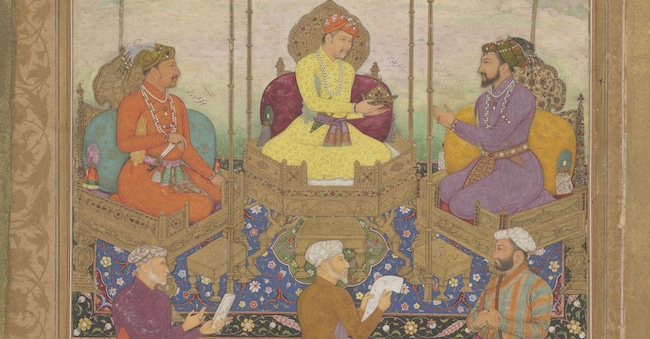
by Maria Laudiero

4' min read

4' min read

With the exhibition entitled 'The Great Mughals: Art, Architecture and Opulence', the Victoria and Albert Museum in London continues its exhibition survey focusing on the history and art of South Asia, emphasising the significance of the incredible creative flourishing and international culture of Mughal India during the reign of its most important emperors.

The Mughal dynasty was founded in 1526 by Babur, a Timurid prince from Central Asia. At its height, the Mughal empire stretched from Kabul (in present-day Afghanistan) to the borders of the Deccan sultanates in southern India, and from Gujarat in the east to Bangladesh.

Loading...

The beginnings of the V&A collection

.

Over the years, the museum has promoted advanced research on Mughal art and culture, establishing close links with leading international specialists who have contributed to the documents and texts presented to accompany the art-facts in the exhibition. As museum director Tristram Hunt recalls: "For the exhibition, the V&A drew on its own collection of art from this civilisation, one of the richest and most diverse in the world. The museum started collecting Mughal book art in 1896 with the purchase of part of the Akbar-nama, the illustrated chronicle of Emperor Akbar's life. Its plates all bear inscriptions with the names of the Muslim and Hindu artists who created them under the guidance of Iranian masters'.

L’opulenza Moghul al Victoria and Albert Museum

Photogallery8 foto

The exhibition route

.

The sections of the exhibition are characterised as a grand display of a vast pre-modern empire still little known in the UK, celebrating the artistic triumphs of the golden age of the Mughal court (circa 1560-1660). The exhibition brings together over 200 works spanning the reigns of the emperors Akbar (1556-1605), Jahangir (1605-1627) and Shah Jahan (1628-1658), celebrating the artistry and creativity of their court workshops. Among the works on display are masterpieces never before presented, demonstrating the extraordinary skill of the Mughal master craftsmen.

The first section introduces the reign of Akbar, considered one of the greatest emperors in Indian history. Rising to power at the age of thirteen in 1556, Akbar undertook a series of military conquests and, despite the turmoil during his reign, it was also a period of great artistic innovation. Akbar promoted new crafts and founded numerous workshops, including the goldsmiths' workshop and the House of Books. Among the exhibits are two rare oil paintings of the Hamza-Nama, a work commissioned by Akbar in the 1670s, which recounts the exploits of the legendary Muslim hero Hamza. The paintings in this manuscript, which mix Iranian and Indian artistic traditions, are among the earliest examples of Mughal painting.

The second section explores the art of the reign of Jahangir, son of Akbar. His rule, which began in 1605, was characterised by a splendid and rich court, described as 'the treasure of the world' by the English ambassador to King Charles I. On display in this section are objects of extraordinary opulence, such as a gold dagger decorated with over two thousand rubies, emeralds and diamonds, and an imperial cup made of Chinese jade. In addition, there are paintings that testify to Jahangir's passion for animals, such as those depicting a North American turkey and an African zebra, rare examples of the fauna the ruler encountered on his travels.

Finally, the third section explores the reign of Shah Jahan, most famous for the construction of the Taj Mahal. The ruler projected a strong and unified imperial image, which was reflected in all the art of his court. This section displays decorative objects such as embroidered textiles and albums with golden flowers, symbolising the paradise garden under his rule. An important section is devoted to the Taj Mahal, with 19th century architectural drawings showing details of its marvellous inlaid marble.

The exhibition culminates with a selection of precious stones from the Imperial Workshops and the famous Golconda diamonds.

Most of the larger diamonds in Shah Jahan's treasury would have come from mines within the Qutb Shahi sultanate of Golconda, which was the main global source of diamonds in antiquity until the 18th century. Although important stones were also occasionally found within the Mughal empire, large diamonds were reserved for the rulers. The largest stones were found exclusively in royal treasuries. Mughal diamond cutters followed long-established conventions, according to which the treatment of each stone was determined by the need to preserve its maximum possible size and to reveal its unique, sparkling qualities, described as fire.

Some of the greatest treasures ever made in the Mughal court workshops are on loan from the Al Sabah collection in Kuwait. The magnificent jewel-studded gold dagger reveals the exceptional virtuosity of the imperial goldsmiths and jewellers. Each of its hundreds of diamonds, rubies and emeralds has been meticulously selected, shaped and set in a delicate and refined weave of flowers and small birds, using a uniquely Hindustani technique.

A special focus is on the hybrid art created in the imperial workshops, where Iranian and Indian artists worked together. The influence of European art brought to court by Christian missionaries, ambassadors and merchants is also explored. Among the most significant loans are precious objects and rare gems, including an engraved red spinel, which belonged to Ulugh Beg, Timur's grandson, and later to Jahangir and Shah Jahan; a mother-of-pearl shield (circa 1580), made in Gujarat, and on display for the first time in the UK, which was part of the Medici collection; and a pair of jade objects from the Al Thani Collection, including a jade dagger with extraordinary engravings and rubies, emeralds and pearls.

Victoria and Albert Museum, The Great Mughals: Art, Architecture and Opulence, until 5 May 2025

Copyright reserved ©
Loading...

Brand connect

Loading...

Newsletter

Notizie e approfondimenti sugli avvenimenti politici, economici e finanziari.

Iscriviti