
A controversial text by Elfriede Jelinek at the Vienna Festival
The 2004 Nobel Prize winner for Literature makes a frontal attack on the national past

4' min read
4' min read
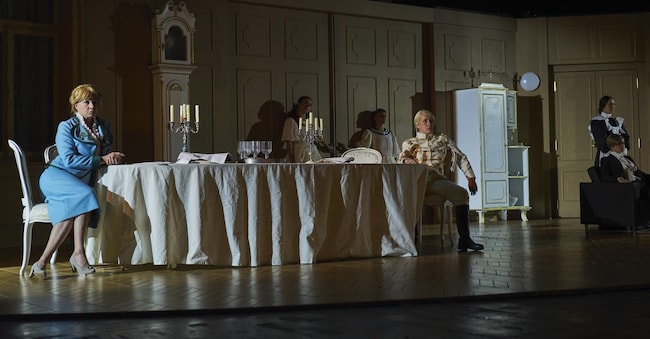
It was the 'farce with songs' entitled 'Burgtheater' that in the early 1980s earned Elfriede Jelinek the enduring label of 'Nestbeschmutzerin', the defiler of the homeland, so much so that the later Nobel Prize winner for literature said: 'That was the beginning of my decline in Austria as an author'.
This text, which focuses on famous actors from Austria's national theatre, the Burghteater, who actively collaborated with the regime during the Nazi period and then resumed their activities after the war, was seven years ahead of the more famous 'Heroes' Square', which Thomas Bernhard wrote on the 50th anniversary of Austria's annexation to Germany and which was staged at the Burgtheater, albeit amidst clamour, protests and even threats.

In more than four decades, Jelinek did not find in any director of that theatre the necessary support to stage her biting indictment of Paula Wessely, her husband Attila Hörbiger, and her brother-in-law Paul Hörbiger. Even after the three disappeared from the stage in the 1980s, their memory as great favourites of the Viennese continued to shine, and within the same prestigious institution their uncomfortable baton was passed on to their three daughters Elisabeth (1936-2025), Christiane (1938-2022) and Mavie (born 1945): a staging of 'Burgtheater' would have risked provoking popular indignation, in a city where theatre has always played a prominent role and the Nazi past lingers undisturbed in not-so-hidden pockets.

"Burgtheater"
.'Burgtheater' was staged defilitely in Bonn in 1985, and then in Graz in 2005 by an off company. Jelinek refused to grant the rights for any other staging until this year, when the 80th anniversary of the end of World War II prompted a rethink, implemented by two Swiss men 44 years after its creation: the new Burgtheater superintendent Stefan Bachmann and the director of the Wiener Festwochen festival, Milo Rau, who agreed on a co-production.
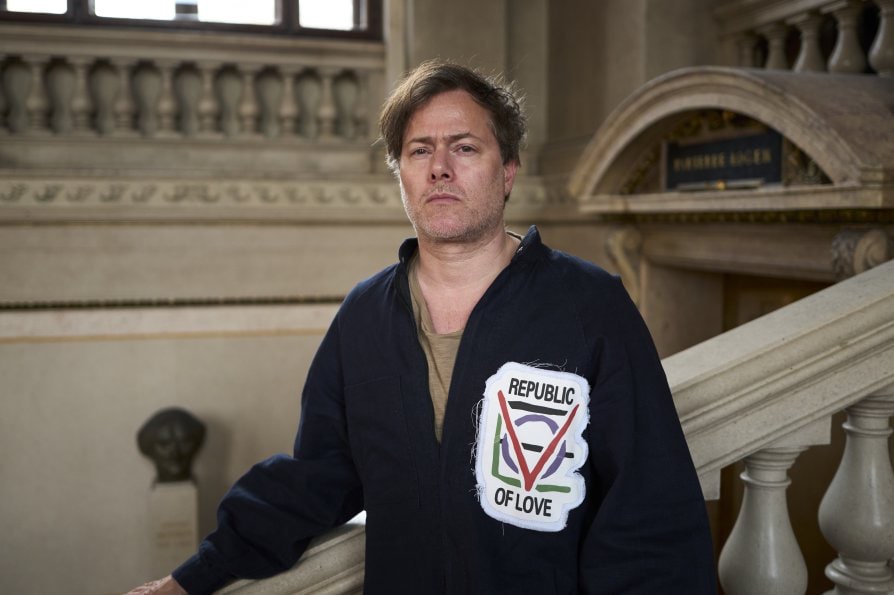
The direction was penned by the latter, who once again, as is in his vein, gave a militant and uncompromising performance. In consonance with the author, the text was expanded with an actualisation aimed especially at the new generations, who are not necessarily familiar with the theme. Hence numerous interventions. First of all, the framework created by the director with the introduction of two characters - a girl and a boy - who film a podcast on the 'making of' of the production. An artifice that allows the two to introduce characters and explain historical facts. Rau also asked the actors, whose surnames have obvious roots outside the Austrian national context, to propose personal recollections relating to the Nazi persecution of their relatives or migration misadventures when they decided to move to Vienna. The result is a series of monologues with an intimate character, which interrupt the action of Jelinek's farce, of which some key scenes remain. But there are also two monologues taken from Nazi propaganda films, in which Paula Wessely's performance stands out: two moments that leave little doubt as to the actress's involvement with Hitler's regime, in particular the one from the film "Heimkehr" by the director Gustav Ucicky, the natural son of Gustav Klimt, as well as a fervent Nazi and collector of his father's works.

