
At Treviso airport a robot assists passengers with reduced mobility
Self-driving electric vehicle prototype presented - RAPIDO Project funded under the Interreg VI-A Italia-Austria 2021/2027 Programme

-U24363745256YMN-1440x752@IlSole24Ore-Web.jpeg?r=650x341)
The prototype of a self-driving electric vehicle designed to facilitate the mobility of people with assistive needs within the terminal debuted yesterday at Treviso Airport.
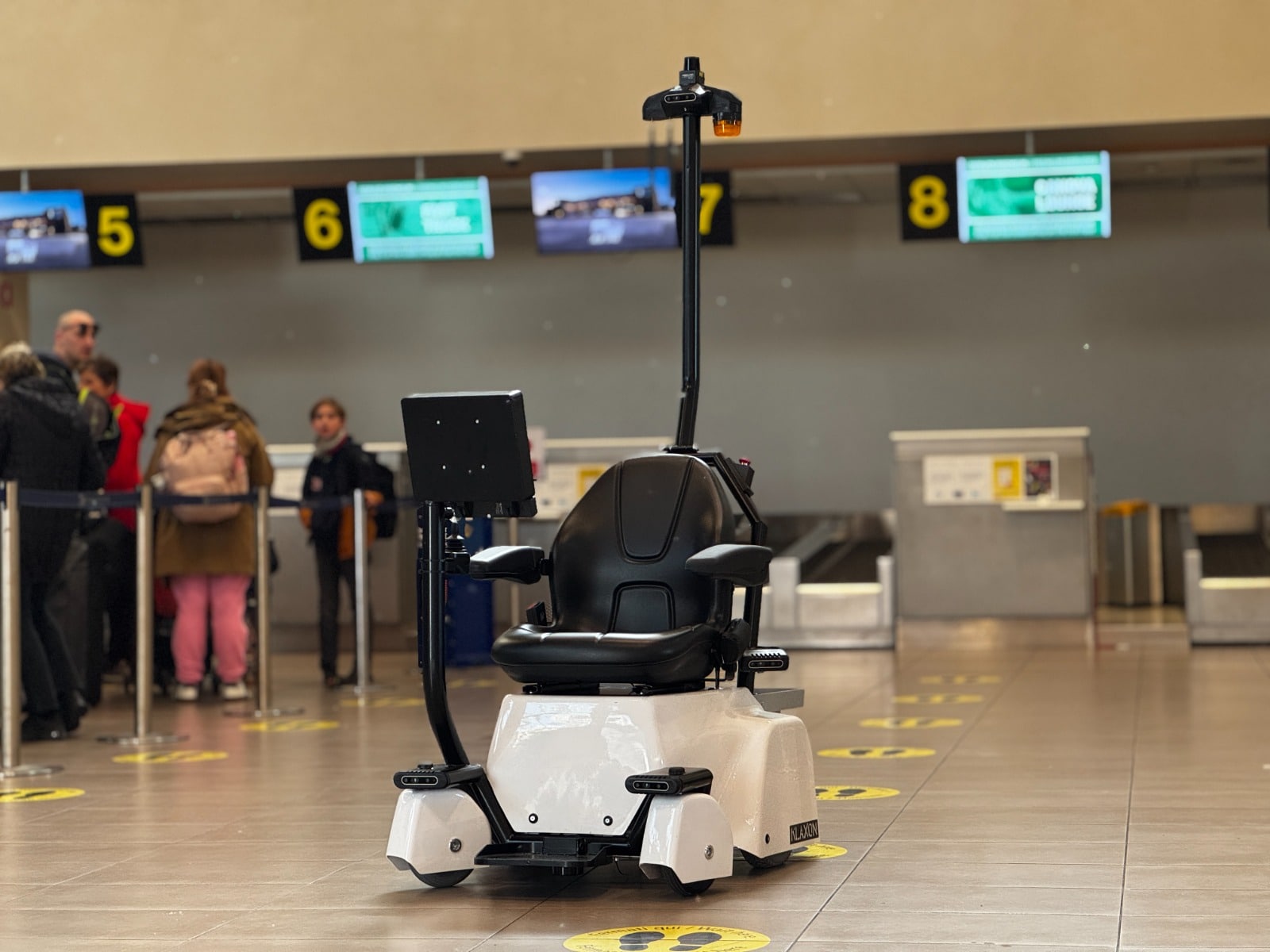
The RAPIDO Project - Robots for assisting passengers with reduced mobility - is now in its final phase. Funded within the framework of the Interreg VI-A Italia-Austria 2021/2027 Programme, the project, which started in June 2023 with an expected end date of April 2026, is promoted by a partnership. Participating Klaxon Mobility Gmbh (Lead Partner, Arnoldstein, Austria) - a company, founded by two disabled entrepreneurs, has an in-depth knowledge of the reference market, its needs and the trends for the future: for about 5 years Klaxon has also been developing technologies for autonomous and assisted driving - and Intercom Solutions Srl of Udine, which realises technological solutions with a particular focus on IT security and data protection. In the field also Aer Tre, the management company of the Treviso airport controlled by the Save Group.
Multidisciplinare
The multidisciplinary and cutting-edge approach led to the creation of an electric vehicle that allows safe and autonomous travel between the main areas of the airport. A result achieved through advanced and ergonomic handling solutions whereby the vehicle is always connected to the airport's IT structure, with which it exchanges data such as its status and location, automatically synchronising information such as gate number and flight time.
Using cameras and sensors to navigate previously mapped environments, the RAPIDO System is able to self-localise within known environments and navigate safely, automatically avoiding obstacles. All this leads to an improvement in the quality of service compared to traditional assistance involving the intervention of an airport operator, entrusting autonomy to the passenger, who on his way to the boarding gate can also choose to stop at the shops and refreshment points in the terminal.
Developments
With a budget of €834,000, RAPIDO received significant financial support from the ERDF (European Regional Development Fund) of €581,188.28 and €86,114.04 in national contributions. The project not only meets, but anticipates the EU 2030 Agenda Goals, in particular with regard to the development of resilient and sustainable infrastructures (Goals 9 and 11).

