
John Galliano arrives at Zara, yet another transition from high fashion to fast fashion
The Spanish brand signs a two-year contract with the British designer, already an acclaimed creator at Dior and Maison Margiela, the latest case in a long series of creative directors borrowed from, or permanently passed on to, the other side of the fashion pyramid

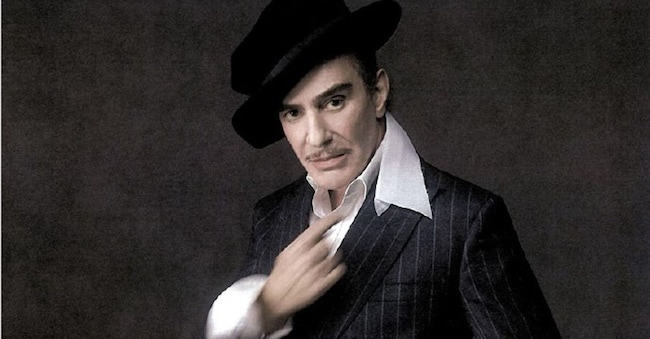
"Fashion is first and foremost the art of change": John Galliano's phrase fits his career perfectly. Considered one of the brightest geniuses of contemporary fashion, former creative director of Givenchy, Dior and Maison Margiela (his latest collection for the Otb group's couture line, Artisanal, presented in Paris in January 2024, is unanimously recognised as one of the most powerful ever), remembered for his flamboyant, personality-rich and exciting looks, Galliano has signed a two-year contract with Zara, a brand of the Inditex group for which he will "recreate the archives through seasonal collections", as the company's note states.
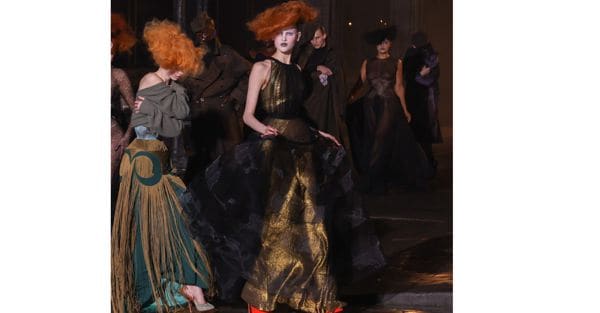
"Galliano will work directly with clothes from Zara's past collections, deconstructing and reconfiguring them into new expressions and creations," the note continues. Guided by a couture process and authorship, the collections will be launched seasonally from September 2026. A clear-cut "change" that arouses expectations and curiosity in the fashion industry, but also bitter reflections on the destiny of a genius like Galliano, marked and in some ways felled by the affair of the anti-Semitic statements (in a state of drunkenness) that in 2011 forced him to resign from Dior, followed by several years of oblivion. "Further details will be released in due course," Inditex's note closes.
It is nothing new that fast fashion brands are progressively hiring well-known designers to curate their collections occasionally, with capsules or lines, or permanently, as creative directors. Zara itself has already collaborated with a name from the style offices of the big fashion brands: in 2024, it was Stefano Pilati, former creative director of Saint Laurent and Zegna, who signed a capsule collection that reworked some pieces from the brand's archive. And certainly the arrival of Galliano is just the latest episode in the long relationship between emblazoned designers and fast fashion: h&M's signature collaborations, which began with Karl Lagerfeld in 2004 and are now continuing with Stella McCartney, have exceeded twenty years; actually a return, given that the British designer had already signed a capsule in 2016, and that, as a champion of sustainability - of which the fast fashion universe is accused of being one of the worst enemies - she was keen to emphasise that "this second collaboration is an opportunity to reflect on the progress we have made in terms of sustainability, cruelty-free practices and conscious design - and to honestly acknowledge how much more we still have to do, together".
This category also includes the recent case of Francesco Risso, who after having left the creative helm of Marni, last January took over that of Gu, a brand of the giant Fast Retailing (headed by Uniqlo), for which a name of international recognition is strategic to support the expansion strategy, especially in the United States and Europe. Also within the Fast Retailing perimeter two years ago was the striking case of Clare Waight Keller, who after having led Givenchy between 2017 and 2020 became creative director of Uniqlo, the Japanese group's most important brand, and who, moreover, has been collaborating with Jonathan Anderson for years, well before his arrival at Dior.
If, with few exceptions, luxury is struggling to turn sales around - Lvmh and Kering ended 2025 in decline - fast fashion groups are in better health: for Inditex, in fact, last year was the best ever in terms of revenues (amounting to EUR 6.2 billion), positive trends confirmed also in the first quarter of this year; same record performance for Mango, with EUR 3.8 billion. In the fiscal year 2025, which ended last August, Fast Retailing reported revenues of ¥3.4 trillion, or approximately USD 23.16 billion, practically doubling in nine years. Bucking the trend was only the H&M group, which ended the financial year 2025 with slightly lower net revenue, at EUR 21.6 billion, compared to EUR 22.2 billion in the previous year, down 2.7% at constant exchange rates. Contributing to this scenario was also the decision by luxury brands to restrict their more affordable offerings in order to focus on higher-value products, to the detriment of a large segment of customers who could no longer afford excessively high prices. And who are looking with increasing interest at a fast fashion that is elevating itself, or attempting to do so, also through designer collaborations.


