
Nuance Audio, EssilorLuxottica's hearing glasses arrive in Italy
Nuance Audio today officially introduced itself in Italy. Here's how they work

4' min read
4' min read
It has been a good year since EssilorLuxottica's smart glasses with acoustic technologies made their first public appearance, in prototype form, on the stage of the Consumer Electronic Show in Las Vegas. The Nuance Audio have today been officially presented in Italy, at an event held in the company's showroom in Milan, and open up a new horizon in the field of wearable devices, starting with the concept of a device that is absolutely indistinguishable from a normal pair of glasses but capable of integrating a highly advanced hearing system.
Because they were born
.The eyewear was conceived, designed and developed over several years of work (also with the support of specialised third parties) in the Agordo-based brand's laboratories and responds to a well-defined and widespread medical need that can be measured and measured and that manifests itself daily in common situations, such as a meal with friends in particularly crowded restaurants, noisy work environments and open spaces, or even simply watching TV in the living room of one's home. 1.6 billion people around the world suffer from hearing loss to varying degrees, with 1.2 billion individuals (between 6 and 7 million in Italy) complaining of mild to moderate hearing loss. Nuance Audio, this is EssilorLuxottica's "institutional" promise, will allow the stigma traditionally associated with hearing aids to be removed, proposing itself to a large section of the population in the form of a medical device with the appearance of a fashion accessory that draws on the company's decades of experience in the field of smart glasses. The basic idea, supported by the positive opinion of experts (doctors and opticians above all), is therefore to bring to consumers with mild or moderate hearing defects a product that has the characteristics to overcome the psychological barriers (linked to comfort, aesthetics and social stigma) that hinder the adoption of traditional hearing aids.
How they are made and how they work
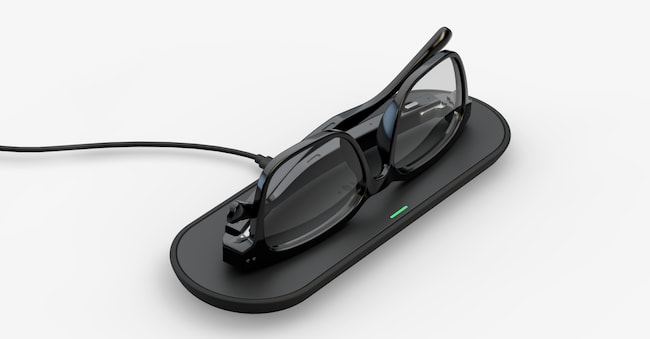
.Stefano Genco, Global Head of Super Audio & Nuance Audio, talked about the main technical features of the glasses, highlighting how the acoustic device is effectively invisible as it is completely integrated in the frame of the glasses and combines with a series of directional microphones (also invisible to the eye) that have the task of collecting and amplifying sound and transferring it to the miniature speakers to facilitate the user's understanding of speech and noise. Also fitted as standard are 'Transitions' ophthalmic lenses, which change shade according to daylight or night, making the glasses usable in any context and at any time of day. Battery autonomy is confirmed at around 8 hours of continuous outdoor use, while the waterproof rating corresponds to X4 certification: Nuance Audio, in other words, can withstand rain or splashes but cannot be placed under water.
How do you control the system that makes these glasses truly smart? The main channel is the dedicated app to be downloaded onto one's smartphone (iOS or Android), from which one can set one's profile and the operating parameters of the glasses, calibrating the listening mode (frontal or 360 degree) and audio amplification according to one's needs and adjusting the background noise level. The same options can be activated by means of compatible digital devices such as the Apple Watch or a special remote control supplied separately and designed for the elderly or those less 'addicted' to technology, while switching between the two audio configurations and adjusting the amplification volume can also be adjusted directly from the glasses with a simple tap on the frame.
The benefits and how much they cost
The ease of use and the wearability of the glasses (less than 1% of active customers complain about this parameter), as the Luxottica manager explained, are the immediately recognisable pluses of Nuance Audio, while the typical user is a person of around 60 years of age, curious about technology and eager to improve their quality of life, aware of their hearing defect but not yet willing to tackle the problem with a traditional solution. We are therefore not talking about a shelf-stable product tout court, as EssilorLuxottica's sales partners explain, but about a solution that derives from a diagnostic analysis and meets a specific need, combining sight correction and hearing support functions in a single device.

