
Automotive and CO2 emissions, proposals for biofuels and vans on the table
In the autumn, the confrontation that crosses the positions of political forces and member states comes into focus - Salini's amendment proposal supported by government and industry

The legislative process will go on at least until next autumn, the debate around the proposal to revise the regulation on CO2 emissions from the car industry presented last December is coming to a head and crosses the positions of the various political components of the European Parliament and the countries of the Union. All this in a context in which geopolitics weighs as never before and European manufacturers, Stellantis in the lead, are moving on the Asian chessboard.
Representing the position of the Italian government and a large part of the automotive components industry is the proposal signed by Forza Italia MEP Massimiliano Salini, appointed European Parliament rapporteur for the revision of the Co2 standards regulation. There are several main points in the proposed revision, which "promises" to straighten out the European Commission's initial proposal in favour of a technology neutrality that has always been advocated.
The emission reduction target of 90% by 2035, the text suggests, must be unconditional - in the original proposal the cut was in any case conditional on the use of green steel, e.g. through the Fuels credit and Credit Steel system -. Furthermore, the proposal separates the car sector from the commercial transport sector and revises the targets for vans: -30% to 2030 and -80% to 2035, again without further conditions.
"Fundamental to the proposal," emphasises Anfia chairman Roberto Vavassori, "is the possibility of differentiating the targets between passenger cars and light commercial vehicles, lengthening the verification period from three to five years, and eliminating the conditionalities linked to cutting emissions. It is clear, adds Vavassori, 'that all this must be accompanied by a consistent measure on the utility factor for plug-ins, which otherwise, in light of the penalising mechanism envisaged by the Commission, risks undermining the possibility for these engines to represent valid transition technologies'.
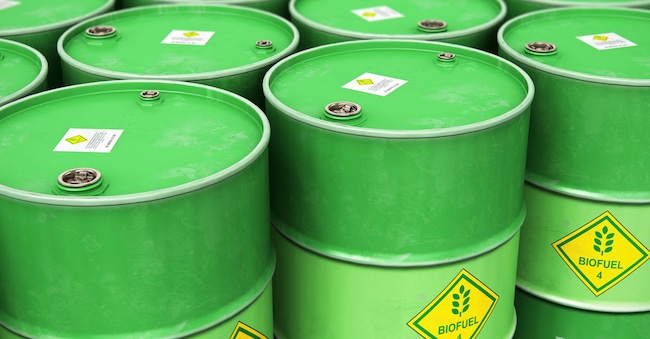
Putting the endothermic engine back on track could, according to the proposed amendment, be the introduction of a new category powered by 100 per cent renewable fuels (VEEF) and considered to be zero-emission. Around this family of fuels an important game is being played not only for the automotive industry but also for the chemical industry. This is an important step, which meets with the approval of producer associations, such as Assogasliquidi or Unem, and on which an important industrial game for Italia is being played, as Eni's conversion projects show.


